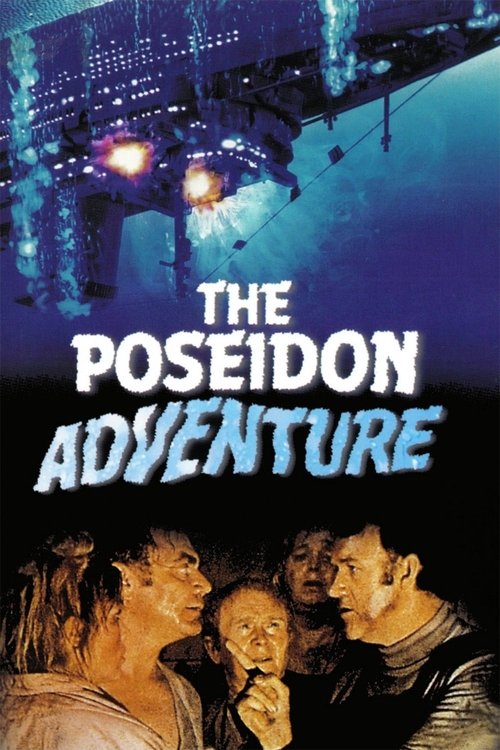
The Poseidon Adventure
When their ocean liner capsizes, a group of passengers struggle to survive and escape.
Despite its limited budget of $5.0M, The Poseidon Adventure became a box office phenomenon, earning $84.6M worldwide—a remarkable 1591% return. The film's unique voice attracted moviegoers, illustrating how strong storytelling can transcend budget limitations.
1 Oscar. 5 wins & 13 nominations


Plot Structure
Story beats plotted across runtime


Narrative Arc
Emotional journey through the story's key moments
Story Circle
Blueprint 15-beat structure
Arcplot Score Breakdown
Weighted: Precision (70%) + Arc (15%) + Theme (15%)
The Poseidon Adventure (1972) reveals strategically placed dramatic framework, characteristic of Ronald Neame's storytelling approach. This structural analysis examines how the film's 15-point plot structure maps to proven narrative frameworks across 1 hour and 57 minutes. With an Arcplot score of 6.7, the film balances conventional beats with creative variation.
Structural Analysis
The Status Quo at 1 minutes (1% through the runtime) establishes The SS Poseidon sails through rough seas on New Year's Eve as passengers prepare for celebration, establishing the luxury liner as a floating world of diverse characters unaware of impending doom.. Notably, this early placement immediately immerses viewers in the story world.
The inciting incident occurs at 15 minutes when A massive underwater earthquake generates a tsunami that strikes the Poseidon at midnight, capsizing the ship completely. The ballroom becomes a death trap as passengers fall to the ceiling, now the floor, in catastrophic chaos.. At 13% through the film, this Disruption is delayed, allowing extended setup of the story world. This beat shifts the emotional landscape, launching the protagonist into the central conflict.
The First Threshold at 29 minutes marks the transition into Act II, occurring at 25% of the runtime. This demonstrates the protagonist's commitment to Reverend Scott leads his small group of survivors to begin climbing the Christmas tree toward the ceiling galley entrance, making the irreversible choice to abandon the main group and forge their own path to salvation through the inverted ship., moving from reaction to action.
At 59 minutes, the Midpoint arrives at 50% of the runtime—precisely centered, creating perfect narrative symmetry. Notably, this crucial beat The group reaches a flooded corridor where they must swim underwater to continue. The harrowing sequence tests each survivor's resolve and physical limits, marking the point where the journey becomes truly life-threatening rather than just difficult., fundamentally raising what's at risk. The emotional intensity shifts, dividing the narrative into clear before-and-after phases.
The Collapse moment at 88 minutes (75% through) represents the emotional nadir. Here, Belle Rosen suffers a fatal heart attack after heroically swimming underwater to save Reverend Scott from drowning. Her death devastates the group and Manny, representing the ultimate sacrifice of the film's moral heart., indicates the protagonist at their lowest point. This beat's placement in the final quarter sets up the climactic reversal.
The Second Threshold at 94 minutes initiates the final act resolution at 80% of the runtime. The group discovers they are close to the hull and can hear rescuers cutting through above. Scott realizes he must make one final sacrifice, turning a scalding steam valve to clear the path while knowing it will kill him., demonstrating the transformation achieved throughout the journey.
Emotional Journey
The Poseidon Adventure's emotional architecture traces a deliberate progression across 15 carefully calibrated beats.
Narrative Framework
This structural analysis employs a 15-point narrative structure framework that maps key story moments. By mapping The Poseidon Adventure against these established plot points, we can identify how Ronald Neame utilizes or subverts traditional narrative conventions. The plot point approach reveals not only adherence to structural principles but also creative choices that distinguish The Poseidon Adventure within the adventure genre.
Ronald Neame's Structural Approach
Among the 4 Ronald Neame films analyzed on Arcplot, the average structural score is 7.1, reflecting strong command of classical structure. The Poseidon Adventure takes a more unconventional approach compared to the director's typical style. For comparative analysis, explore the complete Ronald Neame filmography.
Comparative Analysis
Additional adventure films include The Black Stallion, The Bad Guys and Puss in Boots. For more Ronald Neame analyses, see Meteor, Scrooge and First Monday in October.
Plot Points by Act
Act I
SetupStatus Quo
The SS Poseidon sails through rough seas on New Year's Eve as passengers prepare for celebration, establishing the luxury liner as a floating world of diverse characters unaware of impending doom.
Theme
Reverend Scott delivers a sermon declaring that God helps those who help themselves, establishing the film's central theme of self-reliance and active faith versus passive acceptance of fate.
Worldbuilding
We meet the ensemble: Reverend Scott the maverick minister, the elderly Rosens, the Rogos with their troubled marriage, young Susan and Robin Shelby, and singer Nonnie. The New Year's Eve celebration builds as the Captain expresses concerns about the ship's stability.
Disruption
A massive underwater earthquake generates a tsunami that strikes the Poseidon at midnight, capsizing the ship completely. The ballroom becomes a death trap as passengers fall to the ceiling, now the floor, in catastrophic chaos.
Resistance
In the aftermath, Reverend Scott argues with the ship's purser about the safest route. Scott insists they must climb up through the ship to reach the hull while others want to wait for rescue. He begins recruiting survivors willing to follow him.
Act II
ConfrontationFirst Threshold
Reverend Scott leads his small group of survivors to begin climbing the Christmas tree toward the ceiling galley entrance, making the irreversible choice to abandon the main group and forge their own path to salvation through the inverted ship.
Mirror World
Belle Rosen emerges as a quiet counterpoint to Scott's aggressive leadership, demonstrating selfless love through her devotion to her husband Manny. Her practical wisdom and nurturing presence represent faith through action rather than sermons.
Premise
The group navigates the inverted ship, climbing through ventilation shafts, crossing the engine room, and facing increasingly dangerous obstacles. Young Robin's knowledge of the ship proves valuable as tensions rise between Scott and Detective Rogo.
Midpoint
The group reaches a flooded corridor where they must swim underwater to continue. The harrowing sequence tests each survivor's resolve and physical limits, marking the point where the journey becomes truly life-threatening rather than just difficult.
Opposition
The ship continues to take on water and shift. Explosions rock the vessel. The group loses members to various hazards. Linda Rogo dies in a fiery blast, devastating her husband Mike. The path grows increasingly treacherous as hope fades.
Collapse
Belle Rosen suffers a fatal heart attack after heroically swimming underwater to save Reverend Scott from drowning. Her death devastates the group and Manny, representing the ultimate sacrifice of the film's moral heart.
Crisis
Manny mourns Belle as the remaining survivors struggle with despair. Reverend Scott questions whether his aggressive push forward has cost too many lives. The group faces their darkest moment, trapped and losing faith.
Act III
ResolutionSecond Threshold
The group discovers they are close to the hull and can hear rescuers cutting through above. Scott realizes he must make one final sacrifice, turning a scalding steam valve to clear the path while knowing it will kill him.
Synthesis
Reverend Scott sacrifices himself to shut off the steam, falling to his death but opening the way forward. The remaining survivors—Manny, Mike Rogo, Nonnie, Martin, Susan, and Robin—reach the hull as rescuers break through.
Transformation
The six survivors emerge through the hull into daylight and are rescued by helicopter. Their survival validates Scott's philosophy—those who helped themselves were saved—while the cost of their journey weighs heavily on each face.