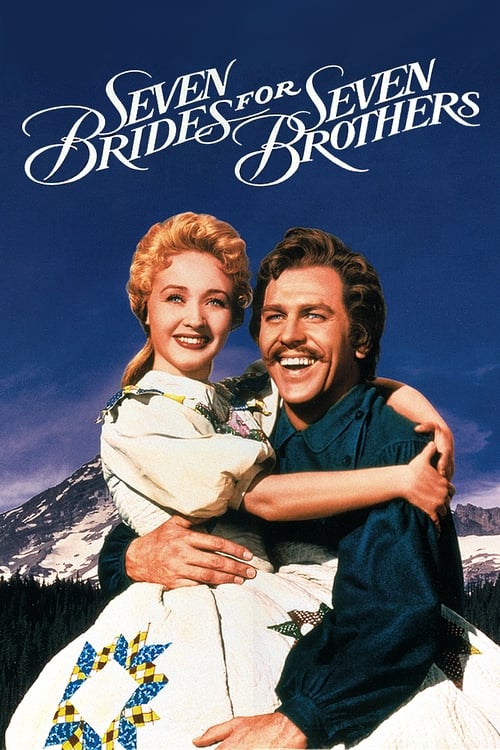
Seven Brides for Seven Brothers
In 1850 Oregon, when a backwoodsman brings a wife home to his farm, his six brothers decide that they want to get married too.
The film earned $5.0M at the global box office.
1 Oscar. 8 wins & 8 nominations


Plot Structure
Story beats plotted across runtime


Narrative Arc
Emotional journey through the story's key moments
Story Circle
Blueprint 15-beat structure
Arcplot Score Breakdown
Weighted: Precision (70%) + Arc (15%) + Theme (15%)
Seven Brides for Seven Brothers (1954) exemplifies precise dramatic framework, characteristic of Stanley Donen's storytelling approach. This structural analysis examines how the film's 15-point plot structure maps to proven narrative frameworks across 1 hour and 43 minutes. With an Arcplot score of 7.6, the film showcases strong structural fundamentals.
Characters
Cast & narrative archetypes

Adam Pontipee
Milly Pontipee
Benjamin Pontipee
Dorcas Gailen
Caleb Pontipee
Daniel Pontipee
Ephraim Pontipee
Frank Pontipee
Gideon Pontipee
Main Cast & Characters
Adam Pontipee
Played by Howard Keel
The eldest of seven brothers, a confident backwoodsman who goes to town seeking a wife and convinces Milly to marry him the same day.
Milly Pontipee
Played by Jane Powell
A hardworking restaurant cook who marries Adam impulsively, only to discover he has six unruly brothers she must civilize.
Benjamin Pontipee
Played by Jeff Richards
The second eldest brother, sensitive and romantic, who falls for Dorcas and leads his brothers in learning manners.
Dorcas Gailen
Played by Julie Newmar
A refined young woman from town who catches Benjamin's eye and becomes the object of his devoted affection.
Caleb Pontipee
Played by Matt Mattox
One of the six younger brothers, athletic and energetic, who participates in the barn-raising competition.
Daniel Pontipee
Played by Marc Platt
One of the six younger brothers, strong and physical, who learns to court properly under Milly's guidance.
Ephraim Pontipee
Played by Jacques d'Amboise
One of the six younger brothers, playful and mischievous, who joins in the competition for the town girls.
Frank Pontipee
Played by Tommy Rall
One of the six younger brothers, earnest and eager to please, who transforms under Milly's civilizing influence.
Gideon Pontipee
Played by Russ Tamblyn
The youngest brother, sweet-natured and impressionable, who follows his older brothers' lead in courtship.
Structural Analysis
The Status Quo at 1 minutes (1% through the runtime) establishes Adam Pontipee rides into town alone from his mountain home, a rough frontiersman in need of a wife to cook and clean for him and his six brothers.. Structural examination shows that this early placement immediately immerses viewers in the story world.
The inciting incident occurs at 13 minutes when Milly arrives at the Pontipee homestead and is shocked to discover Adam has six wild brothers living like animals. Her dream of a romantic marriage collapses.. At 12% through the film, this Disruption aligns precisely with traditional story structure. This beat shifts the emotional landscape, launching the protagonist into the central conflict.
The First Threshold at 25 minutes marks the transition into Act II, occurring at 24% of the runtime. This demonstrates the protagonist's commitment to Milly makes the active choice to stay and transform the brothers. She commits to teaching them to dance and court properly, launching the "Goin' Courtin'" sequence., moving from reaction to action.
At 52 minutes, the Midpoint arrives at 50% of the runtime—precisely centered, creating perfect narrative symmetry. Notably, this crucial beat False defeat: The town suitors win the girls' company, and the brothers are rejected. Adam tells them the story of the Sobbin' Women (Roman rape of the Sabine women), planting the seed for their disastrous decision., fundamentally raising what's at risk. The emotional intensity shifts, dividing the narrative into clear before-and-after phases.
The Collapse moment at 76 minutes (73% through) represents the emotional nadir. Here, Adam, refusing to apologize, abandons his pregnant wife and leaves for the trapping cabin. Milly goes into labor alone (metaphorical death of the old marriage, birth of new responsibility). The brothers realize they've destroyed everything., reveals the protagonist at their lowest point. This beat's placement in the final quarter sets up the climactic reversal.
The Second Threshold at 82 minutes initiates the final act resolution at 80% of the runtime. Spring thaw. The brothers, now truly changed, decide to face the consequences of their actions. They will return the girls and accept punishment, demonstrating they've learned honor and respect., demonstrating the transformation achieved throughout the journey.
Emotional Journey
Seven Brides for Seven Brothers's emotional architecture traces a deliberate progression across 15 carefully calibrated beats.
Narrative Framework
This structural analysis employs structural analysis methodology used to understand storytelling architecture. By mapping Seven Brides for Seven Brothers against these established plot points, we can identify how Stanley Donen utilizes or subverts traditional narrative conventions. The plot point approach reveals not only adherence to structural principles but also creative choices that distinguish Seven Brides for Seven Brothers within the comedy genre.
Stanley Donen's Structural Approach
Among the 5 Stanley Donen films analyzed on Arcplot, the average structural score is 7.4, reflecting strong command of classical structure. Seven Brides for Seven Brothers represents one of the director's most structurally precise works. For comparative analysis, explore the complete Stanley Donen filmography.
Comparative Analysis
Additional comedy films include The Bad Guys, Ella Enchanted and The Evening Star. For more Stanley Donen analyses, see Saturn 3, On the Town and The Grass Is Greener.
Plot Points by Act
Act I
SetupStatus Quo
Adam Pontipee rides into town alone from his mountain home, a rough frontiersman in need of a wife to cook and clean for him and his six brothers.
Theme
The reverend/townspeople comment on treating women with respect and proper courtship, foreshadowing the central lesson the brothers must learn.
Worldbuilding
Adam meets and hastily proposes to Milly. She accepts, envisioning a small cabin. They marry immediately and he takes her to his remote mountain home, where she discovers six rowdy, uncivilized brothers.
Disruption
Milly arrives at the Pontipee homestead and is shocked to discover Adam has six wild brothers living like animals. Her dream of a romantic marriage collapses.
Resistance
Milly debates whether to stay or leave. She decides to civilize the brothers, teaching them manners, cleanliness, and how to properly court women. The brothers resist at first but begin to transform.
Act II
ConfrontationFirst Threshold
Milly makes the active choice to stay and transform the brothers. She commits to teaching them to dance and court properly, launching the "Goin' Courtin'" sequence.
Mirror World
The brothers, now cleaned up and trained, meet the town girls at the barn raising. Romance blossoms between each brother and a respective girl, mirroring the Adam/Milly relationship but with proper courtship.
Premise
The promise of the premise: courtship, dancing, and romance. Includes the spectacular "Barn Raising" dance competition where the brothers compete with town suitors for the girls' affections.
Midpoint
False defeat: The town suitors win the girls' company, and the brothers are rejected. Adam tells them the story of the Sobbin' Women (Roman rape of the Sabine women), planting the seed for their disastrous decision.
Opposition
The brothers kidnap the girls from town, causing an avalanche that traps everyone at the homestead for winter. Milly is furious and pregnant. She banishes the brothers to the barn and protects the girls, creating a house divided.
Collapse
Adam, refusing to apologize, abandons his pregnant wife and leaves for the trapping cabin. Milly goes into labor alone (metaphorical death of the old marriage, birth of new responsibility). The brothers realize they've destroyed everything.
Crisis
Winter darkness. Milly has her baby. The brothers care for the infant and the girls, learning true responsibility and selfless love. They process their shame and begin genuine transformation.
Act III
ResolutionSecond Threshold
Spring thaw. The brothers, now truly changed, decide to face the consequences of their actions. They will return the girls and accept punishment, demonstrating they've learned honor and respect.
Synthesis
The townsmen arrive with shotguns. The girls reveal they want to marry the brothers. Adam returns, humbled, and reconciles with Milly. The reverend arranges a mass wedding. All conflicts resolve.
Transformation
Six weddings occur simultaneously. The once-savage brothers are now civilized men ready for marriage. Adam holds his daughter, transformed from selfish to loving husband and father. The mirror image of the opening: civilization has replaced savagery.