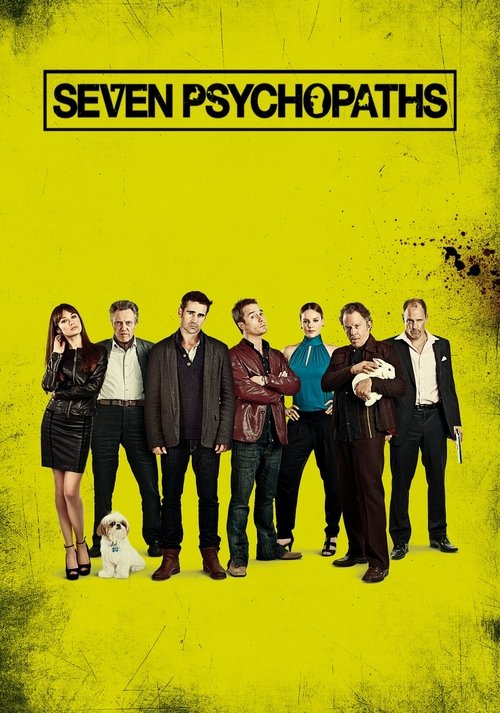
Seven Psychopaths
A struggling screenwriter inadvertently becomes entangled in the Los Angeles criminal underworld after his oddball friends kidnap a gangster's beloved Shih Tzu.
Despite a respectable budget of $15.0M, Seven Psychopaths became a financial success, earning $33.0M worldwide—a 120% return.
Nominated for 1 BAFTA Award3 wins & 21 nominations


Plot Structure
Story beats plotted across runtime


Narrative Arc
Emotional journey through the story's key moments
Story Circle
Blueprint 15-beat structure
Arcplot Score Breakdown
Weighted: Precision (70%) + Arc (15%) + Theme (15%)
Seven Psychopaths (2012) showcases strategically placed narrative architecture, characteristic of Martin McDonagh's storytelling approach. This structural analysis examines how the film's 15-point plot structure maps to proven narrative frameworks across 1 hour and 50 minutes. With an Arcplot score of 6.6, the film balances conventional beats with creative variation.
Characters
Cast & narrative archetypes

Marty Faranan
Billy Bickle
Hans Kieslowski
Charlie Costello
Kaya
Main Cast & Characters
Marty Faranan
Played by Colin Farrell
A struggling screenwriter trying to write a script called "Seven Psychopaths" while battling alcoholism and writer's block.
Billy Bickle
Played by Sam Rockwell
Marty's best friend, an aspiring actor who runs a dog-kidnapping scheme and has a flair for dramatic violence.
Hans Kieslowski
Played by Christopher Walken
Billy's partner in the dog-napping business, a gentle Quaker with a terminally ill wife and a mysterious past.
Charlie Costello
Played by Woody Harrelson
A volatile gangster whose beloved Shih Tzu is kidnapped by Billy and Hans, triggering a violent pursuit.
Kaya
Played by Abbie Cornish
Marty's girlfriend who is frustrated with his drinking and lack of commitment to their relationship.
Structural Analysis
The Status Quo at 1 minutes (1% through the runtime) establishes Marty is a struggling alcoholic screenwriter in Los Angeles, unable to finish his script "Seven Psychopaths" beyond the title. He lives disconnected from meaningful relationships and drinks away his creative block.. Notably, this early placement immediately immerses viewers in the story world.
The inciting incident occurs at 13 minutes when Billy and Hans kidnap Charlie's beloved Shih Tzu, Bonny, not knowing she belongs to a psychopathic gangster. This sets in motion the violent collision course that will consume all characters.. At 12% through the film, this Disruption aligns precisely with traditional story structure. This beat shifts the emotional landscape, launching the protagonist into the central conflict.
The First Threshold at 27 minutes marks the transition into Act II, occurring at 24% of the runtime. This demonstrates the protagonist's commitment to Charlie's men shoot up Hans' house looking for his dog, killing Hans' wife Myra. Marty witnesses the aftermath and is now inextricably pulled into the violent world created by Billy's reckless scheme., moving from reaction to action.
At 56 minutes, the Midpoint arrives at 50% of the runtime—precisely centered, creating perfect narrative symmetry. Of particular interest, this crucial beat In the desert, Hans reveals his terminal cancer and shares the true story of the Quaker psychopath who chose peace over revenge. The stakes raise as philosophies clash: Billy wants a violent shootout ending, Hans wants peace, and Marty must choose his story's soul., fundamentally raising what's at risk. The emotional intensity shifts, dividing the narrative into clear before-and-after phases.
The Collapse moment at 82 minutes (75% through) represents the emotional nadir. Here, Hans is shot and killed by Charlie's men during a peyote-fueled confrontation. The gentle voice of peace and Marty's true mentor dies, leaving only Billy's violent path and Marty's desperate grief., demonstrates the protagonist at their lowest point. This beat's placement in the final quarter sets up the climactic reversal.
The Second Threshold at 87 minutes initiates the final act resolution at 79% of the runtime. Marty finds Hans' tape recorder with the peaceful ending Hans envisioned: the psychopath puts down his gun and walks away. Marty understands he must reject Billy's violent narrative and honor Hans' vision of breaking the cycle., demonstrating the transformation achieved throughout the journey.
Emotional Journey
Seven Psychopaths's emotional architecture traces a deliberate progression across 15 carefully calibrated beats.
Narrative Framework
This structural analysis employs structural analysis methodology used to understand storytelling architecture. By mapping Seven Psychopaths against these established plot points, we can identify how Martin McDonagh utilizes or subverts traditional narrative conventions. The plot point approach reveals not only adherence to structural principles but also creative choices that distinguish Seven Psychopaths within the comedy genre.
Martin McDonagh's Structural Approach
Among the 3 Martin McDonagh films analyzed on Arcplot, the average structural score is 5.6, showcasing experimental approaches to narrative form. Seven Psychopaths represents one of the director's most structurally precise works. For comparative analysis, explore the complete Martin McDonagh filmography.
Comparative Analysis
Additional comedy films include The Bad Guys, Ella Enchanted and The Evening Star. For more Martin McDonagh analyses, see The Banshees of Inisherin, Three Billboards Outside Ebbing, Missouri.
Plot Points by Act
Act I
SetupStatus Quo
Marty is a struggling alcoholic screenwriter in Los Angeles, unable to finish his script "Seven Psychopaths" beyond the title. He lives disconnected from meaningful relationships and drinks away his creative block.
Theme
Billy tells Marty his script shouldn't be about "guys with guns" but should be about something deeper. The theme: violence begets violence, and peaceful resolution requires rejecting the cycle of revenge.
Worldbuilding
Introduction to Marty's world: his writing struggles, friendship with the chaotic Billy, Billy's dog-kidnapping scheme with Hans, the violent gangster Charlie and his beloved Shih Tzu, and the mysterious Jack of Diamonds killer targeting mobsters.
Disruption
Billy and Hans kidnap Charlie's beloved Shih Tzu, Bonny, not knowing she belongs to a psychopathic gangster. This sets in motion the violent collision course that will consume all characters.
Resistance
Marty tries to work on his script while Billy pushes him with ideas about psychopaths. Hans and Billy continue their scheme. Charlie discovers his dog is missing and begins his violent search. Marty remains oblivious to the danger building around him.
Act II
ConfrontationFirst Threshold
Charlie's men shoot up Hans' house looking for his dog, killing Hans' wife Myra. Marty witnesses the aftermath and is now inextricably pulled into the violent world created by Billy's reckless scheme.
Mirror World
Hans emerges as the spiritual center and mirror character. Despite his wife's murder, he advocates for peace and non-violence, representing the alternative to revenge that Marty must learn for his script and life.
Premise
The trio goes on the run to the desert. Billy pitches increasingly violent psychopath stories while Hans offers peaceful alternatives. Marty struggles between these visions for his script. Charlie pursues them relentlessly. The premise delivers: psychopaths telling psychopath stories.
Midpoint
In the desert, Hans reveals his terminal cancer and shares the true story of the Quaker psychopath who chose peace over revenge. The stakes raise as philosophies clash: Billy wants a violent shootout ending, Hans wants peace, and Marty must choose his story's soul.
Opposition
Billy's chaos escalates: he placed the psychopath ad, orchestrated everything for Marty's script, and is revealed as the Jack of Diamonds killer. Charlie closes in. Hans deteriorates. Marty spirals deeper into drinking as violence surrounds him and his friends' flaws manifest.
Collapse
Hans is shot and killed by Charlie's men during a peyote-fueled confrontation. The gentle voice of peace and Marty's true mentor dies, leaving only Billy's violent path and Marty's desperate grief.
Crisis
Marty mourns Hans while Billy prepares for his desired shootout finale. Marty must process the death of the peaceful alternative and decide what kind of ending his story—and his life—will have.
Act III
ResolutionSecond Threshold
Marty finds Hans' tape recorder with the peaceful ending Hans envisioned: the psychopath puts down his gun and walks away. Marty understands he must reject Billy's violent narrative and honor Hans' vision of breaking the cycle.
Synthesis
Billy gets his shootout with Charlie but Marty walks away, refusing to participate in the violence. Billy dies in the gunfight he orchestrated. Marty returns to sobriety, finishes his script with Hans' peaceful ending, and reconnects with his girlfriend.
Transformation
Marty sits sober at his typewriter, completing "Seven Psychopaths" with the peaceful cemetery ending Hans envisioned. He has transformed from a blocked drunk into a purposeful writer who understands that true strength is choosing peace over violence.