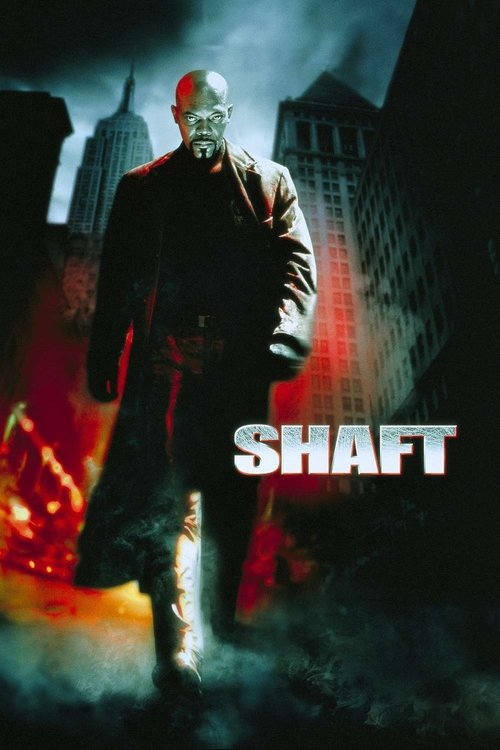
Shaft
New York police detective John Shaft arrests Walter Wade Jr. for a racially motivated slaying. But the only eyewitness disappears, and Wade jumps bail for Switzerland. Two years later Wade returns to face trial, confident his money and influence will get him acquitted -- especially since he's paid a drug kingpin to kill the witness.
Despite a moderate budget of $46.0M, Shaft became a box office success, earning $107.6M worldwide—a 134% return.
2 wins & 13 nominations


Plot Structure
Story beats plotted across runtime


Narrative Arc
Emotional journey through the story's key moments
Story Circle
Blueprint 15-beat structure
Arcplot Score Breakdown
Weighted: Precision (70%) + Arc (15%) + Theme (15%)
Shaft (2000) reveals carefully calibrated plot construction, characteristic of John Singleton's storytelling approach. This structural analysis examines how the film's 15-point plot structure maps to proven narrative frameworks across 1 hour and 39 minutes. With an Arcplot score of 7.1, the film balances conventional beats with creative variation.
Characters
Cast & narrative archetypes

John Shaft
Walter Wade Jr.
Peoples Hernandez
Carmen Vasquez
Diane Palmieri
Jack Roselli
Main Cast & Characters
John Shaft
Played by Samuel L. Jackson
A tough NYPD detective who quits the force to pursue justice against a privileged murderer on his own terms.
Walter Wade Jr.
Played by Christian Bale
A wealthy, racist young man who commits murder and uses his privilege to evade justice.
Peoples Hernandez
Played by Jeffrey Wright
A powerful Dominican drug lord who provides protection to Wade and becomes Shaft's primary antagonist.
Carmen Vasquez
Played by Vanessa Williams
A waitress who witnessed Wade's murder and goes into hiding out of fear for her life.
Diane Palmieri
Played by Toni Collette
An NYPD detective and Shaft's former partner who tries to maintain order while helping him.
Jack Roselli
Played by Dan Hedaya
Shaft's old friend and informant who helps him navigate the streets and gather intelligence.
Structural Analysis
The Status Quo at 1 minutes (1% through the runtime) establishes Detective John Shaft confidently navigates the streets of Harlem, respected and connected to the community. He's a skilled NYPD detective who operates with his own code of justice.. Significantly, this early placement immediately immerses viewers in the story world.
The inciting incident occurs at 11 minutes when Wade murders Trey in a racially motivated attack outside the club. When Shaft arrests him, Wade's wealthy father immediately posts bail, and Wade flees the country, escaping justice entirely.. At 12% through the film, this Disruption aligns precisely with traditional story structure. This beat shifts the emotional landscape, launching the protagonist into the central conflict.
The First Threshold at 24 minutes marks the transition into Act II, occurring at 24% of the runtime. This demonstrates the protagonist's commitment to Shaft throws his badge at the judge in disgust when Wade is given minimal bail again. He quits the NYPD, choosing to pursue justice on his own terms rather than be complicit in a broken system., moving from reaction to action.
At 50 minutes, the Midpoint arrives at 51% of the runtime—precisely centered, creating perfect narrative symmetry. Of particular interest, this crucial beat Shaft locates Carmen and successfully protects her from Peoples' men. False victory - he has the witness and thinks he can bring Wade to justice, but underestimates the alliance forming against him., fundamentally raising what's at risk. The emotional intensity shifts, dividing the narrative into clear before-and-after phases.
The Collapse moment at 73 minutes (74% through) represents the emotional nadir. Here, Peoples' men attack Shaft's mother's house, violating his sanctuary and putting his family in danger. The one line Shaft thought wouldn't be crossed has been crossed. Carmen almost dies in the assault., illustrates the protagonist at their lowest point. This beat's placement in the final quarter sets up the climactic reversal.
The Second Threshold at 78 minutes initiates the final act resolution at 79% of the runtime. Shaft realizes he must combine his street justice approach with legitimate law. He coordinates with his former NYPD partner, synthesizing his independence with institutional power to take down both Wade and Peoples., demonstrating the transformation achieved throughout the journey.
Emotional Journey
Shaft's emotional architecture traces a deliberate progression across 15 carefully calibrated beats.
Narrative Framework
This structural analysis employs structural analysis methodology used to understand storytelling architecture. By mapping Shaft against these established plot points, we can identify how John Singleton utilizes or subverts traditional narrative conventions. The plot point approach reveals not only adherence to structural principles but also creative choices that distinguish Shaft within the action genre.
John Singleton's Structural Approach
Among the 9 John Singleton films analyzed on Arcplot, the average structural score is 7.0, reflecting strong command of classical structure. Shaft represents one of the director's most structurally precise works. For comparative analysis, explore the complete John Singleton filmography.
Comparative Analysis
Additional action films include The Bad Guys, Puss in Boots and Venom: The Last Dance. For more John Singleton analyses, see Higher Learning, Abduction and Poetic Justice.
Plot Points by Act
Act I
SetupStatus Quo
Detective John Shaft confidently navigates the streets of Harlem, respected and connected to the community. He's a skilled NYPD detective who operates with his own code of justice.
Theme
Discussion about justice versus the law. The film establishes its central question: Can real justice exist within a broken system, or must a man stand alone to do what's right?
Worldbuilding
Introduction to Shaft's world: his relationship with the NYPD, his connection to Harlem's streets, the racial tensions, and the corrupt power structures. We meet Wade as a racist privileged murderer and witness the hate crime at the nightclub.
Disruption
Wade murders Trey in a racially motivated attack outside the club. When Shaft arrests him, Wade's wealthy father immediately posts bail, and Wade flees the country, escaping justice entirely.
Resistance
Shaft struggles with the system's failure as Wade escapes. Two years pass. Wade returns and Shaft must navigate whether to work within the corrupt system or act independently. He debates his role as a cop versus his moral obligation.
Act II
ConfrontationFirst Threshold
Shaft throws his badge at the judge in disgust when Wade is given minimal bail again. He quits the NYPD, choosing to pursue justice on his own terms rather than be complicit in a broken system.
Mirror World
Shaft reconnects with Carmen Vasquez, the waitress witness to the murder, representing the victims who deserve justice. She embodies why Shaft must succeed - real people suffering while the powerful escape consequences.
Premise
Shaft as independent investigator hunting for Carmen (the key witness) while Wade and drug lord Peoples Hernandez also search for her. Action sequences showcase Shaft's skills outside badge constraints. Alliance with Peoples forms against Wade.
Midpoint
Shaft locates Carmen and successfully protects her from Peoples' men. False victory - he has the witness and thinks he can bring Wade to justice, but underestimates the alliance forming against him.
Opposition
Wade and Peoples Hernandez form an unexpected alliance. Their combined resources create mounting pressure. Multiple assassination attempts on Shaft and Carmen. Corrupt cops revealed. The system actively works against Shaft now.
Collapse
Peoples' men attack Shaft's mother's house, violating his sanctuary and putting his family in danger. The one line Shaft thought wouldn't be crossed has been crossed. Carmen almost dies in the assault.
Crisis
Shaft regroups after the attack on his family. He must reconcile his methods with the consequences they bring to innocent people. Moment of reflection on whether his crusade is worth the cost to those he loves.
Act III
ResolutionSecond Threshold
Shaft realizes he must combine his street justice approach with legitimate law. He coordinates with his former NYPD partner, synthesizing his independence with institutional power to take down both Wade and Peoples.
Synthesis
Final confrontation combining street warfare and legal justice. Shaft takes down Peoples' operation while ensuring Carmen testifies. Wade is finally held accountable in court. Both legal and street justice achieved simultaneously.
Transformation
Shaft walks the streets of Harlem again, but transformed. He's not the cop from the opening, nor purely independent. He's found a way to serve justice that honors both the system and his moral code, respected by both worlds.