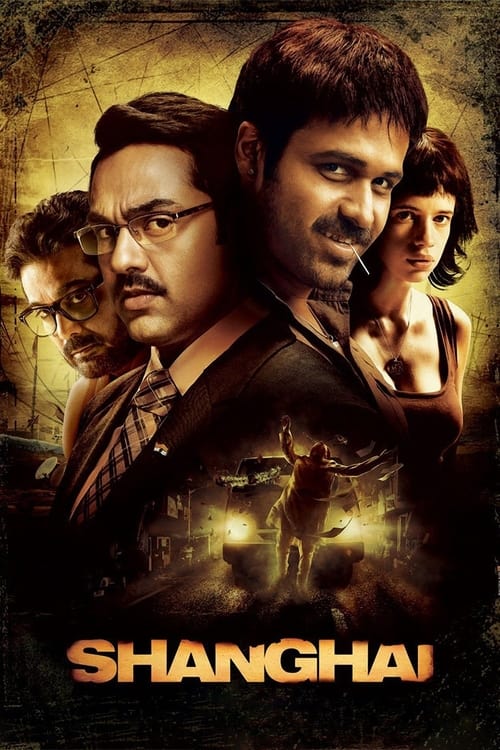
Shanghai
Prime leader of a campaign against a big government project is killed in what appears to be a road accident. An IAS officer is ordered to probe the incident and the veils of falsehood begin to drop.
The film earned $4.9M at the global box office.

Plot Structure
Story beats plotted across runtime


Narrative Arc
Emotional journey through the story's key moments
Story Circle
Blueprint 15-beat structure
Arcplot Score Breakdown
Weighted: Precision (70%) + Arc (15%) + Theme (15%)
Shanghai (2012) demonstrates deliberately positioned dramatic framework, characteristic of Dibakar Banerjee's storytelling approach. This structural analysis examines how the film's 15-point plot structure maps to proven narrative frameworks across 2 hours. With an Arcplot score of 6.8, the film balances conventional beats with creative variation.
Characters
Cast & narrative archetypes

Paul Soames
Anna Lan-Ting
Captain Tanaka
Anthony Lan-Ting
Conner
Sumiko
Main Cast & Characters
Paul Soames
Played by John Cusack
American intelligence operative investigating his friend's death in wartime Shanghai
Anna Lan-Ting
Played by Gong Li
Enigmatic Chinese resistance leader and club owner navigating dangerous political waters
Captain Tanaka
Played by Ken Watanabe
Japanese intelligence officer tasked with maintaining order in occupied Shanghai
Anthony Lan-Ting
Played by Chow Yun-fat
Anna's husband and powerful Chinese crime boss with complex loyalties
Conner
Played by Jeffrey Dean Morgan
British intelligence operative and Paul's murdered friend whose death triggers the investigation
Sumiko
Played by Rinko Kikuchi
Japanese woman caught between conflicting loyalties in occupied Shanghai
Structural Analysis
The Status Quo at 1 minutes (1% through the runtime) establishes Paul Soames arrives in 1941 Shanghai, a city of intrigue and danger under Japanese occupation. He's an American intelligence officer coming to investigate his friend Connor's death, entering a world of shadows and divided loyalties.. The analysis reveals that this early placement immediately immerses viewers in the story world.
The inciting incident occurs at 14 minutes when Paul discovers evidence that Connor's death was not an accident but murder, and that his friend was gathering intelligence on Japanese military operations. What seemed like a simple condolence visit becomes a dangerous investigation.. At 11% through the film, this Disruption aligns precisely with traditional story structure. This beat shifts the emotional landscape, launching the protagonist into the central conflict.
The First Threshold at 30 minutes marks the transition into Act II, occurring at 25% of the runtime. This reveals the protagonist's commitment to Paul makes the active choice to continue Connor's investigation despite the danger. He commits to uncovering the truth and agrees to work with the resistance, fully entering the world of espionage and intrigue., moving from reaction to action.
At 59 minutes, the Midpoint arrives at 50% of the runtime—precisely centered, creating perfect narrative symmetry. Notably, this crucial beat Paul uncovers crucial intelligence about Japanese military expansion plans, but Captain Tanaka becomes aware of his activities. False victory: Paul has the information he needs, but he's now a marked man. The stakes raise dramatically and the game becomes deadly serious., fundamentally raising what's at risk. The emotional intensity shifts, dividing the narrative into clear before-and-after phases.
The Collapse moment at 89 minutes (74% through) represents the emotional nadir. Here, The resistance network is betrayed and key members are killed. Anna is captured by Japanese forces. Paul's investigation has led to devastating consequences, and the woman he loves is now in mortal danger. The "whiff of death" as allies die and hope seems lost., demonstrates the protagonist at their lowest point. This beat's placement in the final quarter sets up the climactic reversal.
The Second Threshold at 95 minutes initiates the final act resolution at 79% of the runtime. News of Pearl Harbor arrives, changing everything. Paul synthesizes what Connor taught him about sacrifice with what Anna showed him about fighting for a cause. He realizes the intelligence must reach Allied forces and formulates a plan to rescue Anna and complete the mission., demonstrating the transformation achieved throughout the journey.
Emotional Journey
Shanghai's emotional architecture traces a deliberate progression across 15 carefully calibrated beats.
Narrative Framework
This structural analysis employs a 15-point narrative structure framework that maps key story moments. By mapping Shanghai against these established plot points, we can identify how Dibakar Banerjee utilizes or subverts traditional narrative conventions. The plot point approach reveals not only adherence to structural principles but also creative choices that distinguish Shanghai within the thriller genre.
Comparative Analysis
Additional thriller films include The Warriors, Thunderball and Rustom.
Plot Points by Act
Act I
SetupStatus Quo
Paul Soames arrives in 1941 Shanghai, a city of intrigue and danger under Japanese occupation. He's an American intelligence officer coming to investigate his friend Connor's death, entering a world of shadows and divided loyalties.
Theme
A character warns Paul about Shanghai: "In this city, everyone has secrets, and trust is the first casualty." This establishes the theme of loyalty, deception, and the cost of truth in a world where allegiances are fluid.
Worldbuilding
Introduction to 1941 Shanghai's dangerous political landscape: Japanese occupation, international zones, spies from multiple nations, and the tension of impending war. Paul learns about Connor's supposed import/export business and meets key players including the glamorous Anna Lan-Ting.
Disruption
Paul discovers evidence that Connor's death was not an accident but murder, and that his friend was gathering intelligence on Japanese military operations. What seemed like a simple condolence visit becomes a dangerous investigation.
Resistance
Paul debates whether to pursue the investigation or leave Shanghai. He weighs the danger against his loyalty to Connor. He begins to understand the complexity of the city's politics and meets Anna more intimately, learning about the resistance movement.
Act II
ConfrontationFirst Threshold
Paul makes the active choice to continue Connor's investigation despite the danger. He commits to uncovering the truth and agrees to work with the resistance, fully entering the world of espionage and intrigue.
Mirror World
Paul and Anna share an intimate moment where she reveals her dual life as a socialite and resistance member. This relationship becomes the thematic counterpoint, teaching Paul about sacrifice, divided loyalties, and what it means to fight for something beyond oneself.
Premise
Paul navigates the espionage game, gathering intelligence on Japanese plans while developing his relationship with Anna. The "fun and games" of being a spy in exotic Shanghai: coded messages, clandestine meetings, dangerous close calls, and the thrill of the investigation.
Midpoint
Paul uncovers crucial intelligence about Japanese military expansion plans, but Captain Tanaka becomes aware of his activities. False victory: Paul has the information he needs, but he's now a marked man. The stakes raise dramatically and the game becomes deadly serious.
Opposition
Captain Tanaka closes in on Paul and the resistance network. Anna's husband's true allegiances are questioned. The Japanese net tightens around them, and Paul's investigation leads to resistance members being captured. Everything becomes harder and more dangerous.
Collapse
The resistance network is betrayed and key members are killed. Anna is captured by Japanese forces. Paul's investigation has led to devastating consequences, and the woman he loves is now in mortal danger. The "whiff of death" as allies die and hope seems lost.
Crisis
Paul faces his darkest moment, processing the cost of his pursuit of truth. He must confront whether the intelligence was worth the lives lost and Anna's capture. His idealism is shattered against the brutal reality of war and espionage.
Act III
ResolutionSecond Threshold
News of Pearl Harbor arrives, changing everything. Paul synthesizes what Connor taught him about sacrifice with what Anna showed him about fighting for a cause. He realizes the intelligence must reach Allied forces and formulates a plan to rescue Anna and complete the mission.
Synthesis
Paul executes his plan, confronting Captain Tanaka and working to rescue Anna while ensuring the intelligence reaches the right hands. The finale brings together his investigative skills, his understanding of Shanghai's politics, and his newfound conviction to fight for something greater.
Transformation
Paul, having completed Connor's mission and secured the intelligence, prepares to leave Shanghai. Unlike his arrival as a naive investigator, he departs as someone who understands the true cost of war and loyalty. The closing image mirrors the opening but shows his transformation from observer to participant.