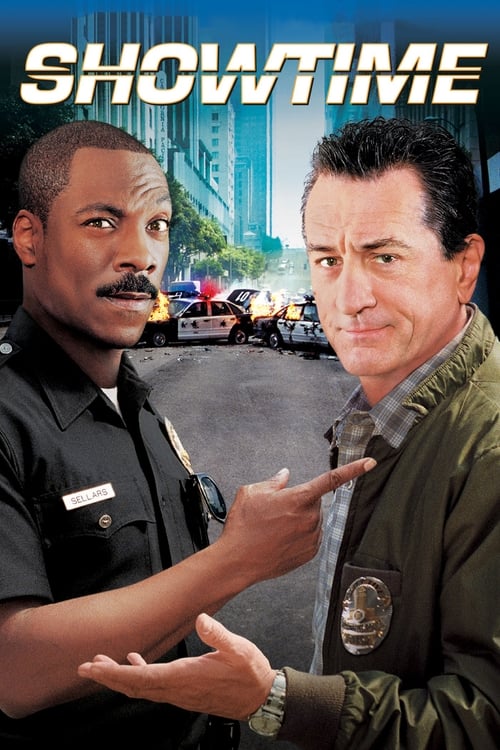
Showtime
A spoof of buddy cop movies where two very different cops are forced to team up on a new reality based T.V. cop show.
The film disappointed at the box office against its substantial budget of $85.0M, earning $77.9M globally (-8% loss).
1 win & 6 nominations


Plot Structure
Story beats plotted across runtime


Narrative Arc
Emotional journey through the story's key moments
Story Circle
Blueprint 15-beat structure
Arcplot Score Breakdown
Weighted: Precision (70%) + Arc (15%) + Theme (15%)
Showtime (2002) exemplifies meticulously timed story structure, characteristic of Tom Dey's storytelling approach. This structural analysis examines how the film's 15-point plot structure maps to proven narrative frameworks across 1 hour and 35 minutes. With an Arcplot score of 7.4, the film balances conventional beats with creative variation.
Characters
Cast & narrative archetypes

Mitch Preston
Trey Sellars
Chase Renzi
Captain Winship
Lazy Boy
Main Cast & Characters
Mitch Preston
Played by Robert De Niro
A serious, no-nonsense LAPD detective who despises media attention and is forced into a reality TV show after a mishap.
Trey Sellars
Played by Eddie Murphy
An attention-seeking, flamboyant patrol officer who dreams of stardom and gets paired with Preston for a reality cop show.
Chase Renzi
Played by Rene Russo
An ambitious TV producer who creates and manages the reality show "Showtime," manipulating events for ratings.
Captain Winship
Played by Frankie Faison
Preston's police captain who reluctantly allows the reality show to proceed due to departmental pressure.
Lazy Boy
Played by Pedro Damián
A dangerous arms dealer and the primary antagonist who becomes the target of Preston's investigation.
Structural Analysis
The Status Quo at 1 minutes (1% through the runtime) establishes Detective Mitch Preston is introduced as a serious, by-the-book LAPD cop who despises media attention and publicity, working a drug case with quiet professionalism.. Notably, this early placement immediately immerses viewers in the story world.
The inciting incident occurs at 12 minutes when During a bust, Trey's showboating with a news crew causes Mitch's expensive camera equipment to be destroyed, creating a PR nightmare and jeopardizing Mitch's career.. At 13% through the film, this Disruption is delayed, allowing extended setup of the story world. This beat shifts the emotional landscape, launching the protagonist into the central conflict.
The First Threshold at 23 minutes marks the transition into Act II, occurring at 24% of the runtime. This shows the protagonist's commitment to Mitch reluctantly agrees to do the reality show "Showtime" partnered with Trey, accepting this new world of cameras and performance despite his hatred of it., moving from reaction to action.
At 48 minutes, the Midpoint arrives at 51% of the runtime—precisely centered, creating perfect narrative symmetry. Of particular interest, this crucial beat The show becomes a ratings hit and Mitch gets a lead on the real arms dealer case; false victory as it seems the show might actually help his police work, but the line between reality and performance blurs., fundamentally raising what's at risk. The emotional intensity shifts, dividing the narrative into clear before-and-after phases.
The Collapse moment at 71 minutes (75% through) represents the emotional nadir. Here, A confrontation with the arms dealers goes wrong due to the TV crew's presence; the case falls apart, someone is endangered, and Mitch realizes the show has compromised real justice and safety., demonstrates the protagonist at their lowest point. This beat's placement in the final quarter sets up the climactic reversal.
The Second Threshold at 76 minutes initiates the final act resolution at 80% of the runtime. Mitch realizes he can use the show's resources and Trey's instincts combined with his own detective skills; they choose to work together authentically, synthesizing performance and real police work., demonstrating the transformation achieved throughout the journey.
Emotional Journey
Showtime's emotional architecture traces a deliberate progression across 15 carefully calibrated beats.
Narrative Framework
This structural analysis employs a 15-point narrative structure framework that maps key story moments. By mapping Showtime against these established plot points, we can identify how Tom Dey utilizes or subverts traditional narrative conventions. The plot point approach reveals not only adherence to structural principles but also creative choices that distinguish Showtime within the action genre.
Tom Dey's Structural Approach
Among the 4 Tom Dey films analyzed on Arcplot, the average structural score is 7.3, reflecting strong command of classical structure. Showtime represents one of the director's most structurally precise works. For comparative analysis, explore the complete Tom Dey filmography.
Comparative Analysis
Additional action films include The Bad Guys, Puss in Boots and Venom: The Last Dance. For more Tom Dey analyses, see Marmaduke, Shanghai Noon and Failure to Launch.
Plot Points by Act
Act I
SetupStatus Quo
Detective Mitch Preston is introduced as a serious, by-the-book LAPD cop who despises media attention and publicity, working a drug case with quiet professionalism.
Theme
A TV producer comments that "everybody wants to be a star" and that the line between reality and entertainment is blurring, establishing the film's theme about authenticity versus performance.
Worldbuilding
Mitch's world as a serious detective is established; Trey Sellars is introduced as an attention-seeking patrol officer who dreams of TV stardom; the LAPD culture and dynamics are shown.
Disruption
During a bust, Trey's showboating with a news crew causes Mitch's expensive camera equipment to be destroyed, creating a PR nightmare and jeopardizing Mitch's career.
Resistance
The LAPD brass and TV producer Chase Renzi propose a reality show pairing Mitch and Trey; Mitch resists fiercely, debating with superiors, but faces career consequences if he refuses.
Act II
ConfrontationFirst Threshold
Mitch reluctantly agrees to do the reality show "Showtime" partnered with Trey, accepting this new world of cameras and performance despite his hatred of it.
Mirror World
Chase Renzi and the TV crew become the mirror world, representing everything Mitch opposes but must learn from; Trey becomes an unlikely partner who understands the performance aspect Mitch must embrace.
Premise
The "fun and games" of the buddy cop reality show: Mitch and Trey clash over methods, staged action scenes are filmed, Trey teaches Mitch about camera presence while Mitch tries to do real police work.
Midpoint
The show becomes a ratings hit and Mitch gets a lead on the real arms dealer case; false victory as it seems the show might actually help his police work, but the line between reality and performance blurs.
Opposition
The criminals become aware of the show and use it against them; pressure from the network for more drama conflicts with real police work; Mitch and Trey's partnership strains as stakes increase.
Collapse
A confrontation with the arms dealers goes wrong due to the TV crew's presence; the case falls apart, someone is endangered, and Mitch realizes the show has compromised real justice and safety.
Crisis
Mitch faces the consequences of mixing entertainment with police work; he and Trey argue about what matters more; Mitch contemplates quitting both the show and possibly the force.
Act III
ResolutionSecond Threshold
Mitch realizes he can use the show's resources and Trey's instincts combined with his own detective skills; they choose to work together authentically, synthesizing performance and real police work.
Synthesis
Mitch and Trey execute a final operation combining showmanship with solid police work; they take down the arms dealers in a climactic confrontation captured on camera, proving partnership works.
Transformation
Mitch has learned to balance authenticity with performance, accepting some media presence; he and Trey have genuine respect as partners, showing Mitch's growth from rigid loner to collaborative team player.