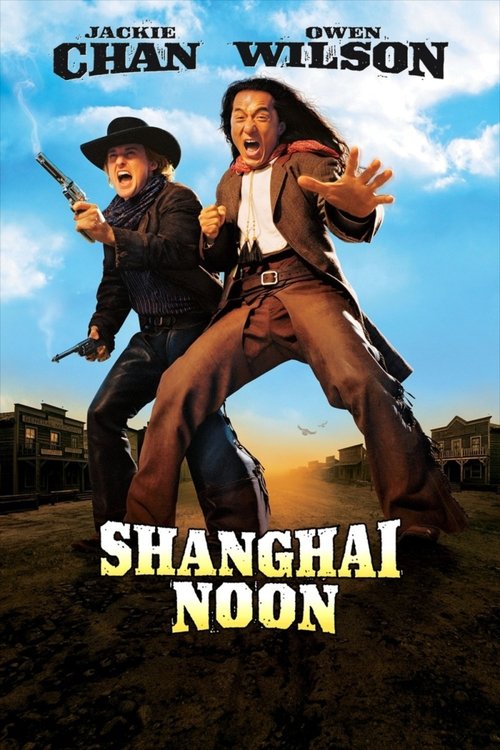
Shanghai Noon
Chon Wang, a clumsy imperial guard, trails Princess Pei Pei when she's kidnapped from the Forbidden City and transported to America. Wang follows her captors to Nevada, where he teams up with an unlikely partner, outcast outlaw Roy O'Bannon, and tries to spring the princess from her imprisonment.
Working with a respectable budget of $55.0M, the film achieved a respectable showing with $99.3M in global revenue (+80% profit margin).
1 win & 7 nominations


Plot Structure
Story beats plotted across runtime


Narrative Arc
Emotional journey through the story's key moments
Story Circle
Blueprint 15-beat structure
Arcplot Score Breakdown
Weighted: Precision (70%) + Arc (15%) + Theme (15%)
Shanghai Noon (2000) exhibits strategically placed plot construction, characteristic of Tom Dey's storytelling approach. This structural analysis examines how the film's 15-point plot structure maps to proven narrative frameworks across 1 hour and 50 minutes. With an Arcplot score of 7.2, the film balances conventional beats with creative variation.
Characters
Cast & narrative archetypes

Chon Wang
Roy O'Bannon
Princess Pei Pei
Lo Fong
Marshal Nathan Van Cleef
Main Cast & Characters
Chon Wang
Played by Jackie Chan
An Imperial Guard from China who travels to the American West to rescue Princess Pei Pei, displaying honor and traditional values while adapting to a new culture.
Roy O'Bannon
Played by Owen Wilson
A charming outlaw and train robber who becomes Chon's unlikely partner, more interested in money and survival than heroism.
Princess Pei Pei
Played by Lucy Liu
The kidnapped Chinese princess who shows independence and adaptability, caught between her royal duties and desire for freedom.
Lo Fong
Played by Roger Yuan
The traitorous Chinese interpreter who orchestrates the princess's kidnapping for his own gain, serving as the primary antagonist.
Marshal Nathan Van Cleef
Played by Xander Berkeley
A corrupt lawman working with Lo Fong, representing the darker side of frontier justice.
Structural Analysis
The Status Quo at 1 minutes (1% through the runtime) establishes Chon Wang serves as an Imperial Guard in the Forbidden City, a loyal and skilled warrior bound by duty and honor to protect Princess Pei Pei.. Notably, this early placement immediately immerses viewers in the story world.
The inciting incident occurs at 14 minutes when Princess Pei Pei is kidnapped by Lo Fong and taken to America. The Emperor orders a rescue mission, disrupting Chon's orderly world.. At 12% through the film, this Disruption aligns precisely with traditional story structure. This beat shifts the emotional landscape, launching the protagonist into the central conflict.
The First Threshold at 28 minutes marks the transition into Act II, occurring at 25% of the runtime. This shows the protagonist's commitment to Chon is captured by Native Americans and scheduled for execution, forcing him into survival mode in a completely foreign world where his Imperial Guard status means nothing., moving from reaction to action.
At 55 minutes, the Midpoint arrives at 50% of the runtime—precisely centered, creating perfect narrative symmetry. Notably, this crucial beat Chon and Roy locate Princess Pei Pei and discover she's married to a sheriff. False victory: she seems safe and happy, but they don't yet realize the deeper conspiracy at play., fundamentally raising what's at risk. The emotional intensity shifts, dividing the narrative into clear before-and-after phases.
The Collapse moment at 82 minutes (75% through) represents the emotional nadir. Here, Roy betrays Chon for gold, leaving him captured by Lo Fong's men. Chon faces execution and the apparent death of his mission, his partnership, and his honor., reveals the protagonist at their lowest point. This beat's placement in the final quarter sets up the climactic reversal.
The Second Threshold at 87 minutes initiates the final act resolution at 80% of the runtime. Roy has a change of heart and returns to rescue Chon, choosing friendship and honor over gold. Their partnership is reforged, stronger and more genuine than before., demonstrating the transformation achieved throughout the journey.
Emotional Journey
Shanghai Noon's emotional architecture traces a deliberate progression across 15 carefully calibrated beats.
Narrative Framework
This structural analysis employs systematic plot point analysis that identifies crucial turning points. By mapping Shanghai Noon against these established plot points, we can identify how Tom Dey utilizes or subverts traditional narrative conventions. The plot point approach reveals not only adherence to structural principles but also creative choices that distinguish Shanghai Noon within the adventure genre.
Tom Dey's Structural Approach
Among the 4 Tom Dey films analyzed on Arcplot, the average structural score is 7.3, reflecting strong command of classical structure. Shanghai Noon takes a more unconventional approach compared to the director's typical style. For comparative analysis, explore the complete Tom Dey filmography.
Comparative Analysis
Additional adventure films include The Black Stallion, The Bad Guys and Puss in Boots. For more Tom Dey analyses, see Marmaduke, Showtime and Failure to Launch.
Plot Points by Act
Act I
SetupStatus Quo
Chon Wang serves as an Imperial Guard in the Forbidden City, a loyal and skilled warrior bound by duty and honor to protect Princess Pei Pei.
Theme
A palace official remarks that sometimes freedom is more valuable than duty, foreshadowing Chon's journey from rigid obligation to self-determination.
Worldbuilding
Establishment of the Imperial Guard hierarchy, Chon's relationship with Princess Pei Pei, and the cultural rigidity of 1880s China. Princess is kidnapped and taken to America.
Disruption
Princess Pei Pei is kidnapped by Lo Fong and taken to America. The Emperor orders a rescue mission, disrupting Chon's orderly world.
Resistance
Chon volunteers for the rescue mission despite being deemed inadequate by his superiors. He travels to the American West, struggling with culture shock and his fish-out-of-water status.
Act II
ConfrontationFirst Threshold
Chon is captured by Native Americans and scheduled for execution, forcing him into survival mode in a completely foreign world where his Imperial Guard status means nothing.
Mirror World
Chon meets Roy O'Bannon, a charming outlaw who represents freedom, improvisation, and the American spirit—everything Chon is not but needs to learn.
Premise
Chon and Roy form an unlikely partnership, combining Eastern discipline with Western cunning. Fish-out-of-water comedy as they search for the Princess, with Chon learning to adapt and Roy learning honor.
Midpoint
Chon and Roy locate Princess Pei Pei and discover she's married to a sheriff. False victory: she seems safe and happy, but they don't yet realize the deeper conspiracy at play.
Opposition
Lo Fong's true plan emerges. The partnership between Chon and Roy is tested by betrayal, greed, and conflicting loyalties. The stakes escalate as they realize the Princess is still in danger.
Collapse
Roy betrays Chon for gold, leaving him captured by Lo Fong's men. Chon faces execution and the apparent death of his mission, his partnership, and his honor.
Crisis
Chon faces his darkest hour in captivity, questioning whether his rigid sense of duty was worth the sacrifice. Meanwhile, Roy wrestles with his conscience over abandoning his friend.
Act III
ResolutionSecond Threshold
Roy has a change of heart and returns to rescue Chon, choosing friendship and honor over gold. Their partnership is reforged, stronger and more genuine than before.
Synthesis
Chon and Roy combine their skills—Eastern martial arts and Western gunslinging—to rescue the Princess, defeat Lo Fong, and stop the conspiracy. Chon embraces improvisation; Roy embraces honor.
Transformation
Chon chooses to stay in America with Roy rather than return to rigid Imperial service, having learned that freedom and friendship can coexist with honor. The duty-bound guard has become his own man.