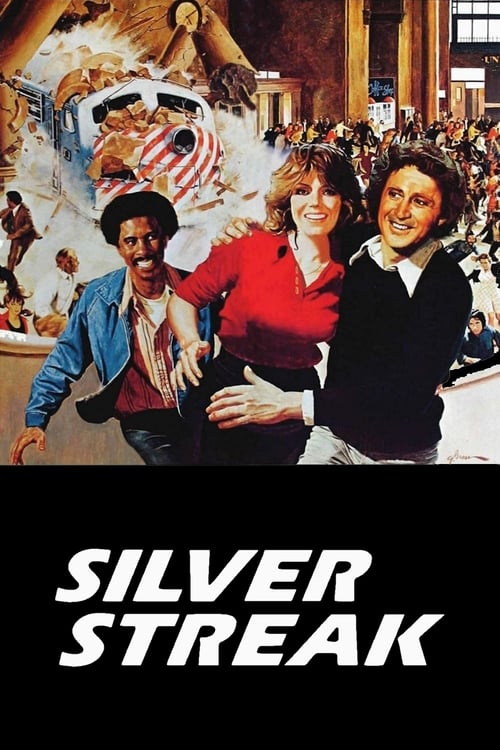
Silver Streak
A somewhat daffy book editor on a rail trip from Los Angeles to Chicago thinks that he sees a murdered man thrown from the train. When he can find no one who will believe him, he starts doing some investigating of his own. But all that accomplishes is to get the killer after him.
Despite its tight budget of $6.5M, Silver Streak became a runaway success, earning $51.1M worldwide—a remarkable 686% return. The film's bold vision engaged audiences, showing that strong storytelling can transcend budget limitations.
Nominated for 1 Oscar. 4 nominations


Plot Structure
Story beats plotted across runtime


Narrative Arc
Emotional journey through the story's key moments
Story Circle
Blueprint 15-beat structure
Arcplot Score Breakdown
Weighted: Precision (70%) + Arc (15%) + Theme (15%)
Silver Streak (1976) demonstrates precise dramatic framework, characteristic of Arthur Hiller's storytelling approach. This structural analysis examines how the film's 15-point plot structure maps to proven narrative frameworks across 1 hour and 54 minutes. With an Arcplot score of 7.3, the film balances conventional beats with creative variation.
Characters
Cast & narrative archetypes

George Caldwell
Grover Muldoon
Hilly Burns
Roger Devereau
Bob Sweet
Main Cast & Characters
George Caldwell
Played by Gene Wilder
A mild-mannered book editor who becomes entangled in a murder mystery aboard a cross-country train. Ordinary man thrust into extraordinary circumstances.
Grover Muldoon
Played by Richard Pryor
A fast-talking, street-smart car thief who becomes George's unlikely ally. Provides comic relief and practical survival skills.
Hilly Burns
Played by Jill Clayburgh
A mysterious and alluring woman who draws George into the conspiracy. She is the secretary of the murdered art historian.
Roger Devereau
Played by Patrick McGoohan
A charming art dealer who is actually the main antagonist orchestrating the conspiracy. Ruthless and deceptive behind his cultured facade.
Bob Sweet
Played by Ned Beatty
Devereau's chief enforcer and henchman. A menacing presence who pursues George throughout the film.
Structural Analysis
The Status Quo at 1 minutes (1% through the runtime) establishes George Caldwell, a mild-mannered book editor, boards the Silver Streak train from Los Angeles to Chicago, seeking a quiet, uneventful journey across the country.. Significantly, this early placement immediately immerses viewers in the story world.
The inciting incident occurs at 14 minutes when George witnesses a body being thrown from the train while looking out Hilly's window. The murdered man is Professor Schreiner, an art historian, and George's quiet trip suddenly becomes dangerous.. At 12% through the film, this Disruption aligns precisely with traditional story structure. This beat shifts the emotional landscape, launching the protagonist into the central conflict.
The First Threshold at 29 minutes marks the transition into Act II, occurring at 25% of the runtime. This indicates the protagonist's commitment to George actively chooses to re-board the train (with help from a farmer) to save Hilly and expose the conspiracy, committing himself to the dangerous adventure despite his cautious nature., moving from reaction to action.
At 57 minutes, the Midpoint arrives at 50% of the runtime—precisely centered, creating perfect narrative symmetry. Of particular interest, this crucial beat George discovers that Hilly has been working with Devereau all along. The woman he trusted and fell for is part of the conspiracy, devastating him and raising the stakes dramatically., fundamentally raising what's at risk. The emotional intensity shifts, dividing the narrative into clear before-and-after phases.
The Collapse moment at 86 minutes (75% through) represents the emotional nadir. Here, George is drugged and framed as the killer, arrested by federal agents. His reputation destroyed and facing criminal charges, he hits rock bottom with all hope seemingly lost., shows the protagonist at their lowest point. This beat's placement in the final quarter sets up the climactic reversal.
The Second Threshold at 91 minutes initiates the final act resolution at 80% of the runtime. Grover helps George escape custody in disguise as a Black man, providing the breakthrough needed. George synthesizes his new boldness with his intelligence, ready for the final confrontation., demonstrating the transformation achieved throughout the journey.
Emotional Journey
Silver Streak's emotional architecture traces a deliberate progression across 15 carefully calibrated beats.
Narrative Framework
This structural analysis employs structural analysis methodology used to understand storytelling architecture. By mapping Silver Streak against these established plot points, we can identify how Arthur Hiller utilizes or subverts traditional narrative conventions. The plot point approach reveals not only adherence to structural principles but also creative choices that distinguish Silver Streak within the comedy genre.
Arthur Hiller's Structural Approach
Among the 10 Arthur Hiller films analyzed on Arcplot, the average structural score is 7.2, reflecting strong command of classical structure. Silver Streak represents one of the director's most structurally precise works. For comparative analysis, explore the complete Arthur Hiller filmography.
Comparative Analysis
Additional comedy films include The Bad Guys, Ella Enchanted and The Evening Star. For more Arthur Hiller analyses, see The Babe, The In-Laws and Author! Author!.
Plot Points by Act
Act I
SetupStatus Quo
George Caldwell, a mild-mannered book editor, boards the Silver Streak train from Los Angeles to Chicago, seeking a quiet, uneventful journey across the country.
Theme
Bob Sweet, George's friend, encourages him to loosen up and take risks, suggesting that life is about adventure and stepping outside your comfort zone.
Worldbuilding
George settles into train life, meeting various passengers and establishing his cautious, bookish nature. He meets the alluring Hilly Burns and becomes intrigued, beginning to open up to the possibility of adventure.
Disruption
George witnesses a body being thrown from the train while looking out Hilly's window. The murdered man is Professor Schreiner, an art historian, and George's quiet trip suddenly becomes dangerous.
Resistance
George tries to report the murder but no one believes him. He's thrown off the train by villains led by Roger Devereau. He debates whether to give up or pursue the truth, becoming increasingly entangled in the mystery.
Act II
ConfrontationFirst Threshold
George actively chooses to re-board the train (with help from a farmer) to save Hilly and expose the conspiracy, committing himself to the dangerous adventure despite his cautious nature.
Mirror World
George meets Grover Muldoon, a car thief who becomes his unlikely ally and guide in the criminal world. Grover represents the street-smart, bold approach to life that George lacks.
Premise
George and Grover work together on the train, investigating the art forgery conspiracy. George learns to be resourceful and daring, navigating danger while growing closer to Hilly and uncovering Devereau's plot.
Midpoint
George discovers that Hilly has been working with Devereau all along. The woman he trusted and fell for is part of the conspiracy, devastating him and raising the stakes dramatically.
Opposition
George is captured and held prisoner by Devereau's men. The villains close in as the train approaches Chicago. George must escape while dealing with the betrayal and the increasing danger to his life.
Collapse
George is drugged and framed as the killer, arrested by federal agents. His reputation destroyed and facing criminal charges, he hits rock bottom with all hope seemingly lost.
Crisis
In custody and desperate, George struggles with his darkest moment. He must find inner strength and resourcefulness he never knew he had to clear his name.
Act III
ResolutionSecond Threshold
Grover helps George escape custody in disguise as a Black man, providing the breakthrough needed. George synthesizes his new boldness with his intelligence, ready for the final confrontation.
Synthesis
George and Grover commandeer the train, racing toward Union Station. In the climactic finale, George confronts Devereau, saves Hilly (who was actually an undercover agent), and crashes the train into the station, stopping the villains.
Transformation
George, no longer the timid book editor, walks away from the wreckage as a confident hero with Hilly by his side, having embraced adventure and proven his courage.