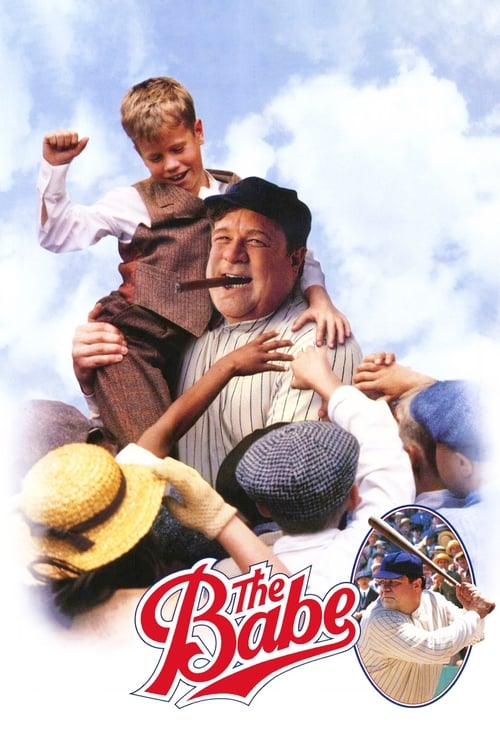
The Babe
A chronicle of Babe Ruth's phenomenal story--from his hard knock beginnings at a Baltimore orphanage, to his meteoric rise to baseball superstardom and his poignant retirement from the game. His amazing career included seven American League pennants, four World Series championships, two tempestuous marriages and a wild lifestyle that earned him numerous suspensions.
The film earned $17.5M at the global box office.


Plot Structure
Story beats plotted across runtime


Narrative Arc
Emotional journey through the story's key moments
Story Circle
Blueprint 15-beat structure
Arcplot Score Breakdown
Weighted: Precision (70%) + Arc (15%) + Theme (15%)
The Babe (1992) demonstrates meticulously timed story structure, characteristic of Arthur Hiller's storytelling approach. This structural analysis examines how the film's 15-point plot structure maps to proven narrative frameworks across 1 hour and 55 minutes. With an Arcplot score of 7.2, the film balances conventional beats with creative variation.
Characters
Cast & narrative archetypes

Babe Ruth
Claire Hodgson Ruth
Helen Ruth
Brother Matthias
Miller Huggins
Colonel Jacob Ruppert
Main Cast & Characters
Babe Ruth
Played by John Goodman
Legendary baseball player whose rise from troubled orphan to home run king is marked by excess, charisma, and inner demons.
Claire Hodgson Ruth
Played by Kelly McGillis
Babe's second wife who provides stability and unconditional love despite his repeated infidelities and reckless behavior.
Helen Ruth
Played by Trini Alvarado
Babe's first wife whose marriage deteriorates due to his fame, drinking, and womanizing.
Brother Matthias
Played by James Cromwell
The stern but caring monk at St. Mary's who becomes Babe's father figure and teaches him baseball.
Miller Huggins
Played by J.C. Quinn
Yankees manager who tries to discipline and guide Babe while managing his volatile personality.
Colonel Jacob Ruppert
Played by Bernard Kates
Yankees owner who signs Babe and struggles to control his biggest star's behavior.
Structural Analysis
The Status Quo at 1 minutes (1% through the runtime) establishes Young George Ruth lives in squalor at St. Mary's Industrial School for Boys in Baltimore, an orphaned, troubled child with no clear future beyond the harsh institutional walls.. The analysis reveals that this early placement immediately immerses viewers in the story world.
The inciting incident occurs at 13 minutes when Jack Dunn of the Baltimore Orioles scouts Babe and offers him a professional contract, pulling him from the only stable home he's known into the world of professional baseball.. At 12% through the film, this Disruption aligns precisely with traditional story structure. This beat shifts the emotional landscape, launching the protagonist into the central conflict.
The First Threshold at 28 minutes marks the transition into Act II, occurring at 24% of the runtime. This illustrates the protagonist's commitment to Babe arrives in Boston and commits to becoming a major league star. He actively chooses to embrace both the game and the lifestyle, declaring himself ready for the big time., moving from reaction to action.
At 56 minutes, the Midpoint arrives at 49% of the runtime—precisely centered, creating perfect narrative symmetry. Notably, this crucial beat Babe is sold to the New York Yankees for a record sum and becomes the highest-paid player in baseball. False victory: he's at the peak of fame and wealth, but his personal demons and self-destructive behavior are about to catch up with him., fundamentally raising what's at risk. The emotional intensity shifts, dividing the narrative into clear before-and-after phases.
The Collapse moment at 84 minutes (73% through) represents the emotional nadir. Here, Helen dies in a house fire—a literal death representing Babe's loss of his moral center and the consequences of his neglect. He realizes too late that he destroyed the one person who truly loved him., shows the protagonist at their lowest point. This beat's placement in the final quarter sets up the climactic reversal.
The Second Threshold at 90 minutes initiates the final act resolution at 79% of the runtime. Babe visits a sick child in the hospital and promises to hit a home run for him. This moment of genuine connection and purpose—choosing to be a hero for someone else—catalyzes his redemption. He rediscovers meaning beyond himself., demonstrating the transformation achieved throughout the journey.
Emotional Journey
The Babe's emotional architecture traces a deliberate progression across 15 carefully calibrated beats.
Narrative Framework
This structural analysis employs systematic plot point analysis that identifies crucial turning points. By mapping The Babe against these established plot points, we can identify how Arthur Hiller utilizes or subverts traditional narrative conventions. The plot point approach reveals not only adherence to structural principles but also creative choices that distinguish The Babe within the drama genre.
Arthur Hiller's Structural Approach
Among the 10 Arthur Hiller films analyzed on Arcplot, the average structural score is 7.2, reflecting strong command of classical structure. The Babe represents one of the director's most structurally precise works. For comparative analysis, explore the complete Arthur Hiller filmography.
Comparative Analysis
Additional drama films include After Thomas, South Pacific and Dirty Dancing: Havana Nights. For more Arthur Hiller analyses, see Silver Streak, The In-Laws and Author! Author!.
Plot Points by Act
Act I
SetupStatus Quo
Young George Ruth lives in squalor at St. Mary's Industrial School for Boys in Baltimore, an orphaned, troubled child with no clear future beyond the harsh institutional walls.
Theme
Brother Matthias tells young Babe: "You've got a gift, George. But gifts aren't worth a damn unless you know what to do with them." The theme of talent versus character is established.
Worldbuilding
Establishing Babe's origins at St. Mary's, his discovery of baseball, his relationship with Brother Matthias, and his raw, undisciplined talent. Shows his impulsive nature, hunger for love and approval, and appetite for life's pleasures.
Disruption
Jack Dunn of the Baltimore Orioles scouts Babe and offers him a professional contract, pulling him from the only stable home he's known into the world of professional baseball.
Resistance
Babe navigates minor league baseball, earns his nickname "Babe" (Dunn's newest "babe"), experiences his first taste of fame and excess. Struggles with discipline, drinks heavily, chases women. Gets sold to the Boston Red Sox.
Act II
ConfrontationFirst Threshold
Babe arrives in Boston and commits to becoming a major league star. He actively chooses to embrace both the game and the lifestyle, declaring himself ready for the big time.
Mirror World
Babe meets and falls for Helen Woodford, a waitress who represents stability, normalcy, and genuine love—everything his chaotic life lacks. She becomes his emotional anchor and thematic mirror.
Premise
The promise of the premise: Babe Ruth becoming Babe Ruth. Record-breaking home runs, World Series victories, celebrity excess, marriage to Helen, adoption of daughter Dorothy. Peak fun and games showing the legend at his most powerful and charismatic.
Midpoint
Babe is sold to the New York Yankees for a record sum and becomes the highest-paid player in baseball. False victory: he's at the peak of fame and wealth, but his personal demons and self-destructive behavior are about to catch up with him.
Opposition
Babe's drinking, womanizing, and childish behavior intensify. Helen grows distant and unhappy. His health deteriorates. Manager Miller Huggins confronts him. Media criticism mounts. Yankees struggle. His relationship with Helen collapses as she retreats into isolation.
Collapse
Helen dies in a house fire—a literal death representing Babe's loss of his moral center and the consequences of his neglect. He realizes too late that he destroyed the one person who truly loved him.
Crisis
Babe spirals into grief and self-loathing. He drinks more, becomes reckless. Faces his own mortality and emptiness. The dark night where he must confront who he's become and what he's lost.
Act III
ResolutionSecond Threshold
Babe visits a sick child in the hospital and promises to hit a home run for him. This moment of genuine connection and purpose—choosing to be a hero for someone else—catalyzes his redemption. He rediscovers meaning beyond himself.
Synthesis
Babe delivers on his promise with the legendary "Called Shot" home run in the 1932 World Series. He reconciles with his past, accepts his flaws, and commits to being there for his adopted daughters. Finale shows him making peace with his legacy.
Transformation
Elderly, dying Babe at Yankee Stadium's 25th anniversary, beloved by thousands. The boy from St. Mary's has become an icon, flawed but redeemed through his gift to the game and the joy he brought to others. He waves goodbye, at peace.