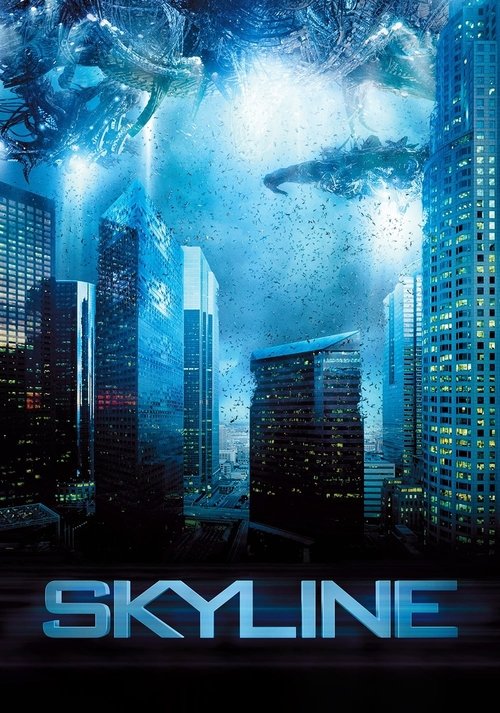
Skyline
When strange lights descend on the city of Los Angeles, people are drawn outside like moths to a flame where an extraterrestrial force threatens to swallow the entire human population off the face of the Earth. Now the band of survivors must fight for their lives as the world unravels around them.
Despite its small-scale budget of $10.5M, Skyline became a box office phenomenon, earning $67.0M worldwide—a remarkable 538% return. The film's distinctive approach attracted moviegoers, proving that strong storytelling can transcend budget limitations.


Plot Structure
Story beats plotted across runtime


Narrative Arc
Emotional journey through the story's key moments
Story Circle
Blueprint 15-beat structure
Arcplot Score Breakdown
Weighted: Precision (70%) + Arc (15%) + Theme (15%)
Skyline (2010) showcases deliberately positioned narrative design, characteristic of Colin Strause's storytelling approach. This structural analysis examines how the film's 15-point plot structure maps to proven narrative frameworks across 1 hour and 32 minutes. With an Arcplot score of 7.4, the film balances conventional beats with creative variation.
Characters
Cast & narrative archetypes

Jarrod
Elaine
Terry
Candice
Oliver
Main Cast & Characters
Jarrod
Played by Eric Balfour
An artist visiting Los Angeles who becomes the de facto leader during the alien invasion, fighting to protect his pregnant girlfriend.
Elaine
Played by Scottie Thompson
Jarrod's pregnant girlfriend who struggles to survive the invasion while dealing with her pregnancy.
Terry
Played by Donald Faison
A successful special effects artist and Jarrod's best friend who invited them to LA, struggles with ego and survival instincts.
Candice
Played by Brittany Daniel
Terry's girlfriend and aspiring actress, caught between Terry's infidelity and the alien threat.
Oliver
Played by David Zayas
The building concierge and military veteran who provides tactical knowledge and survival skills.
Structural Analysis
The Status Quo at 1 minutes (1% through the runtime) establishes Jarrod and Elaine arrive in Los Angeles for Terry's birthday party, showing their ordinary life and relationship struggles as they contemplate starting a family.. The analysis reveals that this early placement immediately immerses viewers in the story world.
The inciting incident occurs at 11 minutes when Strange blue lights descend from the sky during the night, hypnotizing anyone who looks at them and beginning the alien abduction assault on Los Angeles.. At 11% through the film, this Disruption aligns precisely with traditional story structure. This beat shifts the emotional landscape, launching the protagonist into the central conflict.
The First Threshold at 22 minutes marks the transition into Act II, occurring at 24% of the runtime. This illustrates the protagonist's commitment to Jarrod decides they must actively try to survive and escape rather than wait passively. The group commits to leaving the penthouse and reaching the marina despite the dangers., moving from reaction to action.
At 44 minutes, the Midpoint arrives at 48% of the runtime—precisely centered, creating perfect narrative symmetry. Notably, this crucial beat A nuclear strike against the mothership initially appears successful, giving false hope, but the aliens survive and the mothership regenerates, revealing the true hopelessness of humanity's situation., fundamentally raising what's at risk. The emotional intensity shifts, dividing the narrative into clear before-and-after phases.
The Collapse moment at 69 minutes (75% through) represents the emotional nadir. Here, The building is breached by aliens, Oliver dies, and Jarrod and Elaine are separated from any hope of escape as the mothership positions directly overhead to harvest everyone remaining., reveals the protagonist at their lowest point. This beat's placement in the final quarter sets up the climactic reversal.
The Second Threshold at 73 minutes initiates the final act resolution at 79% of the runtime. Jarrod and Elaine are pulled into the mothership. Rather than resist the inevitable, Jarrod embraces his strange connection to the aliens while maintaining his core identity and mission to protect Elaine., demonstrating the transformation achieved throughout the journey.
Emotional Journey
Skyline's emotional architecture traces a deliberate progression across 15 carefully calibrated beats.
Narrative Framework
This structural analysis employs proven narrative structure principles that track dramatic progression. By mapping Skyline against these established plot points, we can identify how Colin Strause utilizes or subverts traditional narrative conventions. The plot point approach reveals not only adherence to structural principles but also creative choices that distinguish Skyline within the science fiction genre.
Colin Strause's Structural Approach
Among the 2 Colin Strause films analyzed on Arcplot, the average structural score is 7.3, reflecting strong command of classical structure. Skyline represents one of the director's most structurally precise works. For comparative analysis, explore the complete Colin Strause filmography.
Comparative Analysis
Additional science fiction films include The Postman, Mad Max 2 and AVP: Alien vs. Predator. For more Colin Strause analyses, see Aliens vs Predator: Requiem.
Plot Points by Act
Act I
SetupStatus Quo
Jarrod and Elaine arrive in Los Angeles for Terry's birthday party, showing their ordinary life and relationship struggles as they contemplate starting a family.
Theme
Terry discusses success and dreams in LA, hinting at the theme of survival versus temptation - "Sometimes you gotta take what you want."
Worldbuilding
The party at Terry's penthouse establishes the characters, relationships, and tensions: Jarrod and Elaine's pregnancy concerns, Terry's success and offer to Jarrod, Candice's affair with Terry, and the group's dynamics.
Disruption
Strange blue lights descend from the sky during the night, hypnotizing anyone who looks at them and beginning the alien abduction assault on Los Angeles.
Resistance
The group debates what to do as they witness the alien attack: stay hidden in the penthouse or try to escape. They observe the aliens harvesting humans and the military's failed response.
Act II
ConfrontationFirst Threshold
Jarrod decides they must actively try to survive and escape rather than wait passively. The group commits to leaving the penthouse and reaching the marina despite the dangers.
Mirror World
Jarrod's relationship with Elaine and their unborn child becomes the emotional anchor - representing what humanity fights to preserve against the alien threat.
Premise
The group fights for survival against various alien forms, experiencing the full horror of the invasion: attempted escapes, discovering the aliens' abilities, witnessing mass abductions, and learning the aliens harvest human brains.
Midpoint
A nuclear strike against the mothership initially appears successful, giving false hope, but the aliens survive and the mothership regenerates, revealing the true hopelessness of humanity's situation.
Opposition
The aliens intensify their assault, the group fragments under pressure, Terry dies trying to fight back, and Jarrod becomes increasingly affected by the alien light, showing physical changes and strange connection to them.
Collapse
The building is breached by aliens, Oliver dies, and Jarrod and Elaine are separated from any hope of escape as the mothership positions directly overhead to harvest everyone remaining.
Crisis
Jarrod and Elaine face their imminent abduction, sharing a final moment together as they accept their fate but refuse to give up their humanity and love for each other.
Act III
ResolutionSecond Threshold
Jarrod and Elaine are pulled into the mothership. Rather than resist the inevitable, Jarrod embraces his strange connection to the aliens while maintaining his core identity and mission to protect Elaine.
Synthesis
Inside the mothership, the aliens extract Jarrod's brain and place it in an alien creature, but his consciousness and humanity survive. Jarrod-alien fights off other aliens to protect Elaine, proving love transcends physical form.
Transformation
Jarrod's brain glows blue inside the alien body as he recognizes and protects Elaine, showing that humanity's consciousness and capacity for love cannot be destroyed even when the body is taken.