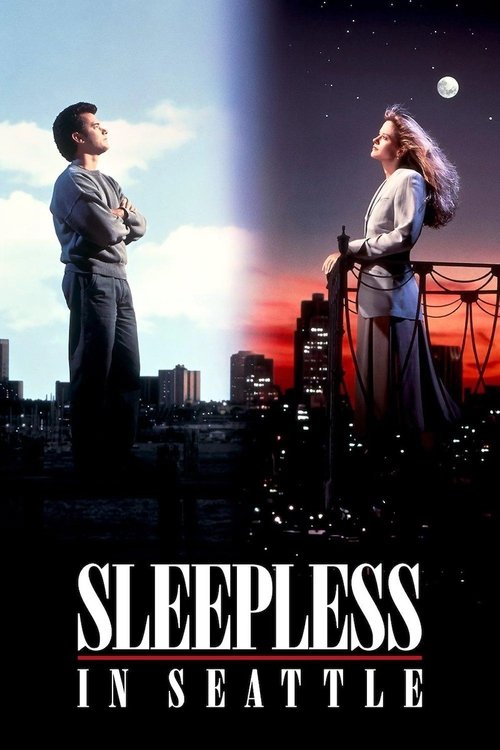
Sleepless in Seattle
After the death of his mother, a young boy calls a radio station in an attempt to set his father up on a date. Talking about his father’s loneliness soon leads to a meeting with a young female journalist, who has flown to Seattle to write a story about the boy and his father.
Despite a moderate budget of $21.0M, Sleepless in Seattle became a box office phenomenon, earning $227.8M worldwide—a remarkable 985% return.
Nominated for 2 Oscars. 4 wins & 19 nominations


Plot Structure
Story beats plotted across runtime


Narrative Arc
Emotional journey through the story's key moments
Story Circle
Blueprint 15-beat structure
Arcplot Score Breakdown
Weighted: Precision (70%) + Arc (15%) + Theme (15%)
Sleepless in Seattle (1993) exhibits strategically placed plot construction, characteristic of Nora Ephron's storytelling approach. This structural analysis examines how the film's 15-point plot structure maps to proven narrative frameworks across 1 hour and 45 minutes. With an Arcplot score of 7.4, the film balances conventional beats with creative variation.
Characters
Cast & narrative archetypes

Sam Baldwin
Annie Reed
Jonah Baldwin
Becky
Walter
Greg
Suzy
Main Cast & Characters
Sam Baldwin
Played by Tom Hanks
A widowed architect struggling with grief who moves to Seattle with his son, seeking a fresh start.
Annie Reed
Played by Meg Ryan
A Baltimore journalist engaged to Walter but drawn to Sam after hearing him on the radio.
Jonah Baldwin
Played by Ross Malinger
Sam's precocious 8-year-old son who calls a radio show to find his father a new wife.
Becky
Played by Rosie O'Donnell
Annie's best friend and editor who encourages her romantic quest despite her engagement.
Walter
Played by Bill Pullman
Annie's well-meaning but allergic fiancé who represents safe, predictable love.
Greg
Played by Victor Garber
Sam's friend and confidant who encourages him to start dating again.
Suzy
Played by Rita Wilson
Sam's sister who worries about him and tries to set him up on dates.
Structural Analysis
The Status Quo at 1 minutes (1% through the runtime) establishes Sam Baldwin stands at his wife Maggie's funeral in Chicago, devastated and hollow. His son Jonah watches his father grieve, establishing a family shattered by loss.. Of particular interest, this early placement immediately immerses viewers in the story world.
The inciting incident occurs at 13 minutes when On Christmas Eve, Jonah calls Dr. Marcia Fieldstone's radio show to find his dad a new wife. Sam is forced onto the phone and vulnerably shares his grief on air, becoming "Sleepless in Seattle." The broadcast goes national, and thousands of women—including Annie—hear his story.. At 12% through the film, this Disruption aligns precisely with traditional story structure. This beat shifts the emotional landscape, launching the protagonist into the central conflict.
The First Threshold at 27 minutes marks the transition into Act II, occurring at 26% of the runtime. This illustrates the protagonist's commitment to Annie convinces her editor to let her write a story in Seattle, using work as a cover to investigate Sam. She actively chooses to pursue this connection, even though she's engaged. This is her irreversible decision to enter the "new world" of possibility., moving from reaction to action.
At 53 minutes, the Midpoint arrives at 50% of the runtime—precisely centered, creating perfect narrative symmetry. The analysis reveals that this crucial beat Annie flies to Seattle and sees Sam at the beach with his son. They share a moment of eye contact across a distance—magic is real. But Sam is with Victoria, and Annie flees. False victory: they've "met," but nothing can happen. Stakes raise: this is real, which makes Annie's engagement a real problem., fundamentally raising what's at risk. The emotional intensity shifts, dividing the narrative into clear before-and-after phases.
The Collapse moment at 79 minutes (76% through) represents the emotional nadir. Here, Annie decides to marry Walter, seemingly giving up on the fantasy. Sam discovers Jonah has flown alone to New York and races after him, unaware of the Empire State Building plan. All is lost—they've missed each other, destiny has failed, and Annie is choosing safety over magic., illustrates the protagonist at their lowest point. This beat's placement in the final quarter sets up the climactic reversal.
The Second Threshold at 85 minutes initiates the final act resolution at 81% of the runtime. Annie sees Walter's allergies and realizes she doesn't love him—she can't marry someone just because it's sensible. She breaks her engagement and chooses to go to the Empire State Building, embracing faith in magic. Sam reunites with Jonah at the observation deck just as it's closing., demonstrating the transformation achieved throughout the journey.
Emotional Journey
Sleepless in Seattle's emotional architecture traces a deliberate progression across 15 carefully calibrated beats.
Narrative Framework
This structural analysis employs a 15-point narrative structure framework that maps key story moments. By mapping Sleepless in Seattle against these established plot points, we can identify how Nora Ephron utilizes or subverts traditional narrative conventions. The plot point approach reveals not only adherence to structural principles but also creative choices that distinguish Sleepless in Seattle within the comedy genre.
Nora Ephron's Structural Approach
Among the 5 Nora Ephron films analyzed on Arcplot, the average structural score is 7.1, reflecting strong command of classical structure. Sleepless in Seattle represents one of the director's most structurally precise works. For comparative analysis, explore the complete Nora Ephron filmography.
Comparative Analysis
Additional comedy films include The Bad Guys, Ella Enchanted and The Evening Star. For more Nora Ephron analyses, see Michael, Julie & Julia and You've Got Mail.
Plot Points by Act
Act I
SetupStatus Quo
Sam Baldwin stands at his wife Maggie's funeral in Chicago, devastated and hollow. His son Jonah watches his father grieve, establishing a family shattered by loss.
Theme
At Christmas dinner in Seattle, Sam's brother Greg says, "It's not like anyone can replace Maggie," and sister Suzy counters that Sam needs to start living again. The theme is stated: can anyone find magic twice, or move on from perfect love?
Worldbuilding
Sam and Jonah have relocated to Seattle to escape painful memories. Sam is a withdrawn architect, going through the motions, unable to move forward. Meanwhile in Baltimore, Annie Reed is a journalist engaged to nice-but-boring Walter. Both protagonists are trapped in their respective emotional states.
Disruption
On Christmas Eve, Jonah calls Dr. Marcia Fieldstone's radio show to find his dad a new wife. Sam is forced onto the phone and vulnerably shares his grief on air, becoming "Sleepless in Seattle." The broadcast goes national, and thousands of women—including Annie—hear his story.
Resistance
Sam receives hundreds of letters from women but resists. He debates whether he can love again, whether it's fair to Maggie's memory. Annie becomes obsessed with Sam's voice, researching him while ignoring her own doubts about Walter. Both resist stepping into the unknown.
Act II
ConfrontationFirst Threshold
Annie convinces her editor to let her write a story in Seattle, using work as a cover to investigate Sam. She actively chooses to pursue this connection, even though she's engaged. This is her irreversible decision to enter the "new world" of possibility.
Mirror World
Annie and her friend Becky watch "An Affair to Remember" together, crying. Becky becomes Annie's thematic guide, encouraging her to believe in magic and destiny. This relationship subplot carries the film's theme: can you trust in romantic fate?
Premise
Annie investigates Sam from afar while he reluctantly starts dating. Comic set pieces include Sam's awkward dinner date with Victoria and Annie spying on Sam's houseboat. Meanwhile, Jonah schemes to bring his dad and Annie together. The premise promised: watching two people unknowingly drawn toward each other.
Midpoint
Annie flies to Seattle and sees Sam at the beach with his son. They share a moment of eye contact across a distance—magic is real. But Sam is with Victoria, and Annie flees. False victory: they've "met," but nothing can happen. Stakes raise: this is real, which makes Annie's engagement a real problem.
Opposition
Annie returns to Walter but can't shake her feelings. Sam continues dating Victoria but it's hollow. Jonah intensifies his campaign, writing Annie to meet at the Empire State Building on Valentine's Day (like "An Affair to Remember"). Time is running out. Both protagonists are pressured to commit to their "safe" choices while destiny pulls them elsewhere.
Collapse
Annie decides to marry Walter, seemingly giving up on the fantasy. Sam discovers Jonah has flown alone to New York and races after him, unaware of the Empire State Building plan. All is lost—they've missed each other, destiny has failed, and Annie is choosing safety over magic.
Crisis
On Valentine's Day in New York, Sam frantically searches for Jonah. Annie goes through with meeting Walter's family. Both are in their darkest emotional place, having seemingly surrendered to the "reasonable" choice. The dream of magic appears dead.
Act III
ResolutionSecond Threshold
Annie sees Walter's allergies and realizes she doesn't love him—she can't marry someone just because it's sensible. She breaks her engagement and chooses to go to the Empire State Building, embracing faith in magic. Sam reunites with Jonah at the observation deck just as it's closing.
Synthesis
Annie arrives at the Empire State Building. Jonah discovers Annie's backpack and realizes she came. Sam, now open to magic because of his son's faith, lingers. The three finally meet face-to-face at the observation deck as it closes. Sam and Annie hold hands, choosing to trust in destiny together.
Transformation
Sam, Annie, and Jonah hold hands in the elevator, descending from the Empire State Building. The closing image mirrors the funeral—Sam is no longer alone and hollow, but whole again. Annie has chosen magic over safety. Both have been transformed by choosing to believe in love.