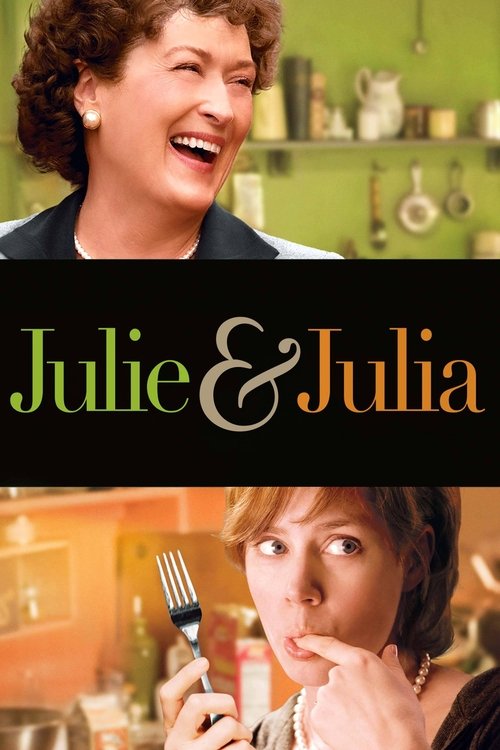
Julie & Julia
Julia Child and Julie Powell – both of whom wrote memoirs – find their lives intertwined. Though separated by time and space, both women are at loose ends... until they discover that with the right combination of passion, fearlessness and butter, anything is possible.
Despite a respectable budget of $40.0M, Julie & Julia became a financial success, earning $129.5M worldwide—a 224% return.
Nominated for 1 Oscar. 26 wins & 48 nominations


Plot Structure
Story beats plotted across runtime


Narrative Arc
Emotional journey through the story's key moments
Story Circle
Blueprint 15-beat structure
Arcplot Score Breakdown
Weighted: Precision (70%) + Arc (15%) + Theme (15%)
Julie & Julia (2009) exemplifies precise narrative architecture, characteristic of Nora Ephron's storytelling approach. This structural analysis examines how the film's 15-point plot structure maps to proven narrative frameworks across 2 hours and 3 minutes. With an Arcplot score of 7.0, the film balances conventional beats with creative variation.
Characters
Cast & narrative archetypes

Julie Powell
Julia Child
Eric Powell
Paul Child
Simone Beck
Louisette Bertholle
Main Cast & Characters
Julie Powell
Played by Amy Adams
A frustrated government worker who decides to cook all 524 recipes from Julia Child's cookbook in one year and blog about it.
Julia Child
Played by Meryl Streep
An American woman living in Paris who discovers her passion for French cooking and becomes a culinary icon.
Eric Powell
Played by Chris Messina
Julie's supportive husband who encourages her blogging project despite the chaos it brings to their lives.
Paul Child
Played by Stanley Tucci
Julia's devoted husband who supports her culinary pursuits and shares her love of French culture.
Simone Beck
Played by Linda Emond
Julia's French cooking partner and co-author who helps develop the cookbook.
Louisette Bertholle
Played by Helen Carey
The third member of Julia's cooking collaboration team in Paris.
Structural Analysis
The Status Quo at 1 minutes (1% through the runtime) establishes Julie Powell lies awake in her Queens apartment at 3 AM, restless and unfulfilled in her post-9/11 call center job. Parallel opening of Julia Child arriving in Paris in 1949, equally adrift as a diplomatic wife searching for purpose.. Structural examination shows that this early placement immediately immerses viewers in the story world.
The inciting incident occurs at 14 minutes when Julie decides to cook all 524 recipes from Julia Child's "Mastering the Art of French Cooking" in 365 days and blog about it. Julia enrolls in Le Cordon Bleu cooking school, the only woman in a class of men.. At 11% through the film, this Disruption aligns precisely with traditional story structure. This beat shifts the emotional landscape, launching the protagonist into the central conflict.
The First Threshold at 30 minutes marks the transition into Act II, occurring at 24% of the runtime. This shows the protagonist's commitment to Julie publishes her first blog post and commits publicly to the 365-day project. Julia passes her cooking exam with highest marks and decisively commits to mastering French cuisine, no longer a dabbler but a dedicated chef., moving from reaction to action.
At 62 minutes, the Midpoint arrives at 50% of the runtime—precisely centered, creating perfect narrative symmetry. Notably, this crucial beat Julie gets national media attention - a mention in the New York Times brings flood of readers. False victory: fame seems imminent. Julia and collaborators finish manuscript and submit to Houghton Mifflin, believing publication is near. Both women experience validation and raised stakes., fundamentally raising what's at risk. The emotional intensity shifts, dividing the narrative into clear before-and-after phases.
The Collapse moment at 91 minutes (74% through) represents the emotional nadir. Here, Julie and Eric have a devastating fight about her blog obsession; he walks out, and she faces the possibility of losing her marriage over the project. Julia learns her collaborator Louisette has been forced off the book project, a betrayal that threatens everything., demonstrates the protagonist at their lowest point. This beat's placement in the final quarter sets up the climactic reversal.
The Second Threshold at 97 minutes initiates the final act resolution at 79% of the runtime. Julie realizes the project was never about fame but about finding herself and her voice. Eric returns, understanding her need to finish. Julia receives the call that Knopf will publish the cookbook - vindication after years of rejection., demonstrating the transformation achieved throughout the journey.
Emotional Journey
Julie & Julia's emotional architecture traces a deliberate progression across 15 carefully calibrated beats.
Narrative Framework
This structural analysis employs proven narrative structure principles that track dramatic progression. By mapping Julie & Julia against these established plot points, we can identify how Nora Ephron utilizes or subverts traditional narrative conventions. The plot point approach reveals not only adherence to structural principles but also creative choices that distinguish Julie & Julia within the romance genre.
Nora Ephron's Structural Approach
Among the 5 Nora Ephron films analyzed on Arcplot, the average structural score is 7.1, reflecting strong command of classical structure. Julie & Julia takes a more unconventional approach compared to the director's typical style. For comparative analysis, explore the complete Nora Ephron filmography.
Comparative Analysis
Additional romance films include South Pacific, Dirty Dancing: Havana Nights and The Evening Star. For more Nora Ephron analyses, see Michael, Sleepless in Seattle and You've Got Mail.
Plot Points by Act
Act I
SetupStatus Quo
Julie Powell lies awake in her Queens apartment at 3 AM, restless and unfulfilled in her post-9/11 call center job. Parallel opening of Julia Child arriving in Paris in 1949, equally adrift as a diplomatic wife searching for purpose.
Theme
Julia's husband Paul tells her, "You are the butter to my bread, the breath to my life," establishing the theme of finding one's passion and the supportive relationships that enable transformation.
Worldbuilding
Dual timelines establish both women's ordinary worlds. Julie: stuck in Queens, turning 30, surrounded by successful friends, marriage strained by monotony. Julia: expatriate in Paris, struggling to find meaningful occupation, attempting hat-making and bridge lessons without fulfillment.
Disruption
Julie decides to cook all 524 recipes from Julia Child's "Mastering the Art of French Cooking" in 365 days and blog about it. Julia enrolls in Le Cordon Bleu cooking school, the only woman in a class of men.
Resistance
Julie debates whether she can actually complete the project while working full-time. Her husband Eric is supportive but skeptical. Julia faces dismissal and condescension from male instructors and fellow students. Both women grapple with self-doubt and the magnitude of their chosen challenges.
Act II
ConfrontationFirst Threshold
Julie publishes her first blog post and commits publicly to the 365-day project. Julia passes her cooking exam with highest marks and decisively commits to mastering French cuisine, no longer a dabbler but a dedicated chef.
Mirror World
Julie begins to feel Julia's presence as a spiritual mentor through the cookbook. The intercut structure deepens as Julie reads Julia's letters and feels connected across time. Julia's relationship with Simca and Louisette begins as they plan to write a cookbook together.
Premise
The fun of both projects unfolds. Julie cooks elaborate recipes, gains blog readers, and experiences small victories (mastering boeuf bourguignon, aspic). Julia collaborates on the cookbook, tests recipes obsessively, and finds her calling. Both marriages strengthen through shared purpose.
Midpoint
Julie gets national media attention - a mention in the New York Times brings flood of readers. False victory: fame seems imminent. Julia and collaborators finish manuscript and submit to Houghton Mifflin, believing publication is near. Both women experience validation and raised stakes.
Opposition
Pressure mounts for Julie as the project consumes her life. Friends criticize her obsession, work suffers, marriage strains under the relentless pace. Julia faces repeated publisher rejections, years of revisions, and professional setbacks. The joy turns to grinding persistence.
Collapse
Julie and Eric have a devastating fight about her blog obsession; he walks out, and she faces the possibility of losing her marriage over the project. Julia learns her collaborator Louisette has been forced off the book project, a betrayal that threatens everything.
Crisis
Julie contemplates quitting the blog but realizes she's lost herself in the process. Dark night alone in her apartment. Julia grieves the loss of her friend and questions whether the cookbook will ever be published after nearly a decade of work.
Act III
ResolutionSecond Threshold
Julie realizes the project was never about fame but about finding herself and her voice. Eric returns, understanding her need to finish. Julia receives the call that Knopf will publish the cookbook - vindication after years of rejection.
Synthesis
Julie completes all 524 recipes on day 365, achieving her goal with renewed purpose and marriage intact. Julia's book becomes a phenomenon, leading to her TV career and culinary immortality. Both women reach their transformations through commitment and support.
Transformation
Julie visits Julia Child's kitchen preserved at the Smithsonian, paying homage to her spiritual mentor. She has found her voice as a writer and renewed sense of purpose. Mirror of opening: once lost, now found through dedication to craft and passion.