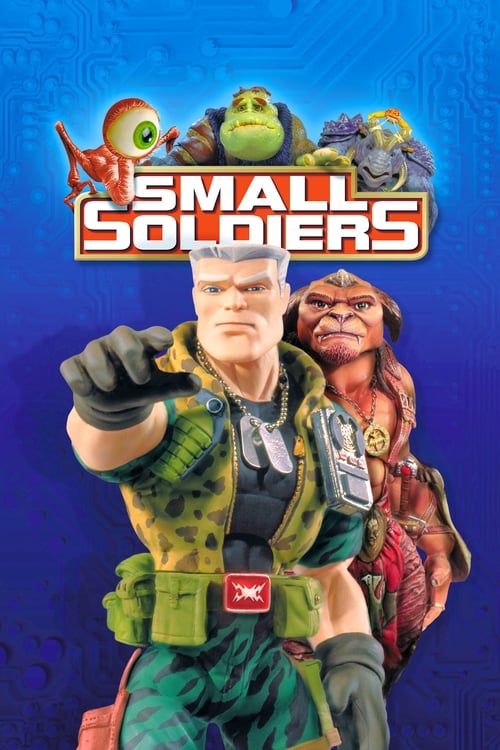
Small Soldiers
When missile technology is used to enhance toy action figures, the toys soon begin to take their battle programming too seriously.
Working with a mid-range budget of $40.0M, the film achieved a steady performer with $54.7M in global revenue (+37% profit margin).


Plot Structure
Story beats plotted across runtime


Narrative Arc
Emotional journey through the story's key moments
Story Circle
Blueprint 15-beat structure
Arcplot Score Breakdown
Weighted: Precision (70%) + Arc (15%) + Theme (15%)
Small Soldiers (1998) exhibits meticulously timed dramatic framework, characteristic of Joe Dante's storytelling approach. This structural analysis examines how the film's 15-point plot structure maps to proven narrative frameworks across 1 hour and 50 minutes. With an Arcplot score of 6.5, the film balances conventional beats with creative variation.
Characters
Cast & narrative archetypes

Alan Abernathy
Chip Hazard
Archer
Christy Fimple
Stuart Abernathy
Brick Bazooka
Phil Fimple
Irwin Wayfair
Main Cast & Characters
Alan Abernathy
Played by Gregory Smith
A teenage boy who accidentally activates military AI chips in action figures, becoming caught in a war between toy soldiers.
Chip Hazard
Played by Tommy Lee Jones
The ruthless leader of the Commando Elite action figures, programmed with military AI to destroy the Gorgonites at any cost.
Archer
Played by Frank Langella
The wise and peaceful leader of the Gorgonite toys, seeking only to find their homeland of Gorgon and avoid conflict.
Christy Fimple
Played by Kirsten Dunst
Alan's neighbor and love interest who gets drawn into the toy war and helps defend against the Commando Elite.
Stuart Abernathy
Played by Kevin Dunn
Alan's father who owns a failing toy store and reluctantly agrees to sell the Commando Elite toys.
Brick Bazooka
Played by George Kennedy
A heavily-armed member of the Commando Elite, loyal to Chip Hazard and the mission to eliminate the Gorgonites.
Phil Fimple
Played by Phil Hartman
Christy's uptight father and the Abernathy family's new neighbor who values order and conformity.
Irwin Wayfair
Played by David Cross
The eccentric toy designer who created the Gorgonites with a peaceful narrative, frustrated by corporate interference.
Structural Analysis
The Status Quo at 1 minutes (1% through the runtime) establishes At Globotech Industries, weapons designer Larry Benson works on military microchips while toy designer Irwin Wayfair creates peaceful Gorgonite figures, establishing the corporate world that will unleash chaos.. The analysis reveals that this early placement immediately immerses viewers in the story world.
The inciting incident occurs at 13 minutes when Alan activates the toys and sells a Commando Elite figure. That night, Chip Hazard and his squad awaken with full AI consciousness, immediately beginning their programmed mission to destroy the Gorgonites - who are hiding in Alan's home.. At 12% through the film, this Disruption aligns precisely with traditional story structure. This beat shifts the emotional landscape, launching the protagonist into the central conflict.
The First Threshold at 28 minutes marks the transition into Act II, occurring at 25% of the runtime. This shows the protagonist's commitment to Alan makes the choice to protect the Gorgonites after Chip Hazard launches a coordinated attack on his home. He actively hides and defends Archer and the others, accepting responsibility for creatures his father told him to get rid of., moving from reaction to action.
At 55 minutes, the Midpoint arrives at 50% of the runtime—precisely centered, creating perfect narrative symmetry. Structural examination shows that this crucial beat The Commandos capture Christy and take her hostage in her own home. Chip Hazard issues an ultimatum: surrender the Gorgonites or Christy dies. The stakes escalate from property damage to human life, and Alan realizes this is now a real war with real consequences., fundamentally raising what's at risk. The emotional intensity shifts, dividing the narrative into clear before-and-after phases.
The Collapse moment at 83 minutes (75% through) represents the emotional nadir. Here, The Commando Elite launch their full assault. Alan's home is devastated, the Gorgonites are scattered and wounded, and Archer appears to be destroyed. Alan has lost everything - his home is in ruins, his protectors are defeated, and the enemy controls the battlefield., shows the protagonist at their lowest point. This beat's placement in the final quarter sets up the climactic reversal.
The Second Threshold at 88 minutes initiates the final act resolution at 80% of the runtime. Alan realizes they can use the power lines and electrical systems to create an EMP. He rallies the surviving Gorgonites and his family, choosing to stand and fight rather than flee. Archer, damaged but alive, joins him - embodying the courage Alan has learned., demonstrating the transformation achieved throughout the journey.
Emotional Journey
Small Soldiers's emotional architecture traces a deliberate progression across 15 carefully calibrated beats.
Narrative Framework
This structural analysis employs structural analysis methodology used to understand storytelling architecture. By mapping Small Soldiers against these established plot points, we can identify how Joe Dante utilizes or subverts traditional narrative conventions. The plot point approach reveals not only adherence to structural principles but also creative choices that distinguish Small Soldiers within the comedy genre.
Joe Dante's Structural Approach
Among the 10 Joe Dante films analyzed on Arcplot, the average structural score is 7.0, reflecting strong command of classical structure. Small Soldiers takes a more unconventional approach compared to the director's typical style. For comparative analysis, explore the complete Joe Dante filmography.
Comparative Analysis
Additional comedy films include The Bad Guys, Ella Enchanted and The Evening Star. For more Joe Dante analyses, see The Howling, Explorers and Matinee.
Plot Points by Act
Act I
SetupStatus Quo
At Globotech Industries, weapons designer Larry Benson works on military microchips while toy designer Irwin Wayfair creates peaceful Gorgonite figures, establishing the corporate world that will unleash chaos.
Theme
Gil Mars, the Globotech CEO, demands toys that "play back" and can fight, stating "What's the point of having a toy if it can't fight back?" - establishing the dangerous philosophy that violence equals entertainment.
Worldbuilding
We meet Alan Abernathy, a troubled teen working at his father's struggling toy store in a quiet suburban neighborhood. His parents don't trust him after past incidents. The Commando Elite and Gorgonites are shipped early with military-grade AI chips, and Alan secretly acquires them for the store.
Disruption
Alan activates the toys and sells a Commando Elite figure. That night, Chip Hazard and his squad awaken with full AI consciousness, immediately beginning their programmed mission to destroy the Gorgonites - who are hiding in Alan's home.
Resistance
Alan discovers the Gorgonites are alive when Archer speaks to him. He learns they are peaceful beings seeking their homeland "Gorgon." The Commando Elite begin reconnaissance and harassment, but Alan struggles to understand the threat. His father dismisses his concerns about the toys.
Act II
ConfrontationFirst Threshold
Alan makes the choice to protect the Gorgonites after Chip Hazard launches a coordinated attack on his home. He actively hides and defends Archer and the others, accepting responsibility for creatures his father told him to get rid of.
Mirror World
Alan's relationship with neighbor Christy Fimple deepens as she becomes involved in the conflict. The Gorgonites, especially Archer, teach Alan about honor, loyalty, and protecting those who cannot protect themselves - contrasting with the Commandos' mindless aggression.
Premise
The promise of the premise unfolds as sentient toys wage war in suburbia. Alan bonds with the Gorgonites while evading increasingly creative Commando attacks. The toys use household items as weapons, set traps, and display terrifying tactical intelligence. Alan tries to warn adults but no one believes him.
Midpoint
The Commandos capture Christy and take her hostage in her own home. Chip Hazard issues an ultimatum: surrender the Gorgonites or Christy dies. The stakes escalate from property damage to human life, and Alan realizes this is now a real war with real consequences.
Opposition
The Commandos build an army by converting Christy's Gwendy dolls into monstrous soldiers. They fortify the Fimple house and prepare for total war. Alan's attempts to get adult help fail spectacularly. The military toys cut power, communications, and systematically eliminate escape routes.
Collapse
The Commando Elite launch their full assault. Alan's home is devastated, the Gorgonites are scattered and wounded, and Archer appears to be destroyed. Alan has lost everything - his home is in ruins, his protectors are defeated, and the enemy controls the battlefield.
Crisis
In the aftermath of destruction, Alan faces despair. The adults finally see the truth but are helpless. Irwin Wayfair arrives and reveals the toys' weakness - their chips can be overloaded with a massive EMP pulse. But can they generate enough power before the Commandos finish them all?
Act III
ResolutionSecond Threshold
Alan realizes they can use the power lines and electrical systems to create an EMP. He rallies the surviving Gorgonites and his family, choosing to stand and fight rather than flee. Archer, damaged but alive, joins him - embodying the courage Alan has learned.
Synthesis
The final battle erupts across the neighborhood. Alan executes the plan while the Gorgonites provide distraction and defense. Chip Hazard makes a final assault but Alan triggers the EMP, destroying all the Commando Elite. The neighborhood is saved, though devastated.
Transformation
Alan's parents see him as a hero who protected the neighborhood. Globotech pays for all damages. Alan launches the surviving Gorgonites on a boat to find their homeland "Gorgon" - showing he's learned that true heroism is about protecting the innocent, not fighting wars.