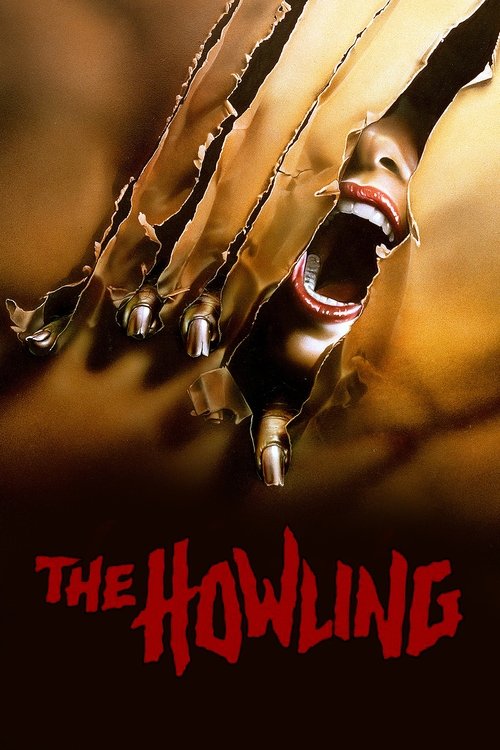
The Howling
After a bizarre and near fatal encounter with a serial killer, a newswoman is sent to a rehabilitation center whose inhabitants may not be what they seem.
Despite its limited budget of $1.0M, The Howling became a box office phenomenon, earning $18.0M worldwide—a remarkable 1699% return. The film's unique voice connected with viewers, illustrating how strong storytelling can transcend budget limitations.
2 wins & 3 nominations


Plot Structure
Story beats plotted across runtime


Narrative Arc
Emotional journey through the story's key moments
Story Circle
Blueprint 15-beat structure
Arcplot Score Breakdown
Weighted: Precision (70%) + Arc (15%) + Theme (15%)
The Howling (1981) demonstrates carefully calibrated narrative architecture, characteristic of Joe Dante's storytelling approach. This structural analysis examines how the film's 15-point plot structure maps to proven narrative frameworks across 1 hour and 31 minutes. With an Arcplot score of 7.1, the film balances conventional beats with creative variation.
Structural Analysis
The Status Quo at 1 minutes (1% through the runtime) establishes Karen White is a successful TV news anchor working on an undercover investigation, established as a professional and competent journalist in her normal urban life before trauma strikes.. Structural examination shows that this early placement immediately immerses viewers in the story world.
The inciting incident occurs at 12 minutes when Karen witnesses Eddie Quist transform into a werewolf in the porn booth before he is shot by police, leaving her traumatized with amnesia about what she saw, disrupting her ability to function normally.. At 13% through the film, this Disruption is delayed, allowing extended setup of the story world. This beat shifts the emotional landscape, launching the protagonist into the central conflict.
The First Threshold at 23 minutes marks the transition into Act II, occurring at 25% of the runtime. This reveals the protagonist's commitment to Karen and Bill actively choose to leave Los Angeles and drive to the Colony retreat in the remote woods, crossing into an isolated world where they will be cut off from their normal support systems., moving from reaction to action.
At 46 minutes, the Midpoint arrives at 50% of the runtime—precisely centered, creating perfect narrative symmetry. Notably, this crucial beat Karen discovers that Eddie Quist is alive (not dead as believed) and at the Colony, representing a false defeat where she realizes she's not safe and the trauma she came to heal from has followed her to this supposedly safe place., fundamentally raising what's at risk. The emotional intensity shifts, dividing the narrative into clear before-and-after phases.
The Collapse moment at 68 minutes (75% through) represents the emotional nadir. Here, Terry is killed by the werewolves and Chris discovers her mutilated body, representing the whiff of death as Karen loses her closest ally and the full horror of the werewolf pack's murderous nature becomes undeniable., shows the protagonist at their lowest point. This beat's placement in the final quarter sets up the climactic reversal.
The Second Threshold at 73 minutes initiates the final act resolution at 80% of the runtime. Chris arrives with werewolf-killing bullets and Karen gains the knowledge and tools to fight back, synthesizing her journalistic courage with the supernatural solution, choosing to confront and expose the werewolves rather than flee., demonstrating the transformation achieved throughout the journey.
Emotional Journey
The Howling's emotional architecture traces a deliberate progression across 15 carefully calibrated beats.
Narrative Framework
This structural analysis employs structural analysis methodology used to understand storytelling architecture. By mapping The Howling against these established plot points, we can identify how Joe Dante utilizes or subverts traditional narrative conventions. The plot point approach reveals not only adherence to structural principles but also creative choices that distinguish The Howling within the horror genre.
Joe Dante's Structural Approach
Among the 10 Joe Dante films analyzed on Arcplot, the average structural score is 7.0, reflecting strong command of classical structure. The Howling represents one of the director's most structurally precise works. For comparative analysis, explore the complete Joe Dante filmography.
Comparative Analysis
Additional horror films include Thinner, A Nightmare on Elm Street and Mary Reilly. For more Joe Dante analyses, see Explorers, Small Soldiers and Matinee.
Plot Points by Act
Act I
SetupStatus Quo
Karen White is a successful TV news anchor working on an undercover investigation, established as a professional and competent journalist in her normal urban life before trauma strikes.
Theme
Dr. George Waggner suggests that confronting one's fears and repressed trauma is necessary for healing, stating the thematic premise about facing the beast within rather than running from it.
Worldbuilding
Karen's world as a news anchor is established, including her relationship with husband Bill, her work with colleague Chris, and the setup of the Eddie Quist investigation that leads to the traumatic encounter at the porn shop.
Disruption
Karen witnesses Eddie Quist transform into a werewolf in the porn booth before he is shot by police, leaving her traumatized with amnesia about what she saw, disrupting her ability to function normally.
Resistance
Dr. Waggner counsels Karen through her trauma and suggests the Colony retreat as therapy. Karen debates whether to go, resists leaving her life behind, but the psychological damage and inability to be intimate with Bill push her toward accepting help.
Act II
ConfrontationFirst Threshold
Karen and Bill actively choose to leave Los Angeles and drive to the Colony retreat in the remote woods, crossing into an isolated world where they will be cut off from their normal support systems.
Mirror World
Karen meets Marsha Quist and the other Colony residents, entering a thematic mirror world where the surface appearance of healing and community masks a predatory werewolf pack that represents repressed animalistic nature.
Premise
Karen explores life at the Colony while strange events unfold: Marsha seduces Bill, Chris and Terry investigate Eddie's background and discover werewolf evidence, and Karen begins seeing disturbing visions and experiencing the promise of the werewolf horror premise.
Midpoint
Karen discovers that Eddie Quist is alive (not dead as believed) and at the Colony, representing a false defeat where she realizes she's not safe and the trauma she came to heal from has followed her to this supposedly safe place.
Opposition
The werewolf threat closes in from all sides: Bill transforms after being bitten by Marsha, Terry is killed investigating the Colony, Karen's friends are hunted down, and Dr. Waggner is revealed as the pack leader trying to create a werewolf society.
Collapse
Terry is killed by the werewolves and Chris discovers her mutilated body, representing the whiff of death as Karen loses her closest ally and the full horror of the werewolf pack's murderous nature becomes undeniable.
Crisis
Karen confronts the dark reality that her husband is now a werewolf, her friend is dead, and she is trapped among monsters. She processes the loss of her old life and the betrayal by those she trusted for healing.
Act III
ResolutionSecond Threshold
Chris arrives with werewolf-killing bullets and Karen gains the knowledge and tools to fight back, synthesizing her journalistic courage with the supernatural solution, choosing to confront and expose the werewolves rather than flee.
Synthesis
Karen and Chris battle the werewolf pack, Karen shoots Eddie and Bill in self-defense, the Colony burns down, and Karen executes her final plan to expose the werewolves to the world by transforming on live television.
Transformation
Karen transforms into a werewolf on live television broadcast, sacrificing her humanity to prove the truth to the world, showing her complete transformation from someone who repressed trauma to someone who exposes the beast within.