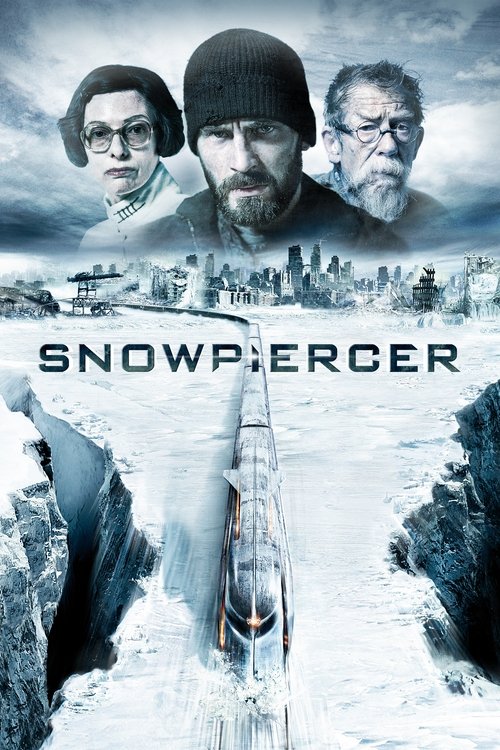
Snowpiercer
In a future where a failed global-warming experiment kills off most life on the planet, a class system evolves aboard the Snowpiercer; a train that travels around the globe via a perpetual-motion engine.
Despite a respectable budget of $39.2M, Snowpiercer became a box office success, earning $86.8M worldwide—a 121% return.
36 wins & 109 nominations


Plot Structure
Story beats plotted across runtime


Narrative Arc
Emotional journey through the story's key moments
Story Circle
Blueprint 15-beat structure
Arcplot Score Breakdown
Weighted: Precision (70%) + Arc (15%) + Theme (15%)
Snowpiercer (2013) exemplifies precise dramatic framework, characteristic of Bong Joon Ho's storytelling approach. This structural analysis examines how the film's 15-point plot structure maps to proven narrative frameworks across 2 hours and 7 minutes. With an Arcplot score of 6.9, the film balances conventional beats with creative variation.
Structural Analysis
The Status Quo at 2 minutes (1% through the runtime) establishes The tail section passengers live in squalid darkness, packed together in misery. Curtis observes the oppressive conditions as armed guards patrol, establishing the brutal class hierarchy aboard the perpetual-motion train Snowpiercer.. Notably, this early placement immediately immerses viewers in the story world.
The inciting incident occurs at 15 minutes when The guards take two children, including Tanya's son Timmy and Andrew's son Andy, measuring them before dragging them toward the front. This child abduction galvanizes the tail section and transforms Curtis's simmering resentment into urgent revolutionary action.. At 12% through the film, this Disruption aligns precisely with traditional story structure. This beat shifts the emotional landscape, launching the protagonist into the central conflict.
The First Threshold at 31 minutes marks the transition into Act II, occurring at 25% of the runtime. This indicates the protagonist's commitment to Curtis leads the tail section uprising, charging through the gate when they confirm the guns are empty. They overwhelm the guards and begin their irreversible march toward the front of the train, crossing into forbidden territory with no possibility of return., moving from reaction to action.
At 64 minutes, the Midpoint arrives at 50% of the runtime—precisely centered, creating perfect narrative symmetry. The analysis reveals that this crucial beat The rebels enter a dark car and are ambushed in a brutal battle with axe-wielding soldiers. The fight occurs as the train passes through a tunnel on New Year's Eve, with night-vision attackers slaughtering rebels. This is a false defeat that decimates Curtis's forces., fundamentally raising what's at risk. The emotional intensity shifts, dividing the narrative into clear before-and-after phases.
The Collapse moment at 95 minutes (75% through) represents the emotional nadir. Here, Curtis learns via video that Gilliam has been executed on Wilford's orders. His mentor and father figure is dead. Edgar died protecting Curtis earlier. Nearly all his people are gone. The revolution appears to have cost everything while achieving nothing., indicates the protagonist at their lowest point. This beat's placement in the final quarter sets up the climactic reversal.
The Second Threshold at 101 minutes initiates the final act resolution at 80% of the runtime. Curtis enters the engine room and meets Wilford, who reveals the horrifying truth: the revolution was orchestrated, Gilliam was complicit, and Curtis was chosen to replace Wilford. The system manufactures its own opposition to maintain population control and balance., demonstrating the transformation achieved throughout the journey.
Emotional Journey
Snowpiercer's emotional architecture traces a deliberate progression across 15 carefully calibrated beats.
Narrative Framework
This structural analysis employs structural analysis methodology used to understand storytelling architecture. By mapping Snowpiercer against these established plot points, we can identify how Bong Joon Ho utilizes or subverts traditional narrative conventions. The plot point approach reveals not only adherence to structural principles but also creative choices that distinguish Snowpiercer within the action genre.
Bong Joon Ho's Structural Approach
Among the 5 Bong Joon Ho films analyzed on Arcplot, the average structural score is 7.0, demonstrating varied approaches to story architecture. Snowpiercer takes a more unconventional approach compared to the director's typical style. For comparative analysis, explore the complete Bong Joon Ho filmography.
Comparative Analysis
Additional action films include The Bad Guys, Puss in Boots and Venom: The Last Dance. For more Bong Joon Ho analyses, see The Host, Mickey 17 and Okja.
Plot Points by Act
Act I
SetupStatus Quo
The tail section passengers live in squalid darkness, packed together in misery. Curtis observes the oppressive conditions as armed guards patrol, establishing the brutal class hierarchy aboard the perpetual-motion train Snowpiercer.
Theme
Gilliam tells Curtis that everyone has their preordained place: "You know what I hate about myself? I know what people taste like. I know babies taste best." This foreshadows the theme that survival within this system requires unconscionable compromise.
Worldbuilding
The tail section's hierarchy is established: protein blocks as food, children being measured and taken, Mason's cruelty demonstrated when she freezes a man's arm for throwing a shoe. Curtis, Edgar, and Gilliam plan their rebellion while receiving cryptic messages hidden in protein blocks.
Disruption
The guards take two children, including Tanya's son Timmy and Andrew's son Andy, measuring them before dragging them toward the front. This child abduction galvanizes the tail section and transforms Curtis's simmering resentment into urgent revolutionary action.
Resistance
Gilliam mentors Curtis on revolution strategy while the tail section plans their assault. They discover the guards' guns have no bullets. Curtis debates the risks with Edgar and receives final guidance from Gilliam about reaching the engine and confronting Wilford.
Act II
ConfrontationFirst Threshold
Curtis leads the tail section uprising, charging through the gate when they confirm the guns are empty. They overwhelm the guards and begin their irreversible march toward the front of the train, crossing into forbidden territory with no possibility of return.
Mirror World
Curtis releases Namgoong Minsoo, the security specialist who designed the train's doors, from his prison drawer. Namgoong and his daughter Yona represent an alternative worldview—not interested in reaching the front, but in escaping the train entirely using explosive Kronole.
Premise
The rebels fight through increasingly luxurious cars: aquarium, greenhouse, meat locker, sushi bar. Each car reveals more obscene privilege. Curtis captures Mason as hostage. They experience the surreal classroom where children are indoctrinated about Wilford's sacred engine.
Midpoint
The rebels enter a dark car and are ambushed in a brutal battle with axe-wielding soldiers. The fight occurs as the train passes through a tunnel on New Year's Eve, with night-vision attackers slaughtering rebels. This is a false defeat that decimates Curtis's forces.
Opposition
Survivors push forward through more cars. Curtis executes Mason when she's no longer useful. They pass through decadent spa cars and nightclubs while losing more people. Franco the Elder stalks them. Namgoong reveals his plan to blow open an external door to escape the train.
Collapse
Curtis learns via video that Gilliam has been executed on Wilford's orders. His mentor and father figure is dead. Edgar died protecting Curtis earlier. Nearly all his people are gone. The revolution appears to have cost everything while achieving nothing.
Crisis
Curtis processes the loss of Gilliam and confronts the emptiness of his mission. He stands at the engine door, exhausted and grief-stricken, questioning whether reaching the front matters anymore. Namgoong prepares his Kronole explosive as an alternative.
Act III
ResolutionSecond Threshold
Curtis enters the engine room and meets Wilford, who reveals the horrifying truth: the revolution was orchestrated, Gilliam was complicit, and Curtis was chosen to replace Wilford. The system manufactures its own opposition to maintain population control and balance.
Synthesis
Curtis confesses his darkest secret—he ate babies to survive and nearly ate Edgar. Wilford offers him control of the engine. Curtis discovers the missing children are enslaved inside the engine as replacement parts. He rejects Wilford's offer and helps Namgoong detonate the explosive.
Transformation
The explosion derails the train. Yona and Timmy emerge as the sole survivors into the frozen world. They see a polar bear—proof that life exists outside. Curtis sacrificed himself not to control the system but to destroy it, enabling genuine freedom rather than cyclical oppression.