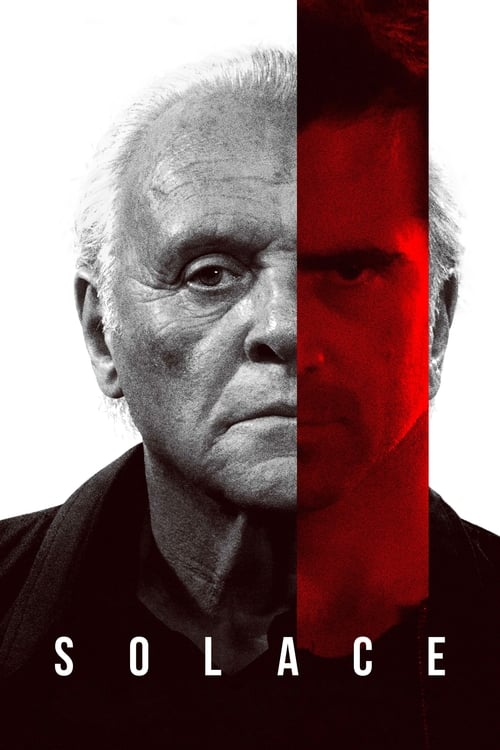
Solace
A psychic doctor, John Clancy, works with an FBI special agent in search of a serial killer.
The film earned $22.6M at the global box office.


Plot Structure
Story beats plotted across runtime


Narrative Arc
Emotional journey through the story's key moments
Story Circle
Blueprint 15-beat structure
Arcplot Score Breakdown
Weighted: Precision (70%) + Arc (15%) + Theme (15%)
Solace (2015) reveals strategically placed narrative architecture, characteristic of Afonso Poyart's storytelling approach. This structural analysis examines how the film's 15-point plot structure maps to proven narrative frameworks across 1 hour and 41 minutes. With an Arcplot score of 7.5, the film showcases strong structural fundamentals.
Characters
Cast & narrative archetypes

Dr. John Clancy
Charles Ambrose
Joe Merriweather
Charles Ambrose (Killer)
Katherine Cowles
Main Cast & Characters
Dr. John Clancy
Played by Anthony Hopkins
A psychic former FBI consultant with powerful precognitive abilities who is drawn back to help solve serial murders.
Charles Ambrose
Played by Jeffrey Dean Morgan
A determined FBI special agent who seeks Clancy's help to catch a serial killer with apparent psychic abilities.
Joe Merriweather
Played by Abbie Cornish
FBI agent and Clancy's former partner who reluctantly brings him back into the investigation.
Charles Ambrose (Killer)
Played by Colin Farrell
The primary antagonist, a physician with psychic abilities who orchestrates mercy killings to prevent future suffering.
Katherine Cowles
Played by Abbie Cornish
An FBI agent working alongside Merriweather and Ambrose on the serial killer case.
Structural Analysis
The Status Quo at 1 minutes (1% through the runtime) establishes Dr. John Clancy lives in isolated retirement, haunted by his psychic abilities and the loss of his daughter to terminal illness. He refuses to use his gift.. The analysis reveals that this early placement immediately immerses viewers in the story world.
The inciting incident occurs at 12 minutes when Merriwether convinces Clancy to visit a crime scene. Clancy has a vivid psychic vision of the murder, forcing him back into the world he tried to leave behind.. At 12% through the film, this Disruption aligns precisely with traditional story structure. This beat shifts the emotional landscape, launching the protagonist into the central conflict.
The First Threshold at 26 minutes marks the transition into Act II, occurring at 26% of the runtime. This reveals the protagonist's commitment to Clancy commits to the investigation fully after realizing the killer has psychic abilities like his own. This is not an ordinary case—he's hunting someone like himself., moving from reaction to action.
At 52 minutes, the Midpoint arrives at 51% of the runtime—precisely centered, creating perfect narrative symmetry. Of particular interest, this crucial beat Clancy discovers Ambrose's true motivation: he's killing people to spare them from worse fates he's foreseen. The killer believes he's performing mercy killings. The stakes are raised—this is not simple evil., fundamentally raising what's at risk. The emotional intensity shifts, dividing the narrative into clear before-and-after phases.
The Collapse moment at 74 minutes (73% through) represents the emotional nadir. Here, Agent Merriwether is killed by Ambrose. Clancy loses his closest friend and the man who brought him back into this world. The whiff of death is literal., demonstrates the protagonist at their lowest point. This beat's placement in the final quarter sets up the climactic reversal.
The Second Threshold at 80 minutes initiates the final act resolution at 80% of the runtime. Clancy has a vision revealing Ambrose's next target and location. He synthesizes his grief with his purpose—he can honor Merriwether by stopping Ambrose. He accepts his gift fully., demonstrating the transformation achieved throughout the journey.
Emotional Journey
Solace's emotional architecture traces a deliberate progression across 15 carefully calibrated beats.
Narrative Framework
This structural analysis employs systematic plot point analysis that identifies crucial turning points. By mapping Solace against these established plot points, we can identify how Afonso Poyart utilizes or subverts traditional narrative conventions. The plot point approach reveals not only adherence to structural principles but also creative choices that distinguish Solace within the thriller genre.
Comparative Analysis
Additional thriller films include The Warriors, Thunderball and Rustom.
Plot Points by Act
Act I
SetupStatus Quo
Dr. John Clancy lives in isolated retirement, haunted by his psychic abilities and the loss of his daughter to terminal illness. He refuses to use his gift.
Theme
Agent Merriwether suggests that some gifts are meant to help others, even when they bring personal pain. The theme of purpose through suffering is introduced.
Worldbuilding
We learn about Clancy's past work with the FBI, his psychic abilities, his relationship with Agent Joe Merriwether, and the serial murders that are baffling law enforcement. The world of psychic investigation is established.
Disruption
Merriwether convinces Clancy to visit a crime scene. Clancy has a vivid psychic vision of the murder, forcing him back into the world he tried to leave behind.
Resistance
Clancy resists full involvement but provides insights. He debates whether his gift is worth the mental anguish. The FBI team provides context about the killer's pattern while Clancy grapples with returning to this dark work.
Act II
ConfrontationFirst Threshold
Clancy commits to the investigation fully after realizing the killer has psychic abilities like his own. This is not an ordinary case—he's hunting someone like himself.
Mirror World
Clancy recognizes that the killer, Charles Ambrose, is his thematic mirror—another psychic who has chosen a different path. Their connection represents the central moral question.
Premise
The cat-and-mouse game between two psychics unfolds. Clancy uses his visions to track Ambrose while Ambrose stays ahead, anticipating their moves. The premise—psychic detective vs psychic killer—is fully explored.
Midpoint
Clancy discovers Ambrose's true motivation: he's killing people to spare them from worse fates he's foreseen. The killer believes he's performing mercy killings. The stakes are raised—this is not simple evil.
Opposition
Ambrose escalates, staying ahead of every move. The FBI suffers casualties. Clancy struggles with understanding Ambrose's twisted logic and questions whether his own gift is a curse. The pressure intensifies.
Collapse
Agent Merriwether is killed by Ambrose. Clancy loses his closest friend and the man who brought him back into this world. The whiff of death is literal.
Crisis
Clancy mourns Merriwether and confronts his darkest fears about his abilities. He must decide if he'll give up or find meaning in this tragic gift. Dark night of the soul.
Act III
ResolutionSecond Threshold
Clancy has a vision revealing Ambrose's next target and location. He synthesizes his grief with his purpose—he can honor Merriwether by stopping Ambrose. He accepts his gift fully.
Synthesis
Clancy confronts Ambrose in a final psychological and physical showdown. They debate the nature of their gifts, mercy, and fate. Clancy must stop Ambrose while proving there's another way to carry this burden.
Transformation
Clancy has accepted his gift as a burden worth carrying. Though scarred by loss, he finds meaning in using his abilities to help others, transformed from isolated hermit to engaged protector.