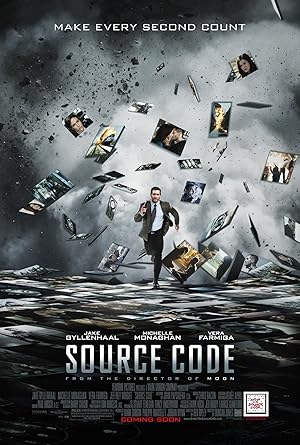
Source Code
Army Captain Colter Stevens finds himself working on a special program where his consciousness can be inserted into another human being. The only catch is can only be there for 8 minutes at any given time. That morning, a bomb exploded on a commuter train just outside Chicago. He occupies the body of teacher going to work on that train and is confused as to what he is doing or why he is there as his last memory is of flying his helicopter on a combat mission in Afghanistan. Those in charge of the program explain to him that there is a bomb on the train, and that he must locate it. More importantly, he must identify the bomber as another bombing is expected later that day. He is also told however that he cannot change the past and can only gather information. As he develops a liking for his traveling companion Christina, he sets out to test that theory.
Despite a mid-range budget of $32.0M, Source Code became a financial success, earning $147.3M worldwide—a 360% return.
1 win & 8 nominations


Plot Structure
Story beats plotted across runtime


Narrative Arc
Emotional journey through the story's key moments
Story Circle
Blueprint 15-beat structure
Arcplot Score Breakdown
Weighted: Precision (70%) + Arc (15%) + Theme (15%)
Source Code (2011) demonstrates precise narrative architecture, characteristic of Duncan Jones's storytelling approach. This structural analysis examines how the film's 15-point plot structure maps to proven narrative frameworks across 1 hour and 33 minutes. With an Arcplot score of 6.8, the film balances conventional beats with creative variation.
Characters
Cast & narrative archetypes

Colter Stevens
Christina Warren
Colleen Goodwin
Dr. Rutledge
Derek Frost
Main Cast & Characters
Colter Stevens
Played by Jake Gyllenhaal
A soldier trapped in a time loop, reliving the same 8 minutes to prevent a terrorist attack.
Christina Warren
Played by Michelle Monaghan
A kind-hearted teacher on the train who becomes Colter's emotional anchor in the loop.
Colleen Goodwin
Played by Vera Farmiga
Air Force captain who serves as Colter's mission handler and develops sympathy for his situation.
Dr. Rutledge
Played by Jeffrey Wright
The cold, mission-focused scientist who created the Source Code program.
Derek Frost
Played by Michael Arden
The terrorist bomber targeting Chicago with a dirty bomb.
Structural Analysis
The Status Quo at 1 minutes (1% through the runtime) establishes Colter Stevens wakes up disoriented on a Chicago commuter train across from a woman who calls him Sean. He has no memory of how he got there and doesn't recognize his own reflection, establishing his fractured identity and confusion.. The analysis reveals that this early placement immediately immerses viewers in the story world.
The inciting incident occurs at 10 minutes when The train explodes, killing everyone aboard including Colter. This catastrophic event disrupts any sense of normalcy and thrusts Colter into the reality that he must repeatedly relive these eight minutes to find the bomber before a larger attack on Chicago.. At 11% through the film, this Disruption aligns precisely with traditional story structure. This beat shifts the emotional landscape, launching the protagonist into the central conflict.
The First Threshold at 23 minutes marks the transition into Act II, occurring at 25% of the runtime. This indicates the protagonist's commitment to Colter commits fully to the mission, accepting his role in Source Code. He stops fighting against Goodwin and chooses to actively work within the program's rules, beginning his systematic investigation of passengers to find the bomber., moving from reaction to action.
At 46 minutes, the Midpoint arrives at 49% of the runtime—precisely centered, creating perfect narrative symmetry. Significantly, this crucial beat Colter identifies Derek Frost as the bomber and locates the bomb in the train's ventilation system. This false victory gives him confidence that he can complete the mission, but he doesn't yet understand Frost's larger plan or the personal stakes he's developing with Christina., fundamentally raising what's at risk. The emotional intensity shifts, dividing the narrative into clear before-and-after phases.
The Collapse moment at 69 minutes (74% through) represents the emotional nadir. Here, Colter sees the reality of his physical state—he's a torso with severe brain damage, kept alive only to power Source Code. He realizes he's essentially dead and being used as a tool. His identity, his body, his life—everything has been taken from him. The whiff of death is absolute., reveals the protagonist at their lowest point. This beat's placement in the final quarter sets up the climactic reversal.
The Second Threshold at 74 minutes initiates the final act resolution at 80% of the runtime. Colter makes Goodwin promise to terminate his life support after one final mission. He synthesizes his understanding: he can save the people on the train AND find peace. He asks Goodwin to let him die with dignity while giving him one last chance to create meaning., demonstrating the transformation achieved throughout the journey.
Emotional Journey
Source Code's emotional architecture traces a deliberate progression across 15 carefully calibrated beats.
Narrative Framework
This structural analysis employs structural analysis methodology used to understand storytelling architecture. By mapping Source Code against these established plot points, we can identify how Duncan Jones utilizes or subverts traditional narrative conventions. The plot point approach reveals not only adherence to structural principles but also creative choices that distinguish Source Code within the action genre.
Duncan Jones's Structural Approach
Among the 3 Duncan Jones films analyzed on Arcplot, the average structural score is 6.9, demonstrating varied approaches to story architecture. Source Code takes a more unconventional approach compared to the director's typical style. For comparative analysis, explore the complete Duncan Jones filmography.
Comparative Analysis
Additional action films include The Bad Guys, Puss in Boots and Venom: The Last Dance. For more Duncan Jones analyses, see Moon, Warcraft.
Plot Points by Act
Act I
SetupStatus Quo
Colter Stevens wakes up disoriented on a Chicago commuter train across from a woman who calls him Sean. He has no memory of how he got there and doesn't recognize his own reflection, establishing his fractured identity and confusion.
Theme
Christina tells Colter, "Everything's going to be okay," as he struggles to understand his situation. This simple reassurance embodies the theme: finding peace and meaning even in impossible circumstances, which Colter will ultimately achieve.
Worldbuilding
Colter experiences eight minutes on the train before it explodes. He awakens in a dark capsule where Goodwin communicates via screen, revealing he's part of a military program. The dual worlds of the train and the capsule are established, along with his mission to find a bomber.
Disruption
The train explodes, killing everyone aboard including Colter. This catastrophic event disrupts any sense of normalcy and thrusts Colter into the reality that he must repeatedly relive these eight minutes to find the bomber before a larger attack on Chicago.
Resistance
Goodwin and Dr. Rutledge guide Colter through the Source Code program. He resists, demanding answers about his identity and situation. He learns he's been dead for two months and his body is on life support. He debates whether to comply with the mission or seek his own answers.
Act II
ConfrontationFirst Threshold
Colter commits fully to the mission, accepting his role in Source Code. He stops fighting against Goodwin and chooses to actively work within the program's rules, beginning his systematic investigation of passengers to find the bomber.
Mirror World
Colter begins to genuinely connect with Christina, seeing her not just as a simulation but as a real person worth saving. Their deepening relationship represents the thematic heart: human connection gives life meaning, even borrowed time in another man's body.
Premise
Colter repeatedly enters Source Code, investigating different suspects each time. He explores the train, follows passengers, gets killed in various ways, and develops his relationship with Christina. Each loop brings him closer to the bomber while deepening his emotional investment.
Midpoint
Colter identifies Derek Frost as the bomber and locates the bomb in the train's ventilation system. This false victory gives him confidence that he can complete the mission, but he doesn't yet understand Frost's larger plan or the personal stakes he's developing with Christina.
Opposition
Complications escalate as Colter pursues Frost. He fails to stop the bomber in multiple attempts. He learns the devastating truth about his own condition—that his mangled body is being kept barely alive. Rutledge prioritizes the mission over Colter's humanity. The dirty bomb threat to Chicago intensifies.
Collapse
Colter sees the reality of his physical state—he's a torso with severe brain damage, kept alive only to power Source Code. He realizes he's essentially dead and being used as a tool. His identity, his body, his life—everything has been taken from him. The whiff of death is absolute.
Crisis
Colter processes the horror of his existence. He must reconcile that he's been dead for months and will never return to his old life. He wrestles with whether anything he does in Source Code matters, since it's supposedly just a simulation of the past that cannot be changed.
Act III
ResolutionSecond Threshold
Colter makes Goodwin promise to terminate his life support after one final mission. He synthesizes his understanding: he can save the people on the train AND find peace. He asks Goodwin to let him die with dignity while giving him one last chance to create meaning.
Synthesis
Colter executes his final mission perfectly. He subdues Frost, calls in the bomb threat, contacts his father for closure, and kisses Christina as the eight minutes expire. Goodwin honors her promise and terminates his life support. But the Source Code timeline continues—Colter lives on in Sean's body in an alternate reality where everyone survived.
Transformation
Colter and Christina stand frozen in a kiss at Cloud Gate as time stops—then continues. He texts Goodwin in this new timeline, revealing Source Code creates alternate realities, not just simulations. Colter has transcended death, found love, and proven that what we do in our final moments creates new worlds of possibility.