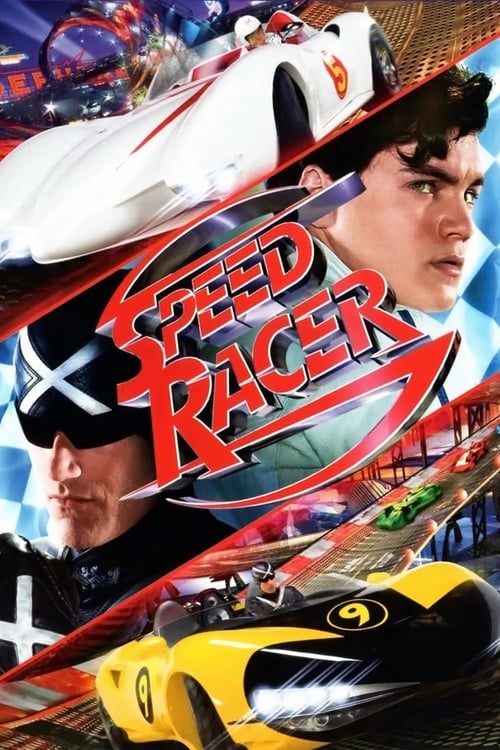
Speed Racer
Speed Racer is a young and brilliant racing driver. When corruption in the racing leagues costs his brother his life, Speed must team up with the police and the mysterious Racer X to bring an end to the corruption and criminal activities.
The film disappointed at the box office against its substantial budget of $120.0M, earning $93.9M globally (-22% loss).
1 win & 12 nominations


Plot Structure
Story beats plotted across runtime


Narrative Arc
Emotional journey through the story's key moments
Story Circle
Blueprint 15-beat structure
Arcplot Score Breakdown
Weighted: Precision (70%) + Arc (15%) + Theme (15%)
Speed Racer (2008) exhibits deliberately positioned plot construction, characteristic of Lana Wachowski's storytelling approach. This structural analysis examines how the film's 15-point plot structure maps to proven narrative frameworks across 2 hours and 15 minutes. With an Arcplot score of 7.1, the film balances conventional beats with creative variation.
Characters
Cast & narrative archetypes

Speed Racer
Racer X
Trixie
Pops Racer
Mom Racer
Royalton
Sparky
Spritle
Main Cast & Characters
Speed Racer
Played by Emile Hirsch
Young professional racer determined to honor his late brother's legacy while maintaining his family's racing integrity against corporate corruption.
Racer X
Played by Matthew Fox
Mysterious masked racer who protects Speed while harboring a secret connection to the Racer family.
Trixie
Played by Christina Ricci
Speed's loyal girlfriend and accomplished helicopter pilot who supports him both on and off the track.
Pops Racer
Played by John Goodman
Speed's father and head of Racer Motors, a principled mechanic who built the Mach 5 and refuses to compromise family values.
Mom Racer
Played by Susan Sarandon
The nurturing matriarch of the Racer family who provides emotional support and wisdom.
Royalton
Played by Roger Allam
Ruthless CEO of Royalton Industries who attempts to corrupt Speed and controls racing through corporate manipulation.
Sparky
Played by Kick Gurry
The Racer family's chief mechanic and loyal friend who maintains the Mach 5.
Spritle
Played by Paulie Litt
Speed's mischievous younger brother who often sneaks into races with his pet chimpanzee.
Structural Analysis
The Status Quo at 2 minutes (2% through the runtime) establishes Young Speed races in a daydream during class, intercut with present-day Speed dominating at Thunderhead race. Establishes Speed's natural talent and his lifelong obsession with racing, showing him as the golden boy of the Racer family legacy.. The analysis reveals that this early placement immediately immerses viewers in the story world.
The inciting incident occurs at 17 minutes when Royalton Industries offers Speed a lucrative contract to leave his family team. The temptation of fame, resources, and honoring Rex's legacy by joining the top team creates immediate tension with Speed's family loyalty.. At 12% through the film, this Disruption aligns precisely with traditional story structure. This beat shifts the emotional landscape, launching the protagonist into the central conflict.
The First Threshold at 33 minutes marks the transition into Act II, occurring at 25% of the runtime. This indicates the protagonist's commitment to Speed actively chooses to fight back against Royalton and corporate corruption by agreeing to work with Inspector Detector and Racer X. He commits to racing in the Casa Cristo rally to expose fixed racing, moving from naive racer to active rebel., moving from reaction to action.
At 68 minutes, the Midpoint arrives at 50% of the runtime—precisely centered, creating perfect narrative symmetry. The analysis reveals that this crucial beat Speed wins the Casa Cristo rally, seemingly striking a blow against Royalton. False victory: they believe they've gathered evidence to expose corruption. Speed feels vindicated in his choice to stay independent, but this success makes them a bigger target., fundamentally raising what's at risk. The emotional intensity shifts, dividing the narrative into clear before-and-after phases.
The Collapse moment at 102 minutes (75% through) represents the emotional nadir. Here, Speed sits defeated in his grounded Mach 6, believing he's failed his family and destroyed everything his father built. His dream of racing with integrity seems dead. The family business teeters on collapse, and Speed questions whether one driver can make any difference against the system., illustrates the protagonist at their lowest point. This beat's placement in the final quarter sets up the climactic reversal.
The Second Threshold at 108 minutes initiates the final act resolution at 80% of the runtime. Inspector Detector clears Speed's name and gets him reinstated for the Grand Prix. More importantly, Speed realizes he doesn't need to expose Royalton to win - he just needs to race honestly and let his driving speak for itself. He synthesizes family values with competitive fire., demonstrating the transformation achieved throughout the journey.
Emotional Journey
Speed Racer's emotional architecture traces a deliberate progression across 15 carefully calibrated beats.
Narrative Framework
This structural analysis employs systematic plot point analysis that identifies crucial turning points. By mapping Speed Racer against these established plot points, we can identify how Lana Wachowski utilizes or subverts traditional narrative conventions. The plot point approach reveals not only adherence to structural principles but also creative choices that distinguish Speed Racer within the family genre.
Lana Wachowski's Structural Approach
Among the 5 Lana Wachowski films analyzed on Arcplot, the average structural score is 7.0, reflecting strong command of classical structure. Speed Racer represents one of the director's most structurally precise works. For comparative analysis, explore the complete Lana Wachowski filmography.
Comparative Analysis
Additional family films include The Black Stallion, The Bad Guys and Ella Enchanted. For more Lana Wachowski analyses, see Bound, The Matrix Resurrections and The Matrix Revolutions.
Plot Points by Act
Act I
SetupStatus Quo
Young Speed races in a daydream during class, intercut with present-day Speed dominating at Thunderhead race. Establishes Speed's natural talent and his lifelong obsession with racing, showing him as the golden boy of the Racer family legacy.
Theme
Pops Racer tells Speed: "It doesn't matter if racing never changes. What matters is if we let racing change us." This statement encapsulates the film's central conflict between maintaining integrity versus succumbing to corporate corruption.
Worldbuilding
Extensive flashbacks establish the Racer family dynamics, Rex Racer's mysterious death, Speed's relationship with Trixie, and the family's independent racing operation. We learn the Mach 5's significance and see Speed's devotion to his late brother's memory.
Disruption
Royalton Industries offers Speed a lucrative contract to leave his family team. The temptation of fame, resources, and honoring Rex's legacy by joining the top team creates immediate tension with Speed's family loyalty.
Resistance
Speed debates the Royalton offer with his family. Royalton reveals the dark truth: racing is fixed by corporate interests, and independent drivers can't win. Speed rejects the offer, and Royalton vows to destroy him, showing Speed the true nature of the racing world.
Act II
ConfrontationFirst Threshold
Speed actively chooses to fight back against Royalton and corporate corruption by agreeing to work with Inspector Detector and Racer X. He commits to racing in the Casa Cristo rally to expose fixed racing, moving from naive racer to active rebel.
Mirror World
Racer X (Rex in disguise) formally enters Speed's world as mysterious ally and mentor figure. This relationship will teach Speed what it truly means to race with integrity, mirroring the brother-bond that drives Speed's motivations.
Premise
The Casa Cristo rally delivers spectacular racing action - the premise the audience came for. Speed and Racer X team up against corporate goons, navigating treacherous terrain. Speed learns to race as part of something bigger than himself, working with allies toward a common goal.
Midpoint
Speed wins the Casa Cristo rally, seemingly striking a blow against Royalton. False victory: they believe they've gathered evidence to expose corruption. Speed feels vindicated in his choice to stay independent, but this success makes them a bigger target.
Opposition
Royalton strikes back hard. Speed is framed for cheating, banned from racing, and publicly humiliated. The evidence they gathered is dismissed. The family business suffers, sponsors pull out. Speed's reputation is destroyed, and he faces the reality that corporate power may be unbeatable.
Collapse
Speed sits defeated in his grounded Mach 6, believing he's failed his family and destroyed everything his father built. His dream of racing with integrity seems dead. The family business teeters on collapse, and Speed questions whether one driver can make any difference against the system.
Crisis
Speed wallows in defeat while his family rallies around him. Trixie, Mom, Pops, and Spritle remind him why he races. Speed processes that winning isn't about beating corruption - it's about not letting corruption change who he is.
Act III
ResolutionSecond Threshold
Inspector Detector clears Speed's name and gets him reinstated for the Grand Prix. More importantly, Speed realizes he doesn't need to expose Royalton to win - he just needs to race honestly and let his driving speak for itself. He synthesizes family values with competitive fire.
Synthesis
The Grand Prix finale. Speed races not to expose corruption but simply to win cleanly. The entire Racer family works together - Pops, Mom, Sparky, Spritle, and Trixie all contribute. Speed drives with pure focus, combining technical skill with emotional integrity. He defeats Royalton's driver and wins the championship on his own terms.
Transformation
Speed crosses the finish line and sees a vision of Rex/Racer X giving him approval. Speed has transformed from a driver racing to honor the past into one racing for himself and his family's future. The family business is saved, integrity wins, and Speed has become his own man.