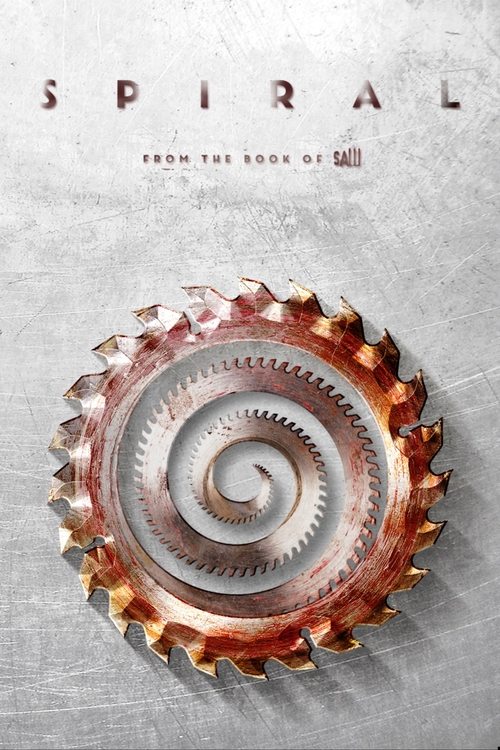
Spiral: From the Book of Saw
Working in the shadow of an esteemed police veteran, brash Detective Ezekiel “Zeke” Banks and his rookie partner take charge of a grisly investigation into murders that are eerily reminiscent of the city’s gruesome past. Unwittingly entrapped in a deepening mystery, Zeke finds himself at the center of the killer’s morbid game.
Despite a respectable budget of $20.0M, Spiral: From the Book of Saw became a box office success, earning $40.6M worldwide—a 103% return.


Plot Structure
Story beats plotted across runtime


Narrative Arc
Emotional journey through the story's key moments
Story Circle
Blueprint 15-beat structure
Arcplot Score Breakdown
Weighted: Precision (70%) + Arc (15%) + Theme (15%)
Spiral: From the Book of Saw (2021) demonstrates deliberately positioned narrative design, characteristic of Darren Lynn Bousman's storytelling approach. This structural analysis examines how the film's 15-point plot structure maps to proven narrative frameworks across 1 hour and 33 minutes. With an Arcplot score of 7.2, the film balances conventional beats with creative variation.
Characters
Cast & narrative archetypes

Ezekiel "Zeke" Banks
William Schenk
Marcus Banks
Captain Angie Garza
Main Cast & Characters
Ezekiel "Zeke" Banks
Played by Chris Rock
A rogue detective investigating a Jigsaw copycat targeting corrupt police officers. Struggles with his father's legacy and systemic corruption.
William Schenk
Played by Max Minghella
Zeke's rookie partner, eager and seemingly loyal. Harbors a hidden agenda related to police corruption.
Marcus Banks
Played by Samuel L. Jackson
Zeke's father and former police chief, representing the old guard. Carries guilt over past decisions.
Captain Angie Garza
Played by Marisol Nichols
The pragmatic police captain overseeing the investigation. Balances department politics with solving murders.
Structural Analysis
The Status Quo at 1 minutes (1% through the runtime) establishes Detective Zeke Banks is an isolated, disrespected cop working alone after turning in a corrupt partner years ago. The opening shows his alienated status in the precinct where no one trusts him.. Significantly, this early placement immediately immerses viewers in the story world.
The inciting incident occurs at 12 minutes when A detective is found dead in a gruesome Jigsaw-style trap on the subway. A copycat killer targeting police officers has emerged, and a package addressed to Zeke indicates he's involved in the game.. At 13% through the film, this Disruption is delayed, allowing extended setup of the story world. This beat shifts the emotional landscape, launching the protagonist into the central conflict.
The First Threshold at 23 minutes marks the transition into Act II, occurring at 25% of the runtime. This demonstrates the protagonist's commitment to Zeke commits to the investigation fully when a second officer dies in a trap and the killer directly taunts him with evidence of police corruption. He realizes this isn't random—someone is targeting his precinct specifically., moving from reaction to action.
At 47 minutes, the Midpoint arrives at 50% of the runtime—precisely centered, creating perfect narrative symmetry. Structural examination shows that this crucial beat Captain Angie Garza is killed in a brutal trap. The stakes escalate dramatically—the killer is moving up the chain of command. Zeke realizes his father's old precinct is being systematically punished, and he may be the ultimate target., fundamentally raising what's at risk. The emotional intensity shifts, dividing the narrative into clear before-and-after phases.
The Collapse moment at 70 minutes (75% through) represents the emotional nadir. Here, Marcus Banks is kidnapped and trapped. Zeke's father—his last true ally and the symbol of righteous policing—is taken. Zeke receives a video showing Marcus in mortal danger, creating the "whiff of death" and Zeke's darkest moment., reveals the protagonist at their lowest point. This beat's placement in the final quarter sets up the climactic reversal.
The Second Threshold at 74 minutes initiates the final act resolution at 79% of the runtime. Zeke discovers Schenk is the killer—his trusted partner is the son of the criminal Zeke killed years ago. Schenk reveals he's been orchestrating everything to expose the corrupt system and force Zeke to choose: save his father or let justice be served., demonstrating the transformation achieved throughout the journey.
Emotional Journey
Spiral: From the Book of Saw's emotional architecture traces a deliberate progression across 15 carefully calibrated beats.
Narrative Framework
This structural analysis employs systematic plot point analysis that identifies crucial turning points. By mapping Spiral: From the Book of Saw against these established plot points, we can identify how Darren Lynn Bousman utilizes or subverts traditional narrative conventions. The plot point approach reveals not only adherence to structural principles but also creative choices that distinguish Spiral: From the Book of Saw within the horror genre.
Darren Lynn Bousman's Structural Approach
Among the 4 Darren Lynn Bousman films analyzed on Arcplot, the average structural score is 7.3, reflecting strong command of classical structure. Spiral: From the Book of Saw takes a more unconventional approach compared to the director's typical style. For comparative analysis, explore the complete Darren Lynn Bousman filmography.
Comparative Analysis
Additional horror films include Thinner, A Nightmare on Elm Street and Mary Reilly. For more Darren Lynn Bousman analyses, see 11-11-11, Saw III and Saw II.
Plot Points by Act
Act I
SetupStatus Quo
Detective Zeke Banks is an isolated, disrespected cop working alone after turning in a corrupt partner years ago. The opening shows his alienated status in the precinct where no one trusts him.
Theme
Marcus Banks (Zeke's father) tells him about the cost of integrity and how the system protects its own. This establishes the central theme: systemic police corruption and the price of doing the right thing.
Worldbuilding
Establishment of the corrupt police department, Zeke's pariah status, his strained relationship with his legendary father Marcus (former chief), and introduction of rookie partner William Schenk assigned to him.
Disruption
A detective is found dead in a gruesome Jigsaw-style trap on the subway. A copycat killer targeting police officers has emerged, and a package addressed to Zeke indicates he's involved in the game.
Resistance
Zeke and Schenk investigate the crime scene and receive cryptic messages from the killer. Zeke debates whether this is really about him, resists getting fully invested, and argues with Captain Angie Garza about the investigation approach.
Act II
ConfrontationFirst Threshold
Zeke commits to the investigation fully when a second officer dies in a trap and the killer directly taunts him with evidence of police corruption. He realizes this isn't random—someone is targeting his precinct specifically.
Mirror World
Zeke's partnership with rookie Schenk develops. Schenk represents idealism and a potential ally in a corrupt system—someone who might understand Zeke's choice to expose corruption. Their bond grows as they work the case.
Premise
Cat-and-mouse investigation as Zeke and Schenk chase clues, discover more corrupt officers being targeted, and uncover the pattern. Each trap reveals another dirty cop, forcing Zeke to confront the depth of corruption around him.
Midpoint
Captain Angie Garza is killed in a brutal trap. The stakes escalate dramatically—the killer is moving up the chain of command. Zeke realizes his father's old precinct is being systematically punished, and he may be the ultimate target.
Opposition
The investigation intensifies as more officers die. Zeke's father Marcus is drawn in. The killer stays ahead of them, revealing deeper corruption. Zeke's isolation increases as he can't trust anyone in the department.
Collapse
Marcus Banks is kidnapped and trapped. Zeke's father—his last true ally and the symbol of righteous policing—is taken. Zeke receives a video showing Marcus in mortal danger, creating the "whiff of death" and Zeke's darkest moment.
Crisis
Zeke races desperately to save his father, grappling with guilt and fear. He confronts the possibility that his choice to expose corruption years ago may have triggered this revenge campaign.
Act III
ResolutionSecond Threshold
Zeke discovers Schenk is the killer—his trusted partner is the son of the criminal Zeke killed years ago. Schenk reveals he's been orchestrating everything to expose the corrupt system and force Zeke to choose: save his father or let justice be served.
Synthesis
Final confrontation in the killer's lair. Zeke fights to save Marcus from the trap while Schenk forces him to confront the system he's been part of. The backup cops arrive but prove to be corrupt, shooting Zeke and validating Schenk's thesis about systemic corruption.
Transformation
Zeke is left wounded and defeated as corrupt officers stand over him. Unlike the opening where he was isolated but righteous, he now understands that the system cannot be reformed from within. Schenk escapes, having proven his point.