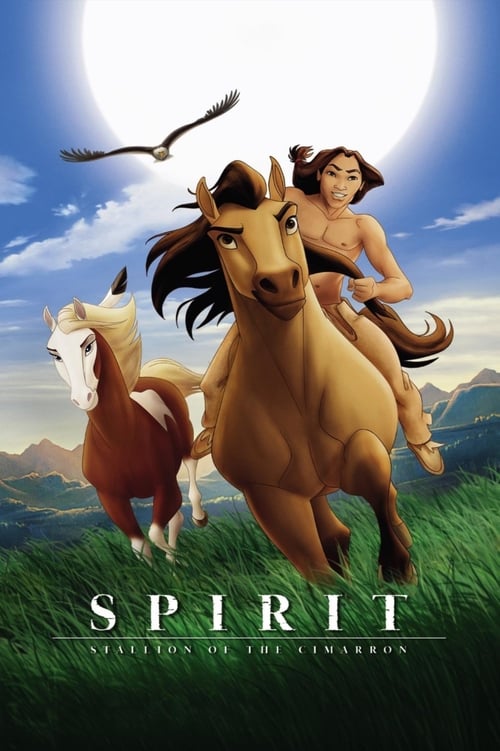
Spirit: Stallion of the Cimarron
A captured mustang remains determined to return to his herd no matter what.
Working with a considerable budget of $80.0M, the film achieved a respectable showing with $122.6M in global revenue (+53% profit margin).
Nominated for 1 Oscar. 10 wins & 22 nominations


Plot Structure
Story beats plotted across runtime


Narrative Arc
Emotional journey through the story's key moments
Story Circle
Blueprint 15-beat structure
Arcplot Score Breakdown
Weighted: Precision (70%) + Arc (15%) + Theme (15%)
Spirit: Stallion of the Cimarron (2002) showcases strategically placed plot construction, characteristic of Kelly Asbury's storytelling approach. This structural analysis examines how the film's 15-point plot structure maps to proven narrative frameworks across 1 hour and 23 minutes. With an Arcplot score of 7.7, the film showcases strong structural fundamentals.
Characters
Cast & narrative archetypes

Spirit
Little Creek
Rain
The Colonel
Main Cast & Characters
Spirit
Played by Matt Damon
A wild mustang stallion who values freedom above all else and leads his herd in the Cimarron territory.
Little Creek
Played by Daniel Studi
A young Lakota warrior who captures Spirit and develops a mutual respect with the stallion.
Rain
Played by Chopper Bernet
A beautiful paint mare who belongs to Little Creek and becomes Spirit's love interest.
The Colonel
Played by James Cromwell
A ruthless U.S. Cavalry officer determined to break Spirit and use him as a military mount.
Structural Analysis
The Status Quo at 1 minutes (1% through the runtime) establishes Spirit narrates his birth and early life running free with his herd in the untamed Cimarron. He embodies wild freedom, running with his mother and eventually becoming the herd's leader.. Notably, this early placement immediately immerses viewers in the story world.
The inciting incident occurs at 9 minutes when Spirit is captured by cavalry soldiers after investigating their camp. He's roped, tied, and dragged away from his homeland and herd, losing his freedom for the first time.. At 11% through the film, this Disruption aligns precisely with traditional story structure. This beat shifts the emotional landscape, launching the protagonist into the central conflict.
The First Threshold at 20 minutes marks the transition into Act II, occurring at 24% of the runtime. This shows the protagonist's commitment to Spirit escapes the fort with Little Creek during a dramatic breakout. He chooses to follow the Lakota warrior rather than immediately fleeing home, entering a new world that will teach him about connection., moving from reaction to action.
At 42 minutes, the Midpoint arrives at 50% of the runtime—precisely centered, creating perfect narrative symmetry. Structural examination shows that this crucial beat The cavalry attacks the Lakota village, destroying the peaceful world Spirit had grown to embrace. Spirit and Rain are recaptured by the Colonel, and Little Creek is shot with an arrow. The stakes escalate dramatically., fundamentally raising what's at risk. The emotional intensity shifts, dividing the narrative into clear before-and-after phases.
The Collapse moment at 62 minutes (74% through) represents the emotional nadir. Here, Rain is shot protecting Spirit during his escape attempt and falls into the river, apparently dead. Spirit loses the love he found, experiencing devastating loss. He nearly gives up entirely, his spirit finally broken., reveals the protagonist at their lowest point. This beat's placement in the final quarter sets up the climactic reversal.
The Second Threshold at 66 minutes initiates the final act resolution at 80% of the runtime. Spirit chooses to return home, but the cavalry pursues him. He combines his wild survival skills with the courage and purpose he learned from connection. He will fight for his freedom and his homeland., demonstrating the transformation achieved throughout the journey.
Emotional Journey
Spirit: Stallion of the Cimarron's emotional architecture traces a deliberate progression across 15 carefully calibrated beats.
Narrative Framework
This structural analysis employs proven narrative structure principles that track dramatic progression. By mapping Spirit: Stallion of the Cimarron against these established plot points, we can identify how Kelly Asbury utilizes or subverts traditional narrative conventions. The plot point approach reveals not only adherence to structural principles but also creative choices that distinguish Spirit: Stallion of the Cimarron within the animation genre.
Kelly Asbury's Structural Approach
Among the 4 Kelly Asbury films analyzed on Arcplot, the average structural score is 7.5, reflecting strong command of classical structure. Spirit: Stallion of the Cimarron represents one of the director's most structurally precise works. For comparative analysis, explore the complete Kelly Asbury filmography.
Comparative Analysis
Additional animation films include The Bad Guys, Puss in Boots and Violet Evergarden: Eternity and the Auto Memory Doll. For more Kelly Asbury analyses, see Smurfs: The Lost Village, Gnomeo & Juliet and UglyDolls.
Plot Points by Act
Act I
SetupStatus Quo
Spirit narrates his birth and early life running free with his herd in the untamed Cimarron. He embodies wild freedom, running with his mother and eventually becoming the herd's leader.
Theme
Spirit's narration establishes the central theme: "I had always been lucky. But as I would soon find out, luck has a way of running out." The film explores freedom versus captivity, independence versus connection.
Worldbuilding
Spirit grows from colt to stallion, protecting his herd and exploring the frontier. We see his pride, curiosity, and fierce independence as he investigates strange lights on the horizon.
Disruption
Spirit is captured by cavalry soldiers after investigating their camp. He's roped, tied, and dragged away from his homeland and herd, losing his freedom for the first time.
Resistance
Spirit is taken to a cavalry fort where Colonel attempts to break him. Spirit resists all efforts to be tamed, refusing the saddle and bucking off every rider. He meets Little Creek, a Lakota prisoner who watches with respect.
Act II
ConfrontationFirst Threshold
Spirit escapes the fort with Little Creek during a dramatic breakout. He chooses to follow the Lakota warrior rather than immediately fleeing home, entering a new world that will teach him about connection.
Mirror World
Spirit meets Rain, Little Creek's mare, in the Lakota village. She represents everything he must learn: trust, partnership, and love. Their relationship becomes the emotional core that carries the theme of connection without losing freedom.
Premise
Spirit learns to live among the Lakota, gradually forming a bond with Little Creek and falling in love with Rain. He discovers that connection doesn't mean losing oneself, as Little Creek earns his trust through respect rather than force.
Midpoint
The cavalry attacks the Lakota village, destroying the peaceful world Spirit had grown to embrace. Spirit and Rain are recaptured by the Colonel, and Little Creek is shot with an arrow. The stakes escalate dramatically.
Opposition
Spirit is forced into brutal labor building the transcontinental railroad. He and Rain are worked mercilessly, witnessing the destruction of the wilderness. Spirit's spirit nearly breaks under the cruelty and captivity.
Collapse
Rain is shot protecting Spirit during his escape attempt and falls into the river, apparently dead. Spirit loses the love he found, experiencing devastating loss. He nearly gives up entirely, his spirit finally broken.
Crisis
Spirit mourns Rain and processes his loss. Little Creek arrives and frees Spirit, choosing to let him go home rather than keep him. Spirit must decide whether to retreat to his old isolated life or fight for what he's learned to love.
Act III
ResolutionSecond Threshold
Spirit chooses to return home, but the cavalry pursues him. He combines his wild survival skills with the courage and purpose he learned from connection. He will fight for his freedom and his homeland.
Synthesis
Spirit leads the Colonel on a desperate chase to the canyon edge, then makes an impossible leap to freedom. Little Creek reunites Spirit with Rain, who survived. Spirit brings Rain home to meet his herd, synthesizing his two worlds.
Transformation
Spirit runs free with Rain and his herd, no longer alone but choosing companionship. He remains wild and free, but transformed by love and connection. The final image mirrors the opening, but he is no longer the solitary stallion.