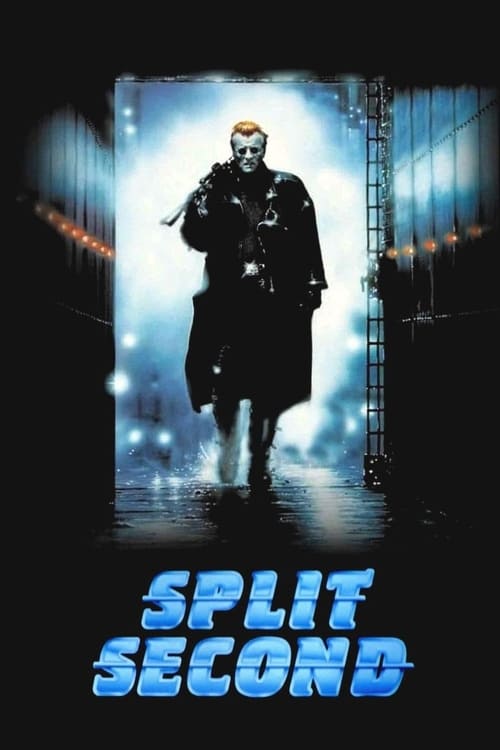
Split Second
In a flooded future London, Detective Harley Stone hunts a serial killer who murdered his partner and has haunted him ever since — but he soon discovers what he is hunting might not be human.
The film disappointed at the box office against its limited budget of $7.0M, earning $5.4M globally (-22% loss).


Plot Structure
Story beats plotted across runtime


Narrative Arc
Emotional journey through the story's key moments
Story Circle
Blueprint 15-beat structure
Arcplot Score Breakdown
Weighted: Precision (70%) + Arc (15%) + Theme (15%)
Split Second (1992) reveals carefully calibrated story structure, characteristic of Tony Maylam's storytelling approach. This structural analysis examines how the film's 15-point plot structure maps to proven narrative frameworks across 1 hour and 30 minutes. With an Arcplot score of 6.8, the film balances conventional beats with creative variation.
Characters
Cast & narrative archetypes

Harley Stone
Dick Durkin
Michelle
The Creature
Main Cast & Characters
Harley Stone
Played by Rutger Hauer
A burned-out detective haunted by his partner's death, hunting a serial killer in flooded 2008 London.
Dick Durkin
Played by Neil Duncan
A by-the-book detective partnered with Stone, who brings logic and order to the chaotic investigation.
Michelle
Played by Kim Cattrall
Stone's girlfriend and the ex-wife of his murdered partner, caught between past trauma and present danger.
The Creature
Played by Ian Dury
A supernatural serial killer hunting victims during astrological alignments, targeting those connected to Stone.
Structural Analysis
The Status Quo at 1 minutes (1% through the runtime) establishes Flooded, dystopian London 2008 is introduced with a brutal murder. Detective Harley Stone is shown as a haunted, obsessive loner fueled by coffee and chocolate, consumed by the unsolved death of his partner Foster.. Structural examination shows that this early placement immediately immerses viewers in the story world.
The inciting incident occurs at 11 minutes when A new victim is discovered with the same ritualistic heart-removal as Stone's partner Foster. The killer Stone has been hunting for years has resurfaced, making this personal.. At 12% through the film, this Disruption aligns precisely with traditional story structure. This beat shifts the emotional landscape, launching the protagonist into the central conflict.
The First Threshold at 22 minutes marks the transition into Act II, occurring at 25% of the runtime. This illustrates the protagonist's commitment to Stone and Durkin discover evidence that the killer is not human—finding DNA that suggests something monstrous. Stone commits fully to hunting this creature, accepting the impossible reality., moving from reaction to action.
At 44 minutes, the Midpoint arrives at 49% of the runtime—precisely centered, creating perfect narrative symmetry. Notably, this crucial beat The creature attacks Stone directly, revealing it has been specifically hunting him—there's a psychic link between them. This is personal: the creature wants Stone specifically. False defeat as Stone realizes he's the target., fundamentally raising what's at risk. The emotional intensity shifts, dividing the narrative into clear before-and-after phases.
The Collapse moment at 67 minutes (74% through) represents the emotional nadir. Here, Michelle is taken by the creature. Stone faces his worst fear—losing someone else he cares about to this monster, just as he lost Foster. His failure to protect her represents the whiff of death., indicates the protagonist at their lowest point. This beat's placement in the final quarter sets up the climactic reversal.
The Second Threshold at 72 minutes initiates the final act resolution at 80% of the runtime. Stone and Durkin arm themselves with massive weapons and descend into the flooded tunnels together. Stone finally synthesizes instinct with intellect, working as a true team to confront the creature., demonstrating the transformation achieved throughout the journey.
Emotional Journey
Split Second's emotional architecture traces a deliberate progression across 15 carefully calibrated beats.
Narrative Framework
This structural analysis employs systematic plot point analysis that identifies crucial turning points. By mapping Split Second against these established plot points, we can identify how Tony Maylam utilizes or subverts traditional narrative conventions. The plot point approach reveals not only adherence to structural principles but also creative choices that distinguish Split Second within the science fiction genre.
Comparative Analysis
Additional science fiction films include The Postman, Mad Max 2 and AVP: Alien vs. Predator.
Plot Points by Act
Act I
SetupStatus Quo
Flooded, dystopian London 2008 is introduced with a brutal murder. Detective Harley Stone is shown as a haunted, obsessive loner fueled by coffee and chocolate, consumed by the unsolved death of his partner Foster.
Theme
Stone's superior tells him he's been running on instinct alone for too long and needs to work with a partner again—suggesting that pure instinct without reason leads to self-destruction.
Worldbuilding
The flooded London setting is established along with Stone's obsessive lifestyle, his psychic connection to the killer, his relationship with Michelle (his dead partner's girlfriend), and the introduction of new partner Dick Durkin.
Disruption
A new victim is discovered with the same ritualistic heart-removal as Stone's partner Foster. The killer Stone has been hunting for years has resurfaced, making this personal.
Resistance
Stone reluctantly works with the intellectual Durkin while investigating crime scenes. Durkin represents analytical methodology that clashes with Stone's gut-driven approach. Stone resists accepting help.
Act II
ConfrontationFirst Threshold
Stone and Durkin discover evidence that the killer is not human—finding DNA that suggests something monstrous. Stone commits fully to hunting this creature, accepting the impossible reality.
Mirror World
Durkin transforms from skeptical academic to true partner, beginning to trust Stone's instincts while bringing his own analytical skills. Their partnership represents the synthesis Stone needs.
Premise
Stone and Durkin hunt the creature through flooded London's underworld. The film delivers on its sci-fi horror premise with close encounters, investigation of the creature's lair, and building dread.
Midpoint
The creature attacks Stone directly, revealing it has been specifically hunting him—there's a psychic link between them. This is personal: the creature wants Stone specifically. False defeat as Stone realizes he's the target.
Opposition
The creature escalates its attacks, targeting people close to Stone including Michelle. Stone's obsession intensifies while the body count rises. The police brass wants to pull Stone off the case.
Collapse
Michelle is taken by the creature. Stone faces his worst fear—losing someone else he cares about to this monster, just as he lost Foster. His failure to protect her represents the whiff of death.
Crisis
Stone spirals, blaming himself. Durkin challenges him to think instead of just feel—to combine his instincts with strategy. Stone must choose between reckless rage and calculated action.
Act III
ResolutionSecond Threshold
Stone and Durkin arm themselves with massive weapons and descend into the flooded tunnels together. Stone finally synthesizes instinct with intellect, working as a true team to confront the creature.
Synthesis
The final confrontation in the creature's lair. Stone and Durkin fight the monster together, using both brute force and tactical thinking. They rescue Michelle and ultimately destroy the creature.
Transformation
Stone, Durkin, and Michelle emerge from the tunnels victorious. Stone is no longer the isolated loner—he's accepted partnership and connection. His demons (literal and figurative) have been confronted.