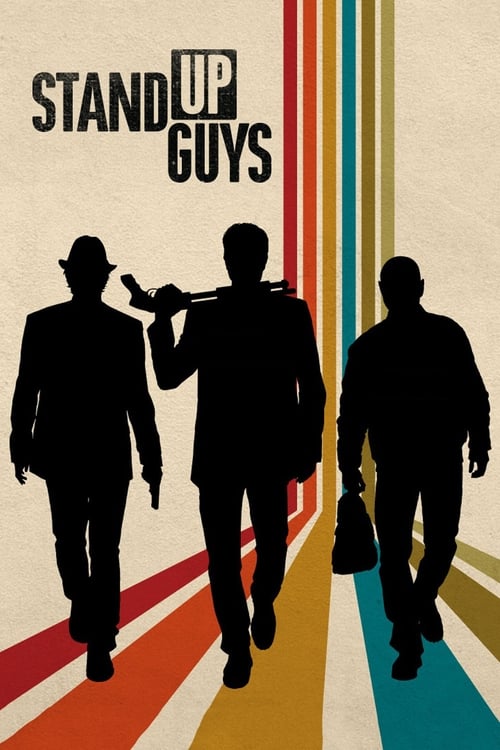
Stand Up Guys
After serving 28 years in prison for accidentally killing the son of a crime boss, newly paroled gangster Val reunites with his former partners in crime, Doc and Hirsch, for a night on the town. As the three men revisit old haunts, reflect on their glory days and try to make up for lost time, one wrestles with a terrible quandary: Doc has orders to kill Val, and time is running out for him to figure out a way out of his dilemma.
The film financial setback against its moderate budget of $15.0M, earning $5.1M globally (-66% loss). While initial box office returns were modest, the film has gained appreciation for its distinctive approach within the thriller genre.


Plot Structure
Story beats plotted across runtime


Narrative Arc
Emotional journey through the story's key moments
Story Circle
Blueprint 15-beat structure
Arcplot Score Breakdown
Weighted: Precision (70%) + Arc (15%) + Theme (15%)
Stand Up Guys (2012) exemplifies deliberately positioned narrative architecture, characteristic of Fisher Stevens's storytelling approach. This structural analysis examines how the film's 15-point plot structure maps to proven narrative frameworks across 1 hour and 35 minutes. With an Arcplot score of 7.3, the film balances conventional beats with creative variation.
Characters
Cast & narrative archetypes

Val
Doc
Hirsch
Alex
Nina
Claphands
Main Cast & Characters
Val
Played by Al Pacino
A newly released ex-con picked up by his old friend Doc after 28 years in prison, seeking one last night of freedom before his fate is sealed.
Doc
Played by Christopher Walken
A retired criminal tasked with killing his best friend Val within 24 hours, torn between loyalty and survival.
Hirsch
Played by Alan Arkin
The third member of the old crew, living in a retirement home, who joins Val and Doc for one final adventure.
Alex
Played by Julianna Margulies
A young sex worker who has a fateful encounter with Val, leading to tragic consequences.
Nina
Played by Addison Timlin
A waitress at the diner who shares a tender connection with Doc and represents a life he could have had.
Claphands
Played by Mark Margolis
The crime boss who demands Val's death as retribution for his son's death during the botched robbery.
Structural Analysis
The Status Quo at 1 minutes (1% through the runtime) establishes Val is released from prison after 28 years. He's alone, aged, and faces an uncertain future in a world that has moved on without him.. Notably, this early placement immediately immerses viewers in the story world.
The inciting incident occurs at 12 minutes when Val takes Viagra and ends up in the hospital with a dangerous erection, forcing Doc to take him to the ER. This comic crisis disrupts Doc's plan and reveals Val's desperate need to feel alive again.. At 13% through the film, this Disruption is delayed, allowing extended setup of the story world. This beat shifts the emotional landscape, launching the protagonist into the central conflict.
The First Threshold at 24 minutes marks the transition into Act II, occurring at 25% of the runtime. This demonstrates the protagonist's commitment to The three men decide to steal a car and have one last adventure together. They actively choose to embrace their old criminal ways for one final night rather than accept their diminished lives., moving from reaction to action.
At 48 minutes, the Midpoint arrives at 51% of the runtime—precisely centered, creating perfect narrative symmetry. Structural examination shows that this crucial beat False defeat: Hirsch has a health crisis and they realize time is running out in more ways than one. The fun and games are over as mortality becomes real, not abstract. Doc must confront his mission., fundamentally raising what's at risk. The emotional intensity shifts, dividing the narrative into clear before-and-after phases.
The Collapse moment at 72 minutes (76% through) represents the emotional nadir. Here, Val discovers Doc has been ordered to kill him. Their friendship appears destroyed. Hirsch dies. The "whiff of death" is literal—their friend is gone and Val realizes he's next., reveals the protagonist at their lowest point. This beat's placement in the final quarter sets up the climactic reversal.
The Second Threshold at 76 minutes initiates the final act resolution at 80% of the runtime. Val chooses to go with Doc willingly, understanding the code they lived by. Doc realizes what true loyalty means. They synthesize their old criminal code with genuine friendship and make a plan together., demonstrating the transformation achieved throughout the journey.
Emotional Journey
Stand Up Guys's emotional architecture traces a deliberate progression across 15 carefully calibrated beats.
Narrative Framework
This structural analysis employs systematic plot point analysis that identifies crucial turning points. By mapping Stand Up Guys against these established plot points, we can identify how Fisher Stevens utilizes or subverts traditional narrative conventions. The plot point approach reveals not only adherence to structural principles but also creative choices that distinguish Stand Up Guys within the thriller genre.
Comparative Analysis
Additional thriller films include The Warriors, Thunderball and Rustom.
Plot Points by Act
Act I
SetupStatus Quo
Val is released from prison after 28 years. He's alone, aged, and faces an uncertain future in a world that has moved on without him.
Theme
Doc picks up Val and says, "We got one more night to be stand up guys." The theme of loyalty, redemption, and making peace with one's past is established.
Worldbuilding
Doc and Val reconnect, visiting old haunts. We learn Doc has been ordered to kill Val by midnight as revenge for a job gone wrong decades ago that killed the mob boss's son. The world of aging criminals is established.
Disruption
Val takes Viagra and ends up in the hospital with a dangerous erection, forcing Doc to take him to the ER. This comic crisis disrupts Doc's plan and reveals Val's desperate need to feel alive again.
Resistance
Doc debates his mission while helping Val. They break their friend Hirsch out of a retirement home. The three old criminals bond, and Doc struggles with whether he can actually kill his best friend.
Act II
ConfrontationFirst Threshold
The three men decide to steal a car and have one last adventure together. They actively choose to embrace their old criminal ways for one final night rather than accept their diminished lives.
Mirror World
They meet Alex, a young sex worker, who represents youth, possibility, and a different kind of loyalty. She becomes part of their crew and mirrors what they've lost and what still matters.
Premise
The promise of the premise: three old gangsters having one last wild night. They steal cars, visit a brothel, reconnect with their past, and relive their glory days while the clock ticks toward Doc's deadline.
Midpoint
False defeat: Hirsch has a health crisis and they realize time is running out in more ways than one. The fun and games are over as mortality becomes real, not abstract. Doc must confront his mission.
Opposition
The mob boss pressures Doc about the deadline. Val begins to suspect the truth. The men settle old scores and confront what they've done with their lives. Their past crimes and failures close in on them.
Collapse
Val discovers Doc has been ordered to kill him. Their friendship appears destroyed. Hirsch dies. The "whiff of death" is literal—their friend is gone and Val realizes he's next.
Crisis
Doc and Val process Hirsch's death and confront their own mortality. Doc wrestles with his conscience. Val must decide whether to run or face his fate. Both men sit in darkness with their choices.
Act III
ResolutionSecond Threshold
Val chooses to go with Doc willingly, understanding the code they lived by. Doc realizes what true loyalty means. They synthesize their old criminal code with genuine friendship and make a plan together.
Synthesis
The finale: Doc and Val confront the mob boss together. They execute their final play, taking revenge for Hirsch and freeing themselves from the past. They settle accounts on their own terms.
Transformation
Doc and Val drive off together at sunrise, having survived the night. They're still "stand up guys" but transformed—free from the past, loyal to what matters, and facing whatever time remains as friends.