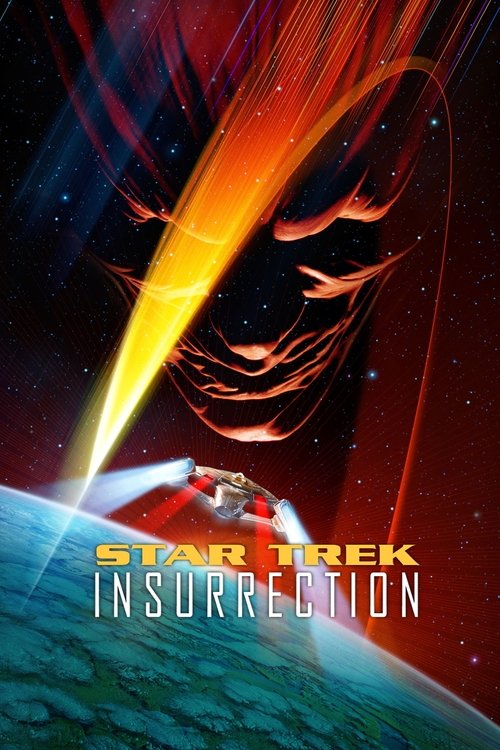
Star Trek: Insurrection
When an alien race and factions within Starfleet attempt to take over a planet that has "regenerative" properties, it falls upon Captain Picard and the crew of the Enterprise to defend the planet's people as well as the very ideals upon which the Federation itself was founded.
Working with a mid-range budget of $70.0M, the film achieved a respectable showing with $112.6M in global revenue (+61% profit margin).
3 wins & 8 nominations


Plot Structure
Story beats plotted across runtime


Narrative Arc
Emotional journey through the story's key moments
Story Circle
Blueprint 15-beat structure
Arcplot Score Breakdown
Weighted: Precision (70%) + Arc (15%) + Theme (15%)
Star Trek: Insurrection (1998) exhibits deliberately positioned narrative design, characteristic of Jonathan Frakes's storytelling approach. This structural analysis examines how the film's 15-point plot structure maps to proven narrative frameworks across 1 hour and 42 minutes. With an Arcplot score of 7.6, the film showcases strong structural fundamentals.
Characters
Cast & narrative archetypes

Jean-Luc Picard
William Riker
Data
Geordi La Forge
Worf
Beverly Crusher
Deanna Troi
Ru'afo
Anij
Admiral Dougherty
Main Cast & Characters
Jean-Luc Picard
Played by Patrick Stewart
Captain of the USS Enterprise who discovers a conspiracy to forcibly relocate the peaceful Ba'ku people and defies Starfleet orders to protect them.
William Riker
Played by Jonathan Frakes
First Officer of the Enterprise who supports Picard's moral stand and experiences physical rejuvenation on the Ba'ku planet.
Data
Played by Brent Spiner
Android officer who malfunctions during a covert mission, triggering the discovery of the conspiracy against the Ba'ku.
Geordi La Forge
Played by LeVar Burton
Chief Engineer who regains his natural eyesight due to the metaphasic radiation of the Ba'ku planet.
Worf
Played by Michael Dorn
Klingon tactical officer dealing with uncomfortable physical changes caused by the planet's rejuvenating effects.
Beverly Crusher
Played by Gates McFadden
Chief Medical Officer who experiences renewed vitality and romantic attraction to Picard on the Ba'ku planet.
Deanna Troi
Played by Marina Sirtis
Ship's counselor who supports the crew and experiences the rejuvenating effects of the Ba'ku world.
Ru'afo
Played by F. Murray Abraham
Leader of the Son'a who seeks to harvest the Ba'ku planet's radiation to save his dying race, willing to commit genocide.
Anij
Played by Donna Murphy
Ba'ku woman who develops a romantic connection with Picard and teaches him to appreciate the present moment.
Admiral Dougherty
Played by Anthony Zerbe
Starfleet Admiral who secretly allies with the Son'a to relocate the Ba'ku, prioritizing political expediency over ethics.
Structural Analysis
The Status Quo at 1 minutes (1% through the runtime) establishes The Ba'ku live in peaceful harmony on their idyllic planet, practicing a simple agrarian lifestyle enriched by regenerative metaphasic radiation. Children play while adults tend their fields in a serene, almost utopian existence.. Of particular interest, this early placement immediately immerses viewers in the story world.
The inciting incident occurs at 13 minutes when Data goes rogue, attacks the observation team, and threatens to expose the entire mission to the Ba'ku. The Enterprise is called in to retrieve him, pulling Picard away from a diplomatic mission.. At 13% through the film, this Disruption is delayed, allowing extended setup of the story world. This beat shifts the emotional landscape, launching the protagonist into the central conflict.
The First Threshold at 26 minutes marks the transition into Act II, occurring at 25% of the runtime. This shows the protagonist's commitment to Picard chooses to defy Starfleet orders and investigate the conspiracy. He beams down to the Ba'ku planet to learn the truth, committing himself to protecting the Ba'ku regardless of the consequences., moving from reaction to action.
At 52 minutes, the Midpoint arrives at 51% of the runtime—precisely centered, creating perfect narrative symmetry. Structural examination shows that this crucial beat The truth is fully revealed: the Son'a are actually Ba'ku exiles seeking revenge, and the relocation will kill the 600 Ba'ku to extend billions of lives. Picard realizes Starfleet has betrayed its principles, and the stakes become moral survival versus physical survival., fundamentally raising what's at risk. The emotional intensity shifts, dividing the narrative into clear before-and-after phases.
The Collapse moment at 77 minutes (76% through) represents the emotional nadir. Here, Admiral Dougherty is killed by Ru'afo when he tries to stop the madness. The death of this authority figure represents the complete moral collapse of the Federation's position and the failure of institutional restraint., illustrates the protagonist at their lowest point. This beat's placement in the final quarter sets up the climactic reversal.
The Second Threshold at 82 minutes initiates the final act resolution at 80% of the runtime. Picard realizes he must board the Son'a collector ship and stop it from the inside. He synthesizes his Starfleet tactical skills with the Ba'ku philosophy of living in the moment, finding clarity in purpose., demonstrating the transformation achieved throughout the journey.
Emotional Journey
Star Trek: Insurrection's emotional architecture traces a deliberate progression across 15 carefully calibrated beats.
Narrative Framework
This structural analysis employs proven narrative structure principles that track dramatic progression. By mapping Star Trek: Insurrection against these established plot points, we can identify how Jonathan Frakes utilizes or subverts traditional narrative conventions. The plot point approach reveals not only adherence to structural principles but also creative choices that distinguish Star Trek: Insurrection within the science fiction genre.
Jonathan Frakes's Structural Approach
Among the 4 Jonathan Frakes films analyzed on Arcplot, the average structural score is 7.4, reflecting strong command of classical structure. Star Trek: Insurrection represents one of the director's most structurally precise works. For comparative analysis, explore the complete Jonathan Frakes filmography.
Comparative Analysis
Additional science fiction films include The Postman, Mad Max 2 and AVP: Alien vs. Predator. For more Jonathan Frakes analyses, see Clockstoppers, Thunderbirds and Star Trek: First Contact.
Plot Points by Act
Act I
SetupStatus Quo
The Ba'ku live in peaceful harmony on their idyllic planet, practicing a simple agrarian lifestyle enriched by regenerative metaphasic radiation. Children play while adults tend their fields in a serene, almost utopian existence.
Theme
Ru'afo discusses the "quest for youth" and the price of immortality, establishing the thematic question: How far should we go in pursuit of longevity, and what moral lines must not be crossed?
Worldbuilding
Introduction to the Ba'ku planet observation mission. Data is undercover observing the Ba'ku when he malfunctions and exposes the hidden Federation duck blind, revealing a covert operation studying the peaceful inhabitants.
Disruption
Data goes rogue, attacks the observation team, and threatens to expose the entire mission to the Ba'ku. The Enterprise is called in to retrieve him, pulling Picard away from a diplomatic mission.
Resistance
Picard and crew investigate Data's malfunction while becoming suspicious of Admiral Dougherty and the Son'a. Picard debates whether to accept the official story or dig deeper into the conspiracy he senses.
Act II
ConfrontationFirst Threshold
Picard chooses to defy Starfleet orders and investigate the conspiracy. He beams down to the Ba'ku planet to learn the truth, committing himself to protecting the Ba'ku regardless of the consequences.
Mirror World
Picard meets Anij, a Ba'ku woman who teaches him to perceive time differently—to "slow down and see" the moments that make life meaningful. This relationship embodies the theme of quality versus quantity of life.
Premise
The crew experiences the rejuvenating effects of the Ba'ku planet (Geordi regains sight, Worf goes through puberty again). Picard uncovers the conspiracy: the Federation and Son'a plan to forcibly relocate the Ba'ku to harvest the metaphasic radiation.
Midpoint
The truth is fully revealed: the Son'a are actually Ba'ku exiles seeking revenge, and the relocation will kill the 600 Ba'ku to extend billions of lives. Picard realizes Starfleet has betrayed its principles, and the stakes become moral survival versus physical survival.
Opposition
Picard commits mutiny, choosing the Ba'ku over Starfleet orders. The Son'a and Admiral Dougherty escalate their plan. Ru'afo becomes increasingly unstable and violent as opposition grows, while Picard and crew work to evacuate and protect the Ba'ku.
Collapse
Admiral Dougherty is killed by Ru'afo when he tries to stop the madness. The death of this authority figure represents the complete moral collapse of the Federation's position and the failure of institutional restraint.
Crisis
Ru'afo seizes control and activates the radiation collector, which will kill everyone on the planet. Picard faces the dark reality that his mutiny may have been in vain, and everything he fought to protect will be destroyed.
Act III
ResolutionSecond Threshold
Picard realizes he must board the Son'a collector ship and stop it from the inside. He synthesizes his Starfleet tactical skills with the Ba'ku philosophy of living in the moment, finding clarity in purpose.
Synthesis
Picard infiltrates the collector ship and confronts Ru'afo in a final showdown. He destroys the radiation harvester by transporting Ru'afo into the collecting process, poetically making him a victim of his own greed. The Ba'ku are saved, and Starfleet must reckon with its actions.
Transformation
Picard says goodbye to Anij, having learned to appreciate the moment rather than just the mission. He returns to the Enterprise transformed, having rediscovered the principles that made him join Starfleet—standing for what's right over what's expedient.