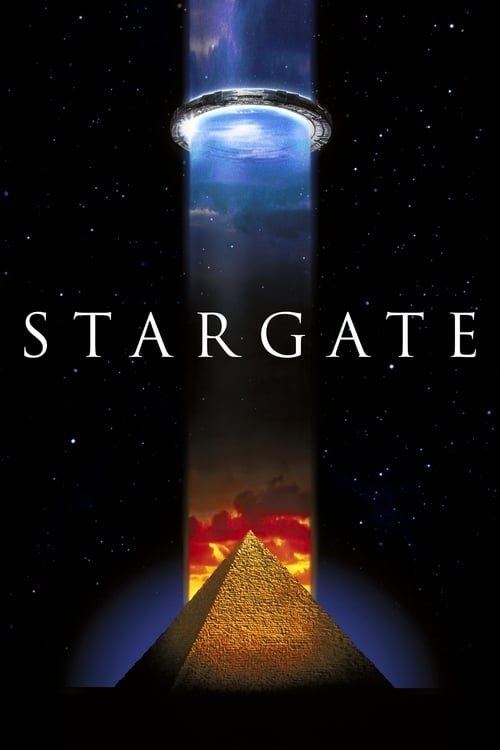
Stargate
An interstellar teleportation device, found in Egypt, leads to a planet with humans resembling ancient Egyptians who worship the god Ra.
Despite a moderate budget of $55.0M, Stargate became a financial success, earning $196.6M worldwide—a 257% return.
6 wins & 6 nominations


Plot Structure
Story beats plotted across runtime


Narrative Arc
Emotional journey through the story's key moments
Story Circle
Blueprint 15-beat structure
Characters
Cast & narrative archetypes

Dr. Daniel Jackson
Colonel Jack O'Neil
Ra
Sha'uri
Skaara
Lieutenant Kawalsky
Main Cast & Characters
Dr. Daniel Jackson
Played by James Spader
A brilliant but outcast Egyptologist recruited to decipher ancient symbols and lead the Stargate mission.
Colonel Jack O'Neil
Played by Kurt Russell
A suicidal military officer given one last mission to lead a team through the Stargate to an alien world.
Ra
Played by Jaye Davidson
An ancient alien who poses as the Egyptian sun god, ruling over enslaved humans on another planet.
Sha'uri
Played by Mili Avital
A young woman from the alien planet who becomes Daniel's love interest and cultural bridge.
Skaara
Played by Alexis Cruz
Sha'uri's brother and a brave young man who befriends the Earth team but is taken as a host by Ra's forces.
Lieutenant Kawalsky
Played by John Diehl
O'Neil's right-hand man and loyal second-in-command on the mission through the Stargate.
Structural Analysis
The Status Quo at 1 minutes (1% through the runtime) establishes Daniel Jackson presents his ridiculed theory about the pyramids to an uninterested academic audience, establishing him as an outcast scholar grieving his wife's death, isolated and purposeless.. Notably, this early placement immediately immerses viewers in the story world.
The inciting incident occurs at 15 minutes when Daniel successfully decodes the Stargate cartouche, solving a puzzle the military couldn't crack for years, proving his theories have value and opening the possibility of interstellar travel.. At 12% through the film, this Disruption aligns precisely with traditional story structure. This beat shifts the emotional landscape, launching the protagonist into the central conflict.
The First Threshold at 31 minutes marks the transition into Act II, occurring at 26% of the runtime. This illustrates the protagonist's commitment to Daniel makes the active choice to step through the Stargate, leaving Earth behind and entering the unknown world of Abydos, accepting he may never return., moving from reaction to action.
At 61 minutes, the Midpoint arrives at 50% of the runtime—precisely centered, creating perfect narrative symmetry. Of particular interest, this crucial beat Ra captures the team and reveals his true parasitic alien nature, raising the stakes by threatening to send a nuclear bomb enhanced with his power back to Earth, turning the mission from exploration to survival., fundamentally raising what's at risk. The emotional intensity shifts, dividing the narrative into clear before-and-after phases.
The Collapse moment at 91 minutes (75% through) represents the emotional nadir. Here, The young boy Skaara, whom O'Neil has bonded with as a surrogate son, is taken as a host by Ra's forces—a symbolic death of innocence and hope, devastating O'Neil and Daniel., reveals the protagonist at their lowest point. This beat's placement in the final quarter sets up the climactic reversal.
The Second Threshold at 96 minutes initiates the final act resolution at 79% of the runtime. Daniel realizes they can inspire the Abydonian people to rise up against Ra, synthesizing his knowledge of history with O'Neil's military leadership. The people choose to fight for freedom rather than submit., demonstrating the transformation achieved throughout the journey.
Emotional Journey
Stargate's emotional architecture traces a deliberate progression across 15 carefully calibrated beats.
Narrative Framework
This structural analysis employs systematic plot point analysis that identifies crucial turning points. By mapping Stargate against these established plot points, we can identify how Roland Emmerich utilizes or subverts traditional narrative conventions. The plot point approach reveals not only adherence to structural principles but also creative choices that distinguish Stargate within the action genre.
Roland Emmerich's Structural Approach
Among the 12 Roland Emmerich films analyzed on Arcplot, the average structural score is 7.0, demonstrating varied approaches to story architecture. Stargate exemplifies the director's characteristic narrative technique. For comparative analysis, explore the complete Roland Emmerich filmography.
Comparative Analysis
Additional action films include The Bad Guys, Puss in Boots and Venom: The Last Dance. For more Roland Emmerich analyses, see The Day After Tomorrow, White House Down and 10,000 BC.
Plot Points by Act
Act I
SetupStatus Quo
Daniel Jackson presents his ridiculed theory about the pyramids to an uninterested academic audience, establishing him as an outcast scholar grieving his wife's death, isolated and purposeless.
Theme
Catherine Langford tells Daniel, "The truth is out there if you're brave enough to find it," suggesting the film's theme: courage to seek truth and purpose beyond fear and isolation.
Worldbuilding
Daniel's failed academic career, Catherine's recruitment, introduction to the Stargate program and Colonel O'Neil's suicidal mission mindset, establishing the military-scientific tension and the mysterious alien artifact.
Disruption
Daniel successfully decodes the Stargate cartouche, solving a puzzle the military couldn't crack for years, proving his theories have value and opening the possibility of interstellar travel.
Resistance
Daniel debates whether to join the mission, learns about the Stargate's function, meets the military team led by the death-seeking O'Neil, and prepares for the journey despite not knowing if return is possible.
Act II
ConfrontationFirst Threshold
Daniel makes the active choice to step through the Stargate, leaving Earth behind and entering the unknown world of Abydos, accepting he may never return.
Mirror World
Daniel meets Sha'uri, the daughter of the tribe leader Kasuf, who will become his love interest and represent connection, purpose, and belonging—everything Daniel has been missing.
Premise
Daniel explores Abydos, learns the people are enslaved descendants of ancient Egyptians, begins teaching them and bonding with Sha'uri, discovers his theories were right, and realizes Ra is an alien, not a god.
Midpoint
Ra captures the team and reveals his true parasitic alien nature, raising the stakes by threatening to send a nuclear bomb enhanced with his power back to Earth, turning the mission from exploration to survival.
Opposition
Ra's forces hunt the team, Daniel and O'Neil are executed but saved by the Abydonians, the team regroups in the desert, and they plan a rebellion while Ra prepares to destroy Earth with the enhanced bomb.
Collapse
The young boy Skaara, whom O'Neil has bonded with as a surrogate son, is taken as a host by Ra's forces—a symbolic death of innocence and hope, devastating O'Neil and Daniel.
Crisis
The team faces their darkest moment: captured friends, Earth threatened, the boy lost, and seemingly no way to defeat Ra's superior technology. O'Neil and Daniel must find new resolve.
Act III
ResolutionSecond Threshold
Daniel realizes they can inspire the Abydonian people to rise up against Ra, synthesizing his knowledge of history with O'Neil's military leadership. The people choose to fight for freedom rather than submit.
Synthesis
The Abydonians rebel against Ra, the team storms the pyramid ship, Daniel confronts Ra, they transport the bomb to Ra's ship, and it detonates in orbit, destroying the false god and freeing the people.
Transformation
Daniel chooses to stay on Abydos with Sha'uri and the freed people, having found purpose, love, and belonging—transformed from an isolated, suicidal academic into a confident leader who helped liberate a civilization.