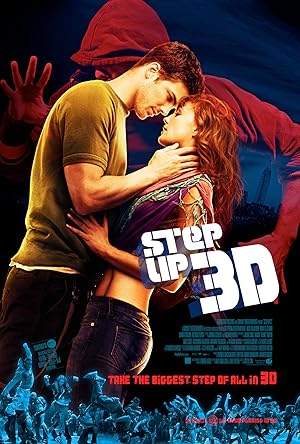
Step Up 3D
A tight-knit group of New York City street dancers, including Luke (Malambri) and Natalie (Vinson), team up with NYU freshman Moose (Sevani), and find themselves pitted against the world's best hip hop dancers in a high-stakes showdown that will change their lives forever.
Despite a mid-range budget of $30.0M, Step Up 3D became a commercial success, earning $159.3M worldwide—a 431% return.


Plot Structure
Story beats plotted across runtime


Narrative Arc
Emotional journey through the story's key moments
Story Circle
Blueprint 15-beat structure
Arcplot Score Breakdown
Weighted: Precision (70%) + Arc (15%) + Theme (15%)
Step Up 3D (2010) demonstrates deliberately positioned dramatic framework, characteristic of Jon M. Chu's storytelling approach. This structural analysis examines how the film's 15-point plot structure maps to proven narrative frameworks across 1 hour and 47 minutes. With an Arcplot score of 6.9, the film balances conventional beats with creative variation.
Characters
Cast & narrative archetypes

Luke Katcher
Natalie
Moose
Julien
Camille
Jason
Main Cast & Characters
Luke Katcher
Played by Rick Malambri
A passionate street dancer who runs a dance crew called The Pirates and dreams of winning the World Jam dance competition.
Natalie
Played by Sharni Vinson
A talented dancer from upstate New York who joins The Pirates after being drawn into the underground dance scene.
Moose
Played by Adam G. Sevani
An engineering student and gifted freestyle dancer who returns from the previous film to help his friends win World Jam.
Julien
Played by Joe Slaughter
Luke's childhood friend turned rival who leads the competing dance crew The Samurai and will do anything to win.
Camille
Played by Alyson Stoner
Moose's girlfriend and engineering student who supports his passion for dance while keeping him grounded.
Jason
Played by Stephen 'tWitch' Boss
A talented member of The Pirates crew who helps choreograph their routines and serves as Luke's right-hand man.
Structural Analysis
The Status Quo at 1 minutes (1% through the runtime) establishes Luke and his crew perform an electrifying street dance in New York, establishing their passion, skill, and tight-knit community in their warehouse home.. Significantly, this early placement immediately immerses viewers in the story world.
The inciting incident occurs at 14 minutes when Luke discovers the warehouse is being foreclosed. They have 30 days to come up with the money or lose their home and dance space.. At 13% through the film, this Disruption is delayed, allowing extended setup of the story world. This beat shifts the emotional landscape, launching the protagonist into the central conflict.
The First Threshold at 26 minutes marks the transition into Act II, occurring at 24% of the runtime. This demonstrates the protagonist's commitment to Luke and the Pirates commit to entering the World Jam competition with Natalie as their new member, making it official. They choose to fight for their home and crew through dance., moving from reaction to action.
At 54 minutes, the Midpoint arrives at 50% of the runtime—precisely centered, creating perfect narrative symmetry. Notably, this crucial beat The truth explodes: Natalie is revealed to be from the Samurai crew, their biggest rival. Luke feels betrayed, and the crew's trust is shattered. False victory of their growing bond becomes false defeat., fundamentally raising what's at risk. The emotional intensity shifts, dividing the narrative into clear before-and-after phases.
The Collapse moment at 81 minutes (76% through) represents the emotional nadir. Here, The Pirates lose a crucial battle to the Samurai crew, humiliated publicly. The crew falls apart completely, with members quitting. Luke faces losing everything: his crew, his home, and Natalie., indicates the protagonist at their lowest point. This beat's placement in the final quarter sets up the climactic reversal.
The Second Threshold at 86 minutes initiates the final act resolution at 81% of the runtime. Natalie returns and shows Luke her father's story—dancing was about heart, not competition. Luke realizes he must dance for love and community, not ego. He reaches out to reunite the crew with humility and authenticity., demonstrating the transformation achieved throughout the journey.
Emotional Journey
Step Up 3D's emotional architecture traces a deliberate progression across 15 carefully calibrated beats.
Narrative Framework
This structural analysis employs structural analysis methodology used to understand storytelling architecture. By mapping Step Up 3D against these established plot points, we can identify how Jon M. Chu utilizes or subverts traditional narrative conventions. The plot point approach reveals not only adherence to structural principles but also creative choices that distinguish Step Up 3D within the drama genre.
Jon M. Chu's Structural Approach
Among the 8 Jon M. Chu films analyzed on Arcplot, the average structural score is 7.0, reflecting strong command of classical structure. Step Up 3D takes a more unconventional approach compared to the director's typical style. For comparative analysis, explore the complete Jon M. Chu filmography.
Comparative Analysis
Additional drama films include After Thomas, South Pacific and Dirty Dancing: Havana Nights. For more Jon M. Chu analyses, see G.I. Joe: Retaliation, Crazy Rich Asians and In the Heights.
Plot Points by Act
Act I
SetupStatus Quo
Luke and his crew perform an electrifying street dance in New York, establishing their passion, skill, and tight-knit community in their warehouse home.
Theme
Moose tells Luke, "You gotta dance from your heart, not just to win." This plants the thematic question about authenticity versus competition.
Worldbuilding
Introduction to Luke's Pirates crew living in a warehouse, their bond, their financial struggles, and the upcoming World Jam competition. Luke meets Natalie and is immediately drawn to her dancing.
Disruption
Luke discovers the warehouse is being foreclosed. They have 30 days to come up with the money or lose their home and dance space.
Resistance
Luke debates solutions and decides to recruit Natalie for the crew. He pursues her, convinces her to audition, and brings her into the Pirates family despite not knowing she's from the rival Samurai crew.
Act II
ConfrontationFirst Threshold
Luke and the Pirates commit to entering the World Jam competition with Natalie as their new member, making it official. They choose to fight for their home and crew through dance.
Mirror World
Luke and Natalie share an intimate dance together, revealing a deeper connection. She represents the emotional, artistic side of dance that Luke has been missing.
Premise
The Pirates train intensely, create innovative routines, and bond as a family. Luke and Natalie's romance blossoms. Spectacular dance sequences showcase what the film promised: amazing 3D choreography and crew unity.
Midpoint
The truth explodes: Natalie is revealed to be from the Samurai crew, their biggest rival. Luke feels betrayed, and the crew's trust is shattered. False victory of their growing bond becomes false defeat.
Opposition
The Pirates fracture from internal conflict. Luke closes himself off emotionally. Moose is pulled away by his girlfriend. The Samurai crew taunts them. Financial pressure mounts as the foreclosure deadline approaches.
Collapse
The Pirates lose a crucial battle to the Samurai crew, humiliated publicly. The crew falls apart completely, with members quitting. Luke faces losing everything: his crew, his home, and Natalie.
Crisis
Luke sits in the empty warehouse, broken and alone. He reflects on what dance and the crew truly meant to him, processing his losses and his own role in pushing people away.
Act III
ResolutionSecond Threshold
Natalie returns and shows Luke her father's story—dancing was about heart, not competition. Luke realizes he must dance for love and community, not ego. He reaches out to reunite the crew with humility and authenticity.
Synthesis
The Pirates reunite and perform at the World Jam finals with pure heart and joy. Their routine combines technical skill with emotional authenticity. Luke dances vulnerably, leading with openness rather than ego.
Transformation
The Pirates celebrate together in their warehouse, saved and transformed. Luke and Natalie are together, and the crew is stronger than ever. Luke has learned to dance from the heart, not just to win.