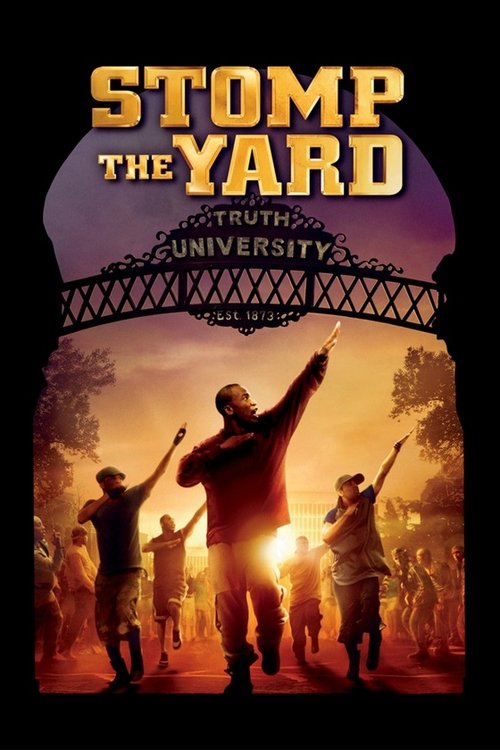
Stomp the Yard
After the death of his younger brother, a troubled 19-year-old street dancer from Los Angeles is able to bypass juvenile hall by enrolling in the historically black, Truth University in Atlanta, Georgia. But his efforts to get an education and woo the girl he likes are sidelined when he is courted by the top two campus fraternities, both of which want and need his fierce street-style dance moves to win the highly coveted national step show competition.
Despite its small-scale budget of $13.0M, Stomp the Yard became a financial success, earning $75.5M worldwide—a 481% return. The film's distinctive approach found its audience, illustrating how strong storytelling can transcend budget limitations.


Plot Structure
Story beats plotted across runtime


Narrative Arc
Emotional journey through the story's key moments
Story Circle
Blueprint 15-beat structure
Arcplot Score Breakdown
Weighted: Precision (70%) + Arc (15%) + Theme (15%)
Stomp the Yard (2007) exhibits deliberately positioned dramatic framework, characteristic of Sylvain White's storytelling approach. This structural analysis examines how the film's 15-point plot structure maps to proven narrative frameworks across 1 hour and 54 minutes. With an Arcplot score of 7.0, the film balances conventional beats with creative variation.
Characters
Cast & narrative archetypes

DJ Williams
April Palmer
Grant
Sylvester
Rich Brown
Zeke
Noel
Main Cast & Characters
DJ Williams
Played by Columbus Short
A talented street dancer from Los Angeles who must adapt to the world of competitive stepping after a personal tragedy leads him to Atlanta
April Palmer
Played by Meagan Good
An aspiring journalist and honor student at Truth University who becomes DJ's love interest and helps him find his place in the new environment
Grant
Played by Darrin Dewitt Henson
The confident and skilled leader of the Theta Nu Theta fraternity step team, who initially clashes with DJ but represents excellence in stepping
Sylvester
Played by Harry Lennix
DJ's uncle and a Truth University staff member who provides guidance and a second chance for his nephew after tragedy strikes
Rich Brown
Played by Ne-Yo
A member of the Theta Nu Theta fraternity who befriends DJ and helps him navigate the world of Greek life and stepping
Zeke
Played by Brian J. White
DJ's loyal friend from the crew who supports him through challenges and represents his connection to his street dancing roots
Noel
Played by Laz Alonso
A member of the Mu Gamma Xi fraternity who becomes DJ's rival and represents the competitive tension between fraternities
Structural Analysis
The Status Quo at 1 minutes (1% through the runtime) establishes DJ Williams is a gifted street dancer in Los Angeles, performing with his crew and brother Duron at underground battle competitions, living for the art and brotherhood of dance.. Notably, this early placement immediately immerses viewers in the story world.
The inciting incident occurs at 15 minutes when A street battle turns violent when rivals ambush DJ and Duron. In the chaos of the fight, Duron is shot and killed, devastating DJ and destroying his world in an instant.. At 13% through the film, this Disruption is delayed, allowing extended setup of the story world. This beat shifts the emotional landscape, launching the protagonist into the central conflict.
The First Threshold at 28 minutes marks the transition into Act II, occurring at 25% of the runtime. This demonstrates the protagonist's commitment to DJ decides to enroll at Truth University and attend classes, making the choice to enter this new world of historically black college life, stepping away from street life and toward structure and education., moving from reaction to action.
At 58 minutes, the Midpoint arrives at 51% of the runtime—precisely centered, creating perfect narrative symmetry. Significantly, this crucial beat DJ is formally initiated into Theta Nu Theta fraternity. He's now part of the brotherhood and will compete on the step team, seemingly achieving his goal of belonging and honoring Duron's memory through dance. But the stakes rise as Grant's jealousy intensifies and the national championship pressure mounts., fundamentally raising what's at risk. The emotional intensity shifts, dividing the narrative into clear before-and-after phases.
The Collapse moment at 86 minutes (75% through) represents the emotional nadir. Here, DJ is kicked off the step team by Grant and the fraternity leadership after a confrontation where his street attitude and insubordination cross the line. He loses his position, his brotherhood, and his chance to compete, hitting rock bottom and facing the same undisciplined behavior that contributed to Duron's death., indicates the protagonist at their lowest point. This beat's placement in the final quarter sets up the climactic reversal.
The Second Threshold at 92 minutes initiates the final act resolution at 81% of the runtime. Uncle Nate and April help DJ realize that Duron's death wasn't his fault, and that honoring his brother means embracing discipline and growth, not running away. DJ understands he must combine his street dance soul with stepping's structure—not choose between them. The team, seeing Grant's toxicity, asks DJ to return and lead them., demonstrating the transformation achieved throughout the journey.
Emotional Journey
Stomp the Yard's emotional architecture traces a deliberate progression across 15 carefully calibrated beats.
Narrative Framework
This structural analysis employs proven narrative structure principles that track dramatic progression. By mapping Stomp the Yard against these established plot points, we can identify how Sylvain White utilizes or subverts traditional narrative conventions. The plot point approach reveals not only adherence to structural principles but also creative choices that distinguish Stomp the Yard within the drama genre.
Sylvain White's Structural Approach
Among the 3 Sylvain White films analyzed on Arcplot, the average structural score is 7.2, reflecting strong command of classical structure. Stomp the Yard takes a more unconventional approach compared to the director's typical style. For comparative analysis, explore the complete Sylvain White filmography.
Comparative Analysis
Additional drama films include After Thomas, South Pacific and Dirty Dancing: Havana Nights. For more Sylvain White analyses, see Slender Man, The Losers.
Plot Points by Act
Act I
SetupStatus Quo
DJ Williams is a gifted street dancer in Los Angeles, performing with his crew and brother Duron at underground battle competitions, living for the art and brotherhood of dance.
Theme
During the street battle, a rival dancer taunts DJ's crew about discipline and structure vs. raw talent, foreshadowing the film's central question: Can undisciplined talent evolve through structure without losing its soul?
Worldbuilding
Establishing DJ's world in LA: his tight bond with brother Duron, their street dance crew, the underground battle scene, and the mounting tension with rival crews. Shows DJ's raw talent but also his impulsiveness and lack of direction beyond dancing.
Disruption
A street battle turns violent when rivals ambush DJ and Duron. In the chaos of the fight, Duron is shot and killed, devastating DJ and destroying his world in an instant.
Resistance
Grieving and lost, DJ is sent to live with his aunt Jackie in Atlanta. He resists this new life, carrying guilt over Duron's death. Aunt Jackie and Uncle Nate push him to enroll at Truth University, offering him a scholarship and a chance to start over, but DJ is reluctant to leave his past behind.
Act II
ConfrontationFirst Threshold
DJ decides to enroll at Truth University and attend classes, making the choice to enter this new world of historically black college life, stepping away from street life and toward structure and education.
Mirror World
DJ meets April Palmer, an intelligent and focused student who challenges him academically and personally. She represents the disciplined, purpose-driven life he's never known, and their connection begins to teach him about commitment beyond dancing.
Premise
DJ discovers stepping—the precision-based, fraternity step dancing culture at Truth University. He's drawn to Theta Nu Theta fraternity and begins pledging, learning the discipline and brotherhood of Greek life. He navigates rivalries with Grant (April's ex and Theta captain), bonds with roommate Rich, and explores his feelings for April while discovering stepping combines his raw talent with new structure.
Midpoint
DJ is formally initiated into Theta Nu Theta fraternity. He's now part of the brotherhood and will compete on the step team, seemingly achieving his goal of belonging and honoring Duron's memory through dance. But the stakes rise as Grant's jealousy intensifies and the national championship pressure mounts.
Opposition
Grant sabotages DJ at every turn, spreading rumors about his street past and creating friction within the team. DJ's relationship with April deepens, further antagonizing Grant. Academic pressures mount as DJ struggles to balance fraternity demands with schoolwork. The team's unity fractures as Grant's resentment and DJ's street instincts clash with stepping's discipline.
Collapse
DJ is kicked off the step team by Grant and the fraternity leadership after a confrontation where his street attitude and insubordination cross the line. He loses his position, his brotherhood, and his chance to compete, hitting rock bottom and facing the same undisciplined behavior that contributed to Duron's death.
Crisis
DJ spirals in guilt and anger, contemplating leaving Truth University entirely. He isolates himself from April and his friends. In his darkest moment, he must confront whether he'll repeat his past mistakes or finally grow into the man Duron would have wanted him to be.
Act III
ResolutionSecond Threshold
Uncle Nate and April help DJ realize that Duron's death wasn't his fault, and that honoring his brother means embracing discipline and growth, not running away. DJ understands he must combine his street dance soul with stepping's structure—not choose between them. The team, seeing Grant's toxicity, asks DJ to return and lead them.
Synthesis
DJ returns to the team and choreographs a revolutionary routine that blends street dance with traditional stepping. He leads with humility and discipline, uniting the fractured brotherhood. At the national championship, Theta Nu Theta performs DJ's routine with precision and soul, winning the competition and defeating their rivals while honoring both tradition and innovation.
Transformation
DJ stands with his fraternity brothers as champions, April by his side, finally at peace with Duron's memory. He's transformed from an undisciplined street dancer into a leader who honors his roots while embracing growth, proving that raw talent elevated by discipline creates something greater than either alone.