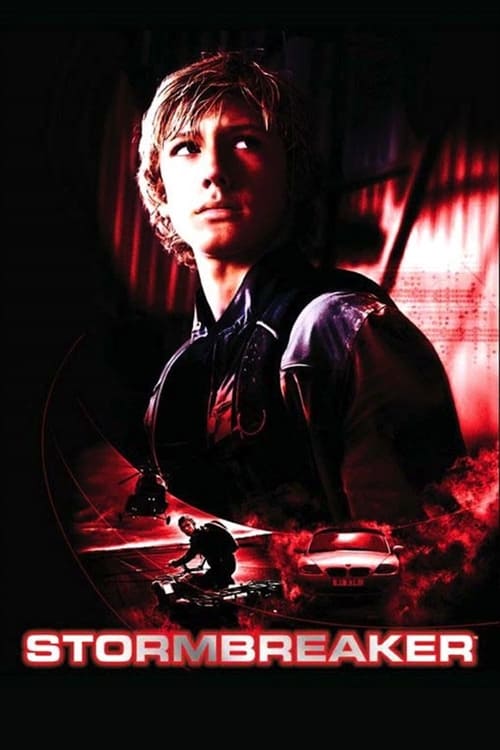
Stormbreaker
Alex Rider thinks he is a normal school boy, until his uncle is killed. He discovers that his uncle was actually spy on a mission, when he was killed. Alex is recruited by Alan Blunt to continue the mission. He is sent to Cornwall to investigate a new computer system, which Darrius Sayle has created. He plans to give the new computer systems to every school in the country, but Mr. Blunt has other ideas and Alex must find out what it is.
The film underperformed commercially against its respectable budget of $40.0M, earning $23.9M globally (-40% loss). While initial box office returns were modest, the film has gained appreciation for its fresh perspective within the adventure genre.


Plot Structure
Story beats plotted across runtime


Narrative Arc
Emotional journey through the story's key moments
Story Circle
Blueprint 15-beat structure
Arcplot Score Breakdown
Weighted: Precision (70%) + Arc (15%) + Theme (15%)
Stormbreaker (2006) showcases meticulously timed narrative architecture, characteristic of Geoffrey Sax's storytelling approach. This structural analysis examines how the film's 15-point plot structure maps to proven narrative frameworks across 1 hour and 33 minutes. With an Arcplot score of 7.1, the film balances conventional beats with creative variation.
Characters
Cast & narrative archetypes

Alex Rider
Jack Starbright
Darrius Sayle
Alan Blunt
Mrs. Jones
Yassen Gregorovich
Nadia Vole
Smithers
Sabina Pleasure
Main Cast & Characters
Alex Rider
Played by Alex Pettyfer
A teenage spy recruited by MI6 after his uncle's death to infiltrate a tech billionaire's operation.
Jack Starbright
Played by Alicia Silverstone
Alex's guardian and confidante who supports him despite the dangers he faces.
Darrius Sayle
Played by Mickey Rourke
A vengeful tech billionaire plotting revenge against Britain through his Stormbreaker computer network.
Alan Blunt
Played by Bill Nighy
The cold, calculating head of MI6 who recruits Alex and treats him as an expendable asset.
Mrs. Jones
Played by Sophie Okonedo
Blunt's deputy at MI6 who shows more compassion toward Alex than her superior.
Yassen Gregorovich
Played by Damian Lewis
A professional assassin with mysterious connections to Alex's past.
Nadia Vole
Played by Missi Pyle
Sayle's deadly assistant and accomplice in his revenge plot.
Smithers
Played by Stephen Fry
MI6's gadget master who provides Alex with spy equipment disguised as everyday items.
Sabina Pleasure
Played by Sarah Bolger
Alex's friend and classmate who becomes concerned about his secret activities.
Structural Analysis
The Status Quo at 1 minutes (1% through the runtime) establishes Alex Rider lives a seemingly normal life in London with his uncle Ian, unaware that his guardian is actually a spy for MI6. He attends school and appears to be an ordinary teenager.. Of particular interest, this early placement immediately immerses viewers in the story world.
The inciting incident occurs at 11 minutes when Alex learns that his Uncle Ian has been killed in a car accident. The police claim he wasn't wearing a seatbelt, but Alex knows his uncle always wore one - the first crack in the lies surrounding Ian's death.. At 11% through the film, this Disruption aligns precisely with traditional story structure. This beat shifts the emotional landscape, launching the protagonist into the central conflict.
The First Threshold at 22 minutes marks the transition into Act II, occurring at 24% of the runtime. This illustrates the protagonist's commitment to Alex agrees to undergo spy training and infiltrate Darrius Sayle's compound. Though coerced, he makes the choice to become a spy to protect Jack and discover the truth about his uncle's death., moving from reaction to action.
At 45 minutes, the Midpoint arrives at 49% of the runtime—precisely centered, creating perfect narrative symmetry. Structural examination shows that this crucial beat Alex discovers the terrifying truth: Sayle has loaded the Stormbreaker computers with a deadly virus that will be released into every school in Britain during the launch ceremony, killing thousands of children as revenge for his own bullied childhood., fundamentally raising what's at risk. The emotional intensity shifts, dividing the narrative into clear before-and-after phases.
The Collapse moment at 69 minutes (74% through) represents the emotional nadir. Here, Alex appears to have failed - Sayle has escaped to the Science Museum launch event, the Prime Minister is about to activate the Stormbreakers, and Alex is alone with no backup. The villain seems certain to succeed in his mass murder plot., indicates the protagonist at their lowest point. This beat's placement in the final quarter sets up the climactic reversal.
The Second Threshold at 74 minutes initiates the final act resolution at 80% of the runtime. Alex realizes he must take direct action himself rather than rely on adults. He parachutes onto the Science Museum roof, accepting fully that he is the only one who can stop the attack - embracing his role as a spy., demonstrating the transformation achieved throughout the journey.
Emotional Journey
Stormbreaker's emotional architecture traces a deliberate progression across 15 carefully calibrated beats.
Narrative Framework
This structural analysis employs systematic plot point analysis that identifies crucial turning points. By mapping Stormbreaker against these established plot points, we can identify how Geoffrey Sax utilizes or subverts traditional narrative conventions. The plot point approach reveals not only adherence to structural principles but also creative choices that distinguish Stormbreaker within the adventure genre.
Geoffrey Sax's Structural Approach
Among the 2 Geoffrey Sax films analyzed on Arcplot, the average structural score is 7.1, reflecting strong command of classical structure. Stormbreaker exemplifies the director's characteristic narrative technique. For comparative analysis, explore the complete Geoffrey Sax filmography.
Comparative Analysis
Additional adventure films include The Black Stallion, The Bad Guys and Puss in Boots. For more Geoffrey Sax analyses, see White Noise.
Plot Points by Act
Act I
SetupStatus Quo
Alex Rider lives a seemingly normal life in London with his uncle Ian, unaware that his guardian is actually a spy for MI6. He attends school and appears to be an ordinary teenager.
Theme
Ian Rider tells Alex that "people aren't always what they appear to be" - foreshadowing both the spy world deception and Alex's own hidden potential that he will need to discover.
Worldbuilding
Alex's ordinary London life is established - school with friend Tom, home life with Uncle Ian and housekeeper Jack. We see hints of Ian's secretive nature and Alex's natural athletic abilities through parkour and martial arts practice.
Disruption
Alex learns that his Uncle Ian has been killed in a car accident. The police claim he wasn't wearing a seatbelt, but Alex knows his uncle always wore one - the first crack in the lies surrounding Ian's death.
Resistance
Alex investigates his uncle's death, finding bullet holes in Ian's car at a junkyard. He's captured by MI6 and brought to their headquarters where Alan Blunt and Mrs. Jones reveal that Ian was a spy. They manipulate Alex into working for them by threatening Jack's deportation.
Act II
ConfrontationFirst Threshold
Alex agrees to undergo spy training and infiltrate Darrius Sayle's compound. Though coerced, he makes the choice to become a spy to protect Jack and discover the truth about his uncle's death.
Mirror World
Alex meets Sabina Pleasure briefly before his mission, and later encounters the mysterious Yassen Gregorovich - the assassin who killed his uncle. Yassen represents what Alex could become: a weapon without conscience, contrasting with Alex's humanity.
Premise
Alex undergoes intensive SAS training, receives spy gadgets from Smithers, and infiltrates Sayle Enterprises posing as a contest winner. He explores the facility, meets Sayle, and begins uncovering clues about the Stormbreaker computers while evading suspicion.
Midpoint
Alex discovers the terrifying truth: Sayle has loaded the Stormbreaker computers with a deadly virus that will be released into every school in Britain during the launch ceremony, killing thousands of children as revenge for his own bullied childhood.
Opposition
Alex's cover is blown and Sayle captures him. He's interrogated and nearly killed by Mr. Grin and a jellyfish tank. Nadia Vole is revealed as a double agent. Alex escapes using his gadgets but faces multiple obstacles as he races to stop the launch while MI6 remains unreachable.
Collapse
Alex appears to have failed - Sayle has escaped to the Science Museum launch event, the Prime Minister is about to activate the Stormbreakers, and Alex is alone with no backup. The villain seems certain to succeed in his mass murder plot.
Crisis
Alex commandeers transportation to reach London, desperately racing against time as the launch ceremony begins. He must find a way into the heavily secured Science Museum while the countdown to activation continues.
Act III
ResolutionSecond Threshold
Alex realizes he must take direct action himself rather than rely on adults. He parachutes onto the Science Museum roof, accepting fully that he is the only one who can stop the attack - embracing his role as a spy.
Synthesis
Alex infiltrates the launch ceremony and shoots the activation button just as the Prime Minister presses it, stopping the virus release. Sayle attempts to escape but is killed by Yassen Gregorovich. Alex confronts the spy world's moral ambiguity when Yassen spares him.
Transformation
Alex returns to his ordinary life but is forever changed. He's offered continued work with MI6 and walks away with Jack, now understanding he can never truly go back to being just a normal schoolboy. He has become the spy his uncle trained him to be.