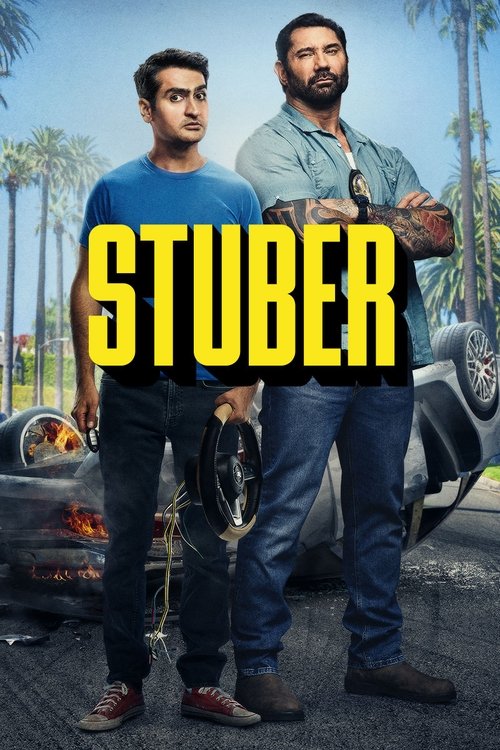
Stuber
After crashing his car, a cop who's recovering from eye surgery recruits an Uber driver to help him catch a heroin dealer. The mismatched pair soon find themselves in for a wild day of stakeouts and shootouts as they encounter the city's seedy side.
Despite a respectable budget of $16.0M, Stuber became a commercial success, earning $32.4M worldwide—a 102% return.


Plot Structure
Story beats plotted across runtime


Narrative Arc
Emotional journey through the story's key moments
Story Circle
Blueprint 15-beat structure
Arcplot Score Breakdown
Weighted: Precision (70%) + Arc (15%) + Theme (15%)
Stuber (2019) exemplifies deliberately positioned dramatic framework, characteristic of Michael Dowse's storytelling approach. This structural analysis examines how the film's 15-point plot structure maps to proven narrative frameworks across 1 hour and 33 minutes. With an Arcplot score of 7.7, the film showcases strong structural fundamentals.
Characters
Cast & narrative archetypes

Vic Manning
Stu
Teijo
Becca
Nicole Manning
Morris
Main Cast & Characters
Vic Manning
Played by Dave Bautista
A tough LAPD detective who recently had laser eye surgery and needs a ride to catch a drug lord who killed his partner.
Stu
Played by Kumail Nanjiani
A mild-mannered Uber driver who gets caught up in Vic's dangerous investigation while trying to earn a five-star rating.
Teijo
Played by Iko Uwais
The ruthless drug lord and main antagonist who killed Vic's partner and operates a major heroin distribution network.
Becca
Played by Betty Gilpin
Stu's friend and love interest who works at a sporting goods store where Stu wants to invest.
Nicole Manning
Played by Natalie Morales
Vic's adult daughter and an artist who has a strained relationship with her workaholic father.
Morris
Played by Mira Sorvino
Vic's police captain and superior officer who tries to keep him in check.
Structural Analysis
The Status Quo at 1 minutes (1% through the runtime) establishes Stu works as an Uber driver, desperately maintaining his 5-star rating while also working at a sporting goods store. He's a people-pleaser who can't assert himself, seen getting walked over by customers and passengers alike.. The analysis reveals that this early placement immediately immerses viewers in the story world.
The inciting incident occurs at 10 minutes when Vic gets LASIK surgery despite being told not to work for 24 hours. He immediately gets a lead on Tepo's location and needs transportation. Unable to see clearly, he orders an Uber—Stu's car.. At 11% through the film, this Disruption aligns precisely with traditional story structure. This beat shifts the emotional landscape, launching the protagonist into the central conflict.
The First Threshold at 23 minutes marks the transition into Act II, occurring at 25% of the runtime. This demonstrates the protagonist's commitment to After a violent confrontation at a strip club where Vic nearly gets them killed, Stu actively chooses to continue helping Vic despite having every reason to leave. He commits to seeing this through, crossing into the dangerous world of Vic's revenge mission., moving from reaction to action.
At 45 minutes, the Midpoint arrives at 49% of the runtime—precisely centered, creating perfect narrative symmetry. Notably, this crucial beat Stu and Vic successfully locate Tepo's distribution center and acquire critical information about his operation. False victory: they're making progress, bonding, and Stu feels empowered. But the stakes raise—Tepo now knows they're coming, and Stu's involvement has been noticed., fundamentally raising what's at risk. The emotional intensity shifts, dividing the narrative into clear before-and-after phases.
The Collapse moment at 69 minutes (74% through) represents the emotional nadir. Here, Stu finally confronts Vic about his toxic behavior and quits, abandoning him. Vic is left alone and nearly blind. Stu returns home to find Becca rejecting him—he's lost everything. The "whiff of death": Stu's dreams of the spin studio and relationship with Becca are dead., demonstrates the protagonist at their lowest point. This beat's placement in the final quarter sets up the climactic reversal.
The Second Threshold at 74 minutes initiates the final act resolution at 79% of the runtime. Stu learns that Tepo has kidnapped Vic. The synthesis: Stu realizes real courage isn't about being tough like Vic—it's about choosing to act despite fear. He arms himself and chooses to rescue Vic, not out of obligation but genuine care., demonstrating the transformation achieved throughout the journey.
Emotional Journey
Stuber's emotional architecture traces a deliberate progression across 15 carefully calibrated beats.
Narrative Framework
This structural analysis employs a 15-point narrative structure framework that maps key story moments. By mapping Stuber against these established plot points, we can identify how Michael Dowse utilizes or subverts traditional narrative conventions. The plot point approach reveals not only adherence to structural principles but also creative choices that distinguish Stuber within the action genre.
Michael Dowse's Structural Approach
Among the 4 Michael Dowse films analyzed on Arcplot, the average structural score is 7.3, reflecting strong command of classical structure. Stuber represents one of the director's most structurally precise works. For comparative analysis, explore the complete Michael Dowse filmography.
Comparative Analysis
Additional action films include The Bad Guys, Puss in Boots and Venom: The Last Dance. For more Michael Dowse analyses, see Take Me Home Tonight, Goon and What If.
Plot Points by Act
Act I
SetupStatus Quo
Stu works as an Uber driver, desperately maintaining his 5-star rating while also working at a sporting goods store. He's a people-pleaser who can't assert himself, seen getting walked over by customers and passengers alike.
Theme
Stu's best friend Richie tells him he needs to "grow a pair" and stand up for himself, especially with his crush Becca. The theme: masculinity isn't about physical toughness, it's about emotional courage and authenticity.
Worldbuilding
Detective Vic Manning witnesses his partner Sara's murder by drug dealer Oka Tepo six months ago. Now Vic is obsessed with revenge, has failing eyesight he won't admit to, and has pushed away his daughter Nicole. Stu pines for Becca who works with him, planning to invest in her spin studio.
Disruption
Vic gets LASIK surgery despite being told not to work for 24 hours. He immediately gets a lead on Tepo's location and needs transportation. Unable to see clearly, he orders an Uber—Stu's car.
Resistance
Stu wants to end the ride when he realizes Vic is dragging him into police business, but Vic intimidates him into continuing. Stu debates whether to stay or bail, worried about his rating and Becca's investment meeting tonight. Vic dismisses Stu's concerns entirely.
Act II
ConfrontationFirst Threshold
After a violent confrontation at a strip club where Vic nearly gets them killed, Stu actively chooses to continue helping Vic despite having every reason to leave. He commits to seeing this through, crossing into the dangerous world of Vic's revenge mission.
Mirror World
Vic opens up slightly about his dead partner Sara and his estranged daughter Nicole. This relationship with Vic becomes Stu's mirror—Vic represents toxic masculinity (violence, emotional suppression) that Stu must learn from but not emulate.
Premise
The "buddy cop" promise: Stu and Vic engage in escalating action sequences—animal hospital shootout, male strip club interrogation, encounters with drug dealers. Stu tries to balance maintaining his Uber rating with surviving. Comedy from their mismatched personalities.
Midpoint
Stu and Vic successfully locate Tepo's distribution center and acquire critical information about his operation. False victory: they're making progress, bonding, and Stu feels empowered. But the stakes raise—Tepo now knows they're coming, and Stu's involvement has been noticed.
Opposition
Tepo's men close in. Vic's captain pulls him from the case. Stu misses Becca's crucial investment meeting, damaging their relationship. Vic's methods become more reckless as his eyesight fails. Stu's life is falling apart—his car gets destroyed, he's involved in multiple felonies, and Becca is furious.
Collapse
Stu finally confronts Vic about his toxic behavior and quits, abandoning him. Vic is left alone and nearly blind. Stu returns home to find Becca rejecting him—he's lost everything. The "whiff of death": Stu's dreams of the spin studio and relationship with Becca are dead.
Crisis
Stu wallows in defeat. Vic reconciles with his daughter Nicole, admitting his flaws. Both men face their emotional darkness separately—Stu realizing he enabled Vic, Vic realizing he's pushed everyone away with his obsession and masculine posturing.
Act III
ResolutionSecond Threshold
Stu learns that Tepo has kidnapped Vic. The synthesis: Stu realizes real courage isn't about being tough like Vic—it's about choosing to act despite fear. He arms himself and chooses to rescue Vic, not out of obligation but genuine care.
Synthesis
Stu infiltrates Tepo's headquarters. He and Vic fight together as true partners—Stu using his intelligence and moral compass, Vic using his experience but trusting Stu. They defeat Tepo's organization. Stu shows authentic bravery, saving Vic's life.
Transformation
Stu confidently handles a difficult Uber passenger, setting boundaries without aggression. He's opening his spin studio with Becca. Vic gives him an approving nod—Stu has transformed from a pushover into an authentically confident man who doesn't need to prove his masculinity through violence.