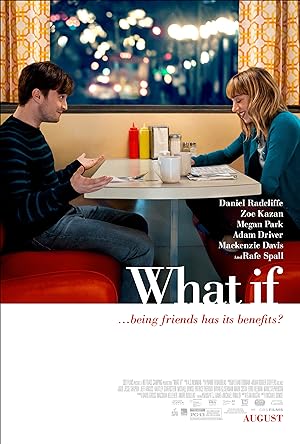
What If
WHAT IF is the story of medical school dropout Wallace, who's been repeatedly burned by bad relationships. So while everyone around him, including his roommate Allan seems to be finding the perfect partner, Wallace decides to put his love life on hold. It is then that he meets Chantry an animator who lives with her longtime boyfriend Ben. Wallace and Chantry form an instant connection, striking up a close friendship. Still, there is no denying the chemistry between them, leading the pair to wonder, what if the love of your life is actually your best friend?
The film underperformed commercially against its small-scale budget of $11.0M, earning $8.5M globally (-23% loss).
2 wins & 10 nominations


Plot Structure
Story beats plotted across runtime


Narrative Arc
Emotional journey through the story's key moments
Story Circle
Blueprint 15-beat structure
Arcplot Score Breakdown
Weighted: Precision (70%) + Arc (15%) + Theme (15%)
What If (2013) reveals precise story structure, characteristic of Michael Dowse's storytelling approach. This structural analysis examines how the film's 15-point plot structure maps to proven narrative frameworks across 1 hour and 38 minutes. With an Arcplot score of 7.0, the film balances conventional beats with creative variation.
Structural Analysis
The Status Quo at 1 minutes (1% through the runtime) establishes Wallace sits alone at a party, isolated and depressed after dropping out of medical school following a devastating breakup. He's disconnected from life and romance.. Structural examination shows that this early placement immediately immerses viewers in the story world.
The inciting incident occurs at 10 minutes when Chantry leaves her number for Wallace with a doodle. Despite knowing she has a boyfriend, this gesture suggests possibility and disrupts Wallace's resigned isolation.. At 10% through the film, this Disruption aligns precisely with traditional story structure. This beat shifts the emotional landscape, launching the protagonist into the central conflict.
The First Threshold at 24 minutes marks the transition into Act II, occurring at 24% of the runtime. This reveals the protagonist's commitment to Wallace consciously chooses to pursue a genuine friendship with Chantry, accepting the "friend zone" rather than walking away. He commits to being in her life despite romantic impossibility., moving from reaction to action.
At 48 minutes, the Midpoint arrives at 49% of the runtime—precisely centered, creating perfect narrative symmetry. Of particular interest, this crucial beat Ben receives a job offer in Dublin and expects Chantry to move with him. This false defeat raises the stakes: Wallace realizes he's going to lose Chantry entirely, and she must choose between her boyfriend's dreams and her own life in Toronto., fundamentally raising what's at risk. The emotional intensity shifts, dividing the narrative into clear before-and-after phases.
The Collapse moment at 71 minutes (72% through) represents the emotional nadir. Here, Wallace finally confesses his feelings to Chantry, but she reacts with anger and betrayal, feeling their entire friendship was based on deception. She tells him she's moving to Dublin with Ben. Their friendship "dies" - she walks away and cuts him off completely., illustrates the protagonist at their lowest point. This beat's placement in the final quarter sets up the climactic reversal.
The Second Threshold at 78 minutes initiates the final act resolution at 80% of the runtime. Wallace learns from Allan that Chantry broke up with Ben and returned to Toronto. He realizes he must take real action and risk complete rejection. Simultaneously, Chantry has her own revelation: she needs to choose what she wants, not just accommodate others., demonstrating the transformation achieved throughout the journey.
Emotional Journey
What If's emotional architecture traces a deliberate progression across 15 carefully calibrated beats.
Narrative Framework
This structural analysis employs proven narrative structure principles that track dramatic progression. By mapping What If against these established plot points, we can identify how Michael Dowse utilizes or subverts traditional narrative conventions. The plot point approach reveals not only adherence to structural principles but also creative choices that distinguish What If within the comedy genre.
Michael Dowse's Structural Approach
Among the 4 Michael Dowse films analyzed on Arcplot, the average structural score is 7.3, reflecting strong command of classical structure. What If takes a more unconventional approach compared to the director's typical style. For comparative analysis, explore the complete Michael Dowse filmography.
Comparative Analysis
Additional comedy films include The Bad Guys, Ella Enchanted and The Evening Star. For more Michael Dowse analyses, see Take Me Home Tonight, Goon and Stuber.
Plot Points by Act
Act I
SetupStatus Quo
Wallace sits alone at a party, isolated and depressed after dropping out of medical school following a devastating breakup. He's disconnected from life and romance.
Theme
Allan tells Wallace about the "friend zone" and relationships. The film's central question is introduced: Can men and women truly be just friends, or will romantic feelings always complicate things?
Worldbuilding
Wallace meets Chantry at the party and they connect instantly over witty conversation and shared humor. We learn she has a boyfriend (Ben), establishing the central obstacle. Wallace's friendships with Allan and his life in Toronto are established.
Disruption
Chantry leaves her number for Wallace with a doodle. Despite knowing she has a boyfriend, this gesture suggests possibility and disrupts Wallace's resigned isolation.
Resistance
Wallace debates whether to pursue a friendship with Chantry. They begin spending time together in group settings and one-on-one. He meets Ben and confirms Chantry is in a committed relationship. Wallace wrestles with his growing feelings while trying to be "just friends."
Act II
ConfrontationFirst Threshold
Wallace consciously chooses to pursue a genuine friendship with Chantry, accepting the "friend zone" rather than walking away. He commits to being in her life despite romantic impossibility.
Mirror World
Wallace and Chantry's friendship deepens through late-night walks and conversations. Their connection becomes the emotional center of the story, teaching Wallace about intimacy, vulnerability, and what he truly needs versus wants.
Premise
The "fun and games" of their friendship: late-night adventures, movie watching, sharing secrets, meeting each other's families. Wallace and Chantry grow closer while maintaining boundaries. Parallel storyline of Allan's relationship with Nicole provides comic relief and romantic contrast.
Midpoint
Ben receives a job offer in Dublin and expects Chantry to move with him. This false defeat raises the stakes: Wallace realizes he's going to lose Chantry entirely, and she must choose between her boyfriend's dreams and her own life in Toronto.
Opposition
Tension escalates as Chantry struggles with Ben's Dublin decision. Wallace's feelings become harder to hide. A moment of near-intimacy at Chantry's family cottage almost crosses the line. Ben grows suspicious and confrontational. Wallace's jealousy and frustration build.
Collapse
Wallace finally confesses his feelings to Chantry, but she reacts with anger and betrayal, feeling their entire friendship was based on deception. She tells him she's moving to Dublin with Ben. Their friendship "dies" - she walks away and cuts him off completely.
Crisis
Wallace spirals into depression, believing he's lost Chantry forever and ruined the best relationship he'd ever had. He processes the loss while his friends try to console him. Chantry goes to Dublin but is miserable and conflicted.
Act III
ResolutionSecond Threshold
Wallace learns from Allan that Chantry broke up with Ben and returned to Toronto. He realizes he must take real action and risk complete rejection. Simultaneously, Chantry has her own revelation: she needs to choose what she wants, not just accommodate others.
Synthesis
Wallace pursues Chantry, leading to a grand romantic gesture at the airport. They confront their feelings honestly - both the friendship and the romance were real. They kiss and commit to trying a relationship, accepting the risk that they might lose the friendship but choosing love anyway.
Transformation
Wallace and Chantry are together as a couple, happy and intimate. The closing image mirrors the opening but transformed: Wallace is no longer isolated and broken but connected, vulnerable, and willing to risk his heart again.