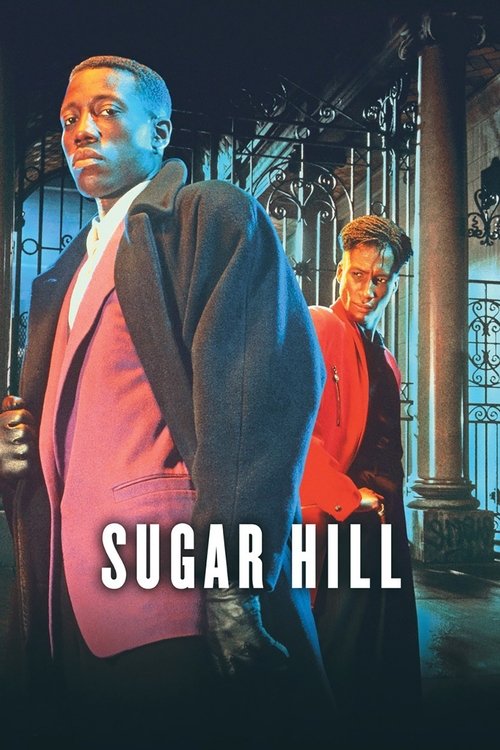
Sugar Hill
In the Harlem neighborhood of New York City, the Mafia steps in when a drug dealer quits his partner and brother to lead a straight life with his girlfriend.
Working with a limited budget of $10.0M, the film achieved a respectable showing with $18.2M in global revenue (+82% profit margin).


Plot Structure
Story beats plotted across runtime


Narrative Arc
Emotional journey through the story's key moments
Story Circle
Blueprint 15-beat structure
Arcplot Score Breakdown
Weighted: Precision (70%) + Arc (15%) + Theme (15%)
Sugar Hill (1994) showcases meticulously timed story structure, characteristic of Leon Ichaso's storytelling approach. This structural analysis examines how the film's 15-point plot structure maps to proven narrative frameworks across 2 hours and 3 minutes. With an Arcplot score of 7.1, the film balances conventional beats with creative variation.
Characters
Cast & narrative archetypes

Roemello Skuggs
Raynathan Skuggs
Melissa
Lolly
Gus Molino
A.R.
Ella Skuggs
Main Cast & Characters
Roemello Skuggs
Played by Wesley Snipes
A successful drug dealer in Harlem who wants to leave the criminal life behind and pursue legitimate business aspirations.
Raynathan Skuggs
Played by Michael Wright
Roemello's younger brother who is deeply committed to the drug trade and resistant to leaving the game.
Melissa
Played by Theresa Randle
Roemello's girlfriend, an aspiring actress who represents the legitimate life he wants to build.
Lolly
Played by Abe Vigoda
A young woman involved with Raynathan who becomes caught up in the dangerous drug world.
Gus Molino
Played by Abe Vigoda
A powerful Italian mobster who controls the drug trade and becomes an antagonist to the Skuggs brothers.
A.R.
Played by Ernie Hudson
A volatile street dealer and enforcer who works with the Skuggs brothers and represents the violence of the drug trade.
Ella Skuggs
Played by Khandi Alexander
The mother of Roemello and Raynathan who disapproves of their criminal lifestyle.
Structural Analysis
The Status Quo at 1 minutes (1% through the runtime) establishes Roemello "Skuggs" Skuggs and his brother Raynathan operate a successful drug empire in Harlem, living the high life with money, power, and respect on the streets.. The analysis reveals that this early placement immediately immerses viewers in the story world.
The inciting incident occurs at 14 minutes when Gus Molino, their Italian mob supplier, makes it clear he wants to take over their operation entirely. The partnership becomes a threat as Gus demands more control and the brothers realize they're not truly independent.. At 12% through the film, this Disruption aligns precisely with traditional story structure. This beat shifts the emotional landscape, launching the protagonist into the central conflict.
The First Threshold at 31 minutes marks the transition into Act II, occurring at 25% of the runtime. This shows the protagonist's commitment to Roemello makes the choice to try to get out of the drug business. He tells Melissa he wants a legitimate life with her and begins planning his exit strategy, knowing it will mean confronting Gus., moving from reaction to action.
At 61 minutes, the Midpoint arrives at 50% of the runtime—precisely centered, creating perfect narrative symmetry. Significantly, this crucial beat A major violent confrontation occurs - either with rivals or Gus's people - that shows Roemello that getting out won't be easy. The stakes are raised and the violence becomes personal. False defeat: his exit plan seems impossible., fundamentally raising what's at risk. The emotional intensity shifts, dividing the narrative into clear before-and-after phases.
The Collapse moment at 91 minutes (74% through) represents the emotional nadir. Here, Raynathan is killed, likely by Gus's orders or in drug-related violence. Roemello's brother - his partner and the person he was trying to protect - dies. The "whiff of death" is literal and devastating., shows the protagonist at their lowest point. This beat's placement in the final quarter sets up the climactic reversal.
The Second Threshold at 98 minutes initiates the final act resolution at 80% of the runtime. Roemello realizes that the only way to truly honor his brother and have a future with Melissa is to definitively end his relationship with Gus and the drug world, even if it means violence. He synthesizes his street skills with his desire for freedom., demonstrating the transformation achieved throughout the journey.
Emotional Journey
Sugar Hill's emotional architecture traces a deliberate progression across 15 carefully calibrated beats.
Narrative Framework
This structural analysis employs structural analysis methodology used to understand storytelling architecture. By mapping Sugar Hill against these established plot points, we can identify how Leon Ichaso utilizes or subverts traditional narrative conventions. The plot point approach reveals not only adherence to structural principles but also creative choices that distinguish Sugar Hill within the drama genre.
Comparative Analysis
Additional drama films include After Thomas, South Pacific and Dirty Dancing: Havana Nights.
Plot Points by Act
Act I
SetupStatus Quo
Roemello "Skuggs" Skuggs and his brother Raynathan operate a successful drug empire in Harlem, living the high life with money, power, and respect on the streets.
Theme
Melissa warns Roemello: "The higher you climb, the harder you fall." The film's exploration of whether one can escape the consequences of the drug game begins.
Worldbuilding
Establishment of the brothers' drug operation, their relationship with supplier Gus Molino, the tension with competitors, and Roemello's romance with Melissa. We see the seductive wealth and danger of their world.
Disruption
Gus Molino, their Italian mob supplier, makes it clear he wants to take over their operation entirely. The partnership becomes a threat as Gus demands more control and the brothers realize they're not truly independent.
Resistance
Roemello debates whether to accept Gus's terms or try to break free. Violence escalates on the streets. His relationship with Melissa deepens, and she represents a life outside the game. Raynathan becomes more volatile and addicted.
Act II
ConfrontationFirst Threshold
Roemello makes the choice to try to get out of the drug business. He tells Melissa he wants a legitimate life with her and begins planning his exit strategy, knowing it will mean confronting Gus.
Mirror World
Roemello's deepening relationship with Melissa shows him what a normal, legitimate life could be. She embodies the possibility of redemption and escape from the streets.
Premise
Roemello attempts to navigate getting out while maintaining his business relationship with Gus. He tries to set up legitimate fronts, protect his territory, and manage his increasingly unstable brother Raynathan who doesn't want to quit.
Midpoint
A major violent confrontation occurs - either with rivals or Gus's people - that shows Roemello that getting out won't be easy. The stakes are raised and the violence becomes personal. False defeat: his exit plan seems impossible.
Opposition
Gus tightens his grip and becomes openly hostile. Raynathan spirals deeper into addiction and paranoia. Police pressure increases. Roemello's attempts to protect everyone and everything begin to crumble. Melissa grows distant as the danger intensifies.
Collapse
Raynathan is killed, likely by Gus's orders or in drug-related violence. Roemello's brother - his partner and the person he was trying to protect - dies. The "whiff of death" is literal and devastating.
Crisis
Roemello grieves his brother and faces the ultimate consequence of the life he chose. He must decide: revenge or escape? Continue the cycle of violence or truly break free? Dark night of the soul.
Act III
ResolutionSecond Threshold
Roemello realizes that the only way to truly honor his brother and have a future with Melissa is to definitively end his relationship with Gus and the drug world, even if it means violence. He synthesizes his street skills with his desire for freedom.
Synthesis
Roemello confronts Gus in a final showdown. He dismantles the operation, settles scores, and fights for his freedom. The finale resolves his relationship with the mob and determines whether he can truly escape.
Transformation
Final image shows Roemello either dead, in prison, or walking away alone - transformed but at tremendous cost. Unlike the opening wealth and power, he is stripped down but potentially free. The price of the life is fully paid.