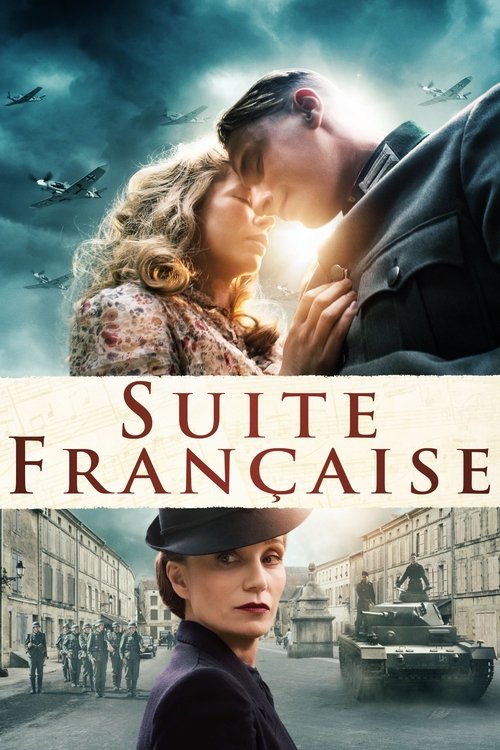
Suite Française
France, 1940. In the first days of occupation, beautiful Lucile Angellier is trapped in a stifled existence with her controlling mother-in-law as they both await news of her husband: a prisoner of war. Parisian refugees start to pour into their small town, soon followed by a regiment of German soldiers who take up residence in the villagers' own homes. Lucile initially tries to ignore Bruno von Falk, the handsome and refined German officer staying with them. But soon, a powerful love draws them together and leads them into the tragedy of war.
The film underperformed commercially against its respectable budget of $15.0M, earning $9.1M globally (-39% loss). While initial box office returns were modest, the film has gained appreciation for its fresh perspective within the drama genre.
Nominated for 1 Primetime Emmy. 4 nominations


Plot Structure
Story beats plotted across runtime


Narrative Arc
Emotional journey through the story's key moments
Story Circle
Blueprint 15-beat structure
Arcplot Score Breakdown
Weighted: Precision (70%) + Arc (15%) + Theme (15%)
Suite Française (2015) exhibits strategically placed plot construction, characteristic of Saul Dibb's storytelling approach. This structural analysis examines how the film's 15-point plot structure maps to proven narrative frameworks across 1 hour and 43 minutes. With an Arcplot score of 6.8, the film balances conventional beats with creative variation.
Characters
Cast & narrative archetypes

Lucile Angellier
Bruno von Falk
Madame Angellier
Madeleine Labarie
Benoit Labarie
Viscount de Montmort
Celine Joseph
Main Cast & Characters
Lucile Angellier
Played by Michelle Williams
A young French woman living with her controlling mother-in-law during the Nazi occupation, who falls in love with a German officer billeted in their home.
Bruno von Falk
Played by Matthias Schoenaerts
A cultured German officer and composer who is billeted with the Angelliers and develops a forbidden romance with Lucile.
Madame Angellier
Played by Kristin Scott Thomas
Lucile's domineering and wealthy mother-in-law who is obsessed with social status and protecting her family's assets during the occupation.
Madeleine Labarie
Played by Ruth Wilson
A young viscountess who begins an affair with a handsome French soldier while her husband is a prisoner of war.
Benoit Labarie
Played by Sam Riley
A wounded French soldier hiding from the Germans who becomes involved with Madeleine despite her marriage.
Viscount de Montmort
Played by Lambert Wilson
Madeleine's aristocratic husband who is a prisoner of war in Germany.
Celine Joseph
Played by Margot Robbie
A French farmer's wife whose husband is also a prisoner of war, struggling to maintain her farm under German occupation.
Structural Analysis
The Status Quo at 1 minutes (1% through the runtime) establishes Lucile Angellier lives a constrained existence in the provincial French town of Bussy, dominated by her cold mother-in-law Madame Angellier while her husband Gaston is away at war. The household operates under strict control and emotional repression.. Of particular interest, this early placement immediately immerses viewers in the story world.
The inciting incident occurs at 12 minutes when German soldiers arrive to occupy the town. Lieutenant Bruno von Falk is billeted in the Angellier home, forcing Lucile into close quarters with the enemy. The invasion shatters any pretense of normalcy.. At 12% through the film, this Disruption aligns precisely with traditional story structure. This beat shifts the emotional landscape, launching the protagonist into the central conflict.
The First Threshold at 26 minutes marks the transition into Act II, occurring at 25% of the runtime. This shows the protagonist's commitment to Lucile makes the choice to speak with Bruno after hearing him play piano. She crosses the threshold from passive resistance to active engagement, beginning a forbidden connection that defies her mother-in-law's commands and social expectations., moving from reaction to action.
At 52 minutes, the Midpoint arrives at 50% of the runtime—precisely centered, creating perfect narrative symmetry. The analysis reveals that this crucial beat Lucile and Bruno share a passionate kiss, acknowledging their love openly for the first time. This false victory represents the peak of their connection, but also marks the point where the stakes become impossibly high—their love cannot survive the reality of war., fundamentally raising what's at risk. The emotional intensity shifts, dividing the narrative into clear before-and-after phases.
The Collapse moment at 77 minutes (75% through) represents the emotional nadir. Here, Bruno's regiment receives orders to deploy to the Eastern Front—essentially a death sentence. Simultaneously, Benoît is discovered hiding in the Angellier cellar, putting everyone at mortal risk. Lucile faces losing Bruno forever while being complicit in harboring a fugitive who killed a German., indicates the protagonist at their lowest point. This beat's placement in the final quarter sets up the climactic reversal.
The Second Threshold at 82 minutes initiates the final act resolution at 80% of the runtime. Lucile chooses to ask Bruno for help, and Bruno chooses to provide the travel passes that will allow Benoît to escape. Both cross moral thresholds—Lucile by trusting Bruno with a deadly secret, Bruno by betraying his army for love and humanity., demonstrating the transformation achieved throughout the journey.
Emotional Journey
Suite Française's emotional architecture traces a deliberate progression across 15 carefully calibrated beats.
Narrative Framework
This structural analysis employs structural analysis methodology used to understand storytelling architecture. By mapping Suite Française against these established plot points, we can identify how Saul Dibb utilizes or subverts traditional narrative conventions. The plot point approach reveals not only adherence to structural principles but also creative choices that distinguish Suite Française within the drama genre.
Saul Dibb's Structural Approach
Among the 2 Saul Dibb films analyzed on Arcplot, the average structural score is 6.9, demonstrating varied approaches to story architecture. Suite Française takes a more unconventional approach compared to the director's typical style. For comparative analysis, explore the complete Saul Dibb filmography.
Comparative Analysis
Additional drama films include After Thomas, South Pacific and Dirty Dancing: Havana Nights. For more Saul Dibb analyses, see The Duchess.
Plot Points by Act
Act I
SetupStatus Quo
Lucile Angellier lives a constrained existence in the provincial French town of Bussy, dominated by her cold mother-in-law Madame Angellier while her husband Gaston is away at war. The household operates under strict control and emotional repression.
Theme
A villager remarks on how war changes people and forces impossible choices, foreshadowing the moral complexities Lucile will face: "In times like these, you cannot know what anyone is capable of."
Worldbuilding
The occupied French village of Bussy is established. We meet the Angellier household with its rigid class hierarchies, the tenant farmers including the Labaries, and witness the panic of Parisian refugees fleeing the German advance. The social order and tensions of the village are laid out.
Disruption
German soldiers arrive to occupy the town. Lieutenant Bruno von Falk is billeted in the Angellier home, forcing Lucile into close quarters with the enemy. The invasion shatters any pretense of normalcy.
Resistance
Lucile and Madame Angellier debate how to interact with their German occupier. Lucile is instructed to avoid him entirely. Bruno proves cultured and respectful, playing piano, while Lucile struggles between her duty to hate him and her growing curiosity about his humanity.
Act II
ConfrontationFirst Threshold
Lucile makes the choice to speak with Bruno after hearing him play piano. She crosses the threshold from passive resistance to active engagement, beginning a forbidden connection that defies her mother-in-law's commands and social expectations.
Mirror World
Lucile and Bruno's relationship deepens as they share conversations about music, art, and life beyond the war. Bruno represents the thematic mirror—showing that humanity and love can exist even in the enemy, challenging Lucile's black-and-white worldview.
Premise
The forbidden romance between Lucile and Bruno blossoms amid the occupation. They steal moments together—walks, conversations, music. Meanwhile, tensions simmer in the village as Benoît Labarie grows increasingly hostile toward the Germans and Madeleine pursues a reckless affair with a German soldier.
Midpoint
Lucile and Bruno share a passionate kiss, acknowledging their love openly for the first time. This false victory represents the peak of their connection, but also marks the point where the stakes become impossibly high—their love cannot survive the reality of war.
Opposition
The consequences of forbidden connections mount. Benoît kills a German soldier and flees. The German command orders a crackdown. Bruno faces pressure from his superiors. Madame Angellier discovers Lucile's feelings and confronts her with contempt. The village informer Bonnet creates danger for everyone.
Collapse
Bruno's regiment receives orders to deploy to the Eastern Front—essentially a death sentence. Simultaneously, Benoît is discovered hiding in the Angellier cellar, putting everyone at mortal risk. Lucile faces losing Bruno forever while being complicit in harboring a fugitive who killed a German.
Crisis
Lucile wrestles with impossible choices. She must decide whether to ask Bruno to betray his duty to save Benoît, knowing it could cost Bruno his life. The dark night forces her to confront what she truly believes and who she has become.
Act III
ResolutionSecond Threshold
Lucile chooses to ask Bruno for help, and Bruno chooses to provide the travel passes that will allow Benoît to escape. Both cross moral thresholds—Lucile by trusting Bruno with a deadly secret, Bruno by betraying his army for love and humanity.
Synthesis
Bruno secures the passes and helps Benoît escape. He and Lucile share a final farewell, knowing they will likely never see each other again. The German regiment departs for Russia. Lucile is left behind, transformed but alone, having acted with courage and compassion.
Transformation
Lucile watches the German convoy leave. Unlike her passive, repressed self at the film's start, she has discovered her capacity for love, moral courage, and independent action. The bittersweet ending shows a woman awakened—alone but no longer trapped in an unlived life.