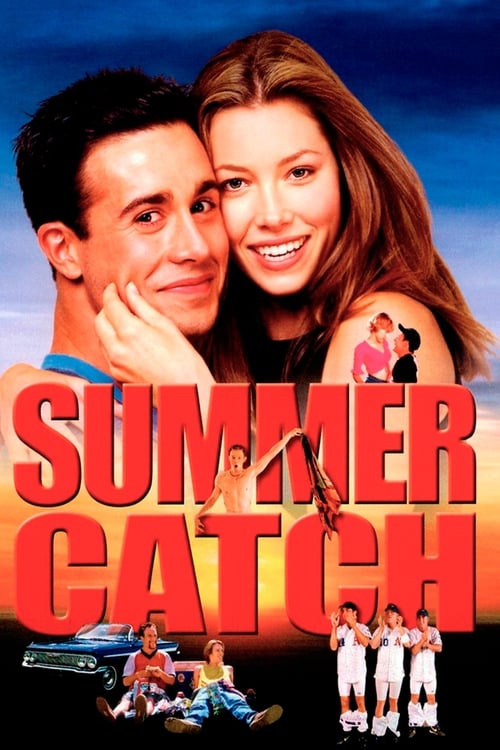
Summer Catch
Local boy Ryan Dunne, now a pitcher for Boston College, meets Tenley Parrish, the daughter of a wealthy couple who summer on the Cape. Ryan and Tenley fall in love, much to the chagrin of their families, while Ryan clings to one last hope of being discovered and signed to a pro baseball contract.
The film struggled financially against its mid-range budget of $34.0M, earning $19.7M globally (-42% loss). While initial box office returns were modest, the film has gained appreciation for its bold vision within the comedy genre.


Plot Structure
Story beats plotted across runtime


Narrative Arc
Emotional journey through the story's key moments
Story Circle
Blueprint 15-beat structure
Arcplot Score Breakdown
Weighted: Precision (70%) + Arc (15%) + Theme (15%)
Summer Catch (2001) exemplifies precise narrative architecture, characteristic of Michael Tollin's storytelling approach. This structural analysis examines how the film's 15-point plot structure maps to proven narrative frameworks across 1 hour and 44 minutes. With an Arcplot score of 7.3, the film balances conventional beats with creative variation.
Characters
Cast & narrative archetypes

Ryan Dunne
Tenley Parrish
Billy Brubaker
Rand Parrish
Sean Dunne
Dede Mulligan
Miles Dalrymple
Main Cast & Characters
Ryan Dunne
Played by Freddie Prinze Jr.
A working-class landscaper and talented baseball pitcher with dreams of making it to the major leagues while playing for the Cape Cod League.
Tenley Parrish
Played by Jessica Biel
A wealthy, sophisticated college girl who returns to her family's Cape Cod estate for the summer and falls for Ryan despite their different worlds.
Billy Brubaker
Played by Matthew Lillard
Ryan's best friend and teammate, a fun-loving catcher who provides comic relief and loyalty throughout the summer season.
Rand Parrish
Played by Bruce Davison
Tenley's wealthy, traditional father who disapproves of Ryan and represents the class barrier between the young lovers.
Sean Dunne
Played by Fred Ward
Ryan's father, a hardworking landscaper who runs the family business and has practical expectations for his son's future.
Dede Mulligan
Played by Beverly D'Angelo
Ryan's mother, a supportive and caring woman who works at the baseball field concession stand and believes in her son's dreams.
Miles Dalrymple
Played by Marc Blucas
Ryan's wealthy teammate and rival who also pursues Tenley and represents the privileged world Ryan aspires to join.
Structural Analysis
The Status Quo at 2 minutes (2% through the runtime) establishes Ryan Dunne works as a landscaper on wealthy Cape Cod estates, dreaming of making it as a professional baseball player while stuck in his working-class life.. Of particular interest, this early placement immediately immerses viewers in the story world.
The inciting incident occurs at 12 minutes when Ryan meets Tenley Parrish, the beautiful daughter of one of the wealthy families whose estate he tends. There's immediate attraction despite their different social worlds.. At 12% through the film, this Disruption aligns precisely with traditional story structure. This beat shifts the emotional landscape, launching the protagonist into the central conflict.
The First Threshold at 25 minutes marks the transition into Act II, occurring at 24% of the runtime. This demonstrates the protagonist's commitment to Ryan actively chooses to pursue a relationship with Tenley, asking her out despite knowing it could distract from baseball and despite their class differences. He enters the "new world" of romance., moving from reaction to action.
At 52 minutes, the Midpoint arrives at 50% of the runtime—precisely centered, creating perfect narrative symmetry. The analysis reveals that this crucial beat False victory: Ryan pitches brilliantly in front of scouts and his relationship with Tenley is at its peak. Everything seems perfect - he appears to have both love and baseball success. But the stakes raise as he must maintain both., fundamentally raising what's at risk. The emotional intensity shifts, dividing the narrative into clear before-and-after phases.
The Collapse moment at 75 minutes (72% through) represents the emotional nadir. Here, Ryan has a catastrophic pitching performance in front of scouts, effectively killing his professional dreams. Simultaneously, his relationship with Tenley falls apart due to class pressures and his own insecurities. He loses everything., reveals the protagonist at their lowest point. This beat's placement in the final quarter sets up the climactic reversal.
The Second Threshold at 83 minutes initiates the final act resolution at 80% of the runtime. Ryan gains clarity: he realizes he was trying to be someone he's not instead of being authentic. He understands he must pitch his own way and be true to himself - synthesizing the lesson Tenley taught him with his baseball skills., demonstrating the transformation achieved throughout the journey.
Emotional Journey
Summer Catch's emotional architecture traces a deliberate progression across 15 carefully calibrated beats.
Narrative Framework
This structural analysis employs structural analysis methodology used to understand storytelling architecture. By mapping Summer Catch against these established plot points, we can identify how Michael Tollin utilizes or subverts traditional narrative conventions. The plot point approach reveals not only adherence to structural principles but also creative choices that distinguish Summer Catch within the comedy genre.
Michael Tollin's Structural Approach
Among the 2 Michael Tollin films analyzed on Arcplot, the average structural score is 7.1, reflecting strong command of classical structure. Summer Catch represents one of the director's most structurally precise works. For comparative analysis, explore the complete Michael Tollin filmography.
Comparative Analysis
Additional comedy films include The Bad Guys, Ella Enchanted and The Evening Star. For more Michael Tollin analyses, see Radio.
Plot Points by Act
Act I
SetupStatus Quo
Ryan Dunne works as a landscaper on wealthy Cape Cod estates, dreaming of making it as a professional baseball player while stuck in his working-class life.
Theme
Ryan's father tells him "You gotta focus on what's important" - establishing the film's theme about choosing between love and ambition, staying grounded versus reaching for dreams.
Worldbuilding
Introduction to the Cape Cod Baseball League summer season, Ryan's working-class family, his landscaping crew job, his teammates, and the class divide between locals and wealthy summer residents.
Disruption
Ryan meets Tenley Parrish, the beautiful daughter of one of the wealthy families whose estate he tends. There's immediate attraction despite their different social worlds.
Resistance
Ryan debates pursuing Tenley despite the class barrier and his need to focus on baseball. He struggles with distractions as baseball scouts arrive to evaluate players. His friends encourage him while his father warns him to stay focused.
Act II
ConfrontationFirst Threshold
Ryan actively chooses to pursue a relationship with Tenley, asking her out despite knowing it could distract from baseball and despite their class differences. He enters the "new world" of romance.
Mirror World
Ryan and Tenley's relationship deepens. She represents the thematic counterpoint - showing him there's more to life than just baseball ambition, teaching him about living in the moment and being himself.
Premise
The "summer romance meets baseball dreams" premise plays out. Ryan juggles his relationship with Tenley and his baseball performance. Fun montages of dates, games, and the Cape Cod summer experience.
Midpoint
False victory: Ryan pitches brilliantly in front of scouts and his relationship with Tenley is at its peak. Everything seems perfect - he appears to have both love and baseball success. But the stakes raise as he must maintain both.
Opposition
Pressure intensifies from all sides. Ryan's baseball performance becomes inconsistent. Tenley's father disapproves of the relationship. Class tensions emerge. Ryan's distraction costs him in crucial games. Scouts lose interest.
Collapse
Ryan has a catastrophic pitching performance in front of scouts, effectively killing his professional dreams. Simultaneously, his relationship with Tenley falls apart due to class pressures and his own insecurities. He loses everything.
Crisis
Ryan wallows in despair, believing he's failed at both baseball and love. His dark night as he processes losing his dream and the girl, questioning his worth and abilities.
Act III
ResolutionSecond Threshold
Ryan gains clarity: he realizes he was trying to be someone he's not instead of being authentic. He understands he must pitch his own way and be true to himself - synthesizing the lesson Tenley taught him with his baseball skills.
Synthesis
The championship game finale. Ryan pitches authentically, without trying to impress, just being himself. He delivers a stellar performance that catches scouts' attention again. He also reconciles with Tenley, no longer ashamed of who he is.
Transformation
Ryan signs with a professional team, having achieved his dream by being authentic rather than trying to be perfect. He's with Tenley, having learned to balance love and ambition. The working-class kid has transformed into someone comfortable in his own skin.