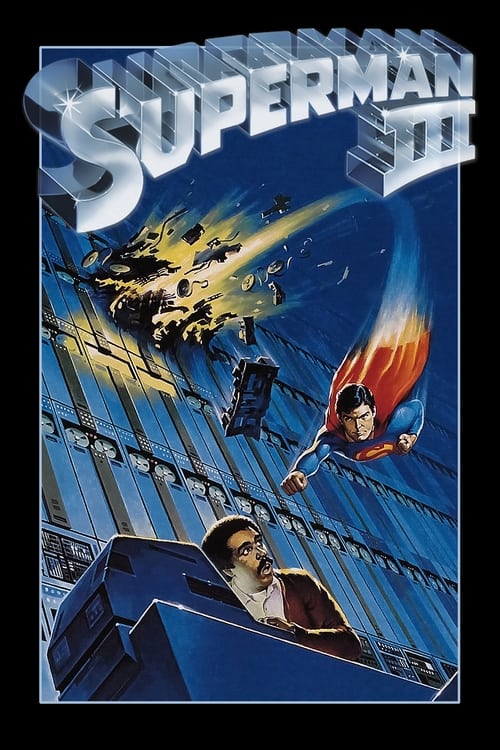
Superman III
Aiming to defeat the Man of Steel, wealthy executive Ross Webster hires bumbling but brilliant Gus Gorman to develop synthetic kryptonite, which yields some unexpected psychological effects. Between rekindling romance with his high school sweetheart and saving himself, Superman must contend with a powerful supercomputer.
Despite a moderate budget of $39.0M, Superman III became a financial success, earning $80.3M worldwide—a 106% return.
3 wins & 7 nominations


Plot Structure
Story beats plotted across runtime


Narrative Arc
Emotional journey through the story's key moments
Story Circle
Blueprint 15-beat structure
Arcplot Score Breakdown
Weighted: Precision (70%) + Arc (15%) + Theme (15%)
Superman III (1983) reveals meticulously timed story structure, characteristic of Richard Lester's storytelling approach. This structural analysis examines how the film's 15-point plot structure maps to proven narrative frameworks across 2 hours and 5 minutes. With an Arcplot score of 7.5, the film showcases strong structural fundamentals.
Characters
Cast & narrative archetypes

Clark Kent / Superman
Gus Gorman
Ross Webster
Lana Lang
Vera Webster
Lorelei Ambrosia
Main Cast & Characters
Clark Kent / Superman
Played by Christopher Reeve
A superhero who faces his dark side when exposed to synthetic kryptonite, splitting his personality between good and evil.
Gus Gorman
Played by Richard Pryor
A bumbling computer programmer with genius-level hacking skills who gets manipulated into helping a corporate villain.
Ross Webster
Played by Robert Vaughn
A ruthless business tycoon who schemes to control the world's economy through computer manipulation and weather control.
Lana Lang
Played by Annette O'Toole
Clark Kent's high school sweetheart who reconnects with him in Smallville, representing a chance at normal life.
Vera Webster
Played by Annie Ross
Ross Webster's seductive and manipulative sister who uses her charm to control men and further her brother's schemes.
Lorelei Ambrosia
Played by Pamela Stephenson
Ross Webster's ditzy girlfriend who serves as his accomplice, though she appears less intelligent than she is.
Structural Analysis
The Status Quo at 1 minutes (1% through the runtime) establishes Opening credits sequence showing a series of comedic disasters in Metropolis - a blind man crossing the street, a window washer, a phone booth rescue - establishing the slapstick tone and Superman's role as protector of everyday people.. Of particular interest, this early placement immediately immerses viewers in the story world.
The inciting incident occurs at 15 minutes when Clark Kent learns Lois is leaving for Bermuda with another man, disrupting his romantic status quo. This personal disruption pushes him toward Smallville and reconnecting with his past.. At 12% through the film, this Disruption aligns precisely with traditional story structure. This beat shifts the emotional landscape, launching the protagonist into the central conflict.
The First Threshold at 31 minutes marks the transition into Act II, occurring at 25% of the runtime. This demonstrates the protagonist's commitment to Clark arrives in Smallville and reunites with Lana Lang at the high school reunion, choosing to reconnect with his hometown roots and past identity rather than pursue Lois., moving from reaction to action.
At 63 minutes, the Midpoint arrives at 50% of the runtime—precisely centered, creating perfect narrative symmetry. Structural examination shows that this crucial beat Superman is exposed to Gus's flawed synthetic Kryptonite. The false victory of Superman's Smallville heroics turns to false defeat as the Kryptonite begins corrupting him, darkening his personality., fundamentally raising what's at risk. The emotional intensity shifts, dividing the narrative into clear before-and-after phases.
The Collapse moment at 92 minutes (73% through) represents the emotional nadir. Here, Clark Kent and Evil Superman split into two physical beings in a junkyard confrontation. This literalized internal battle represents the death of Superman's integrated self - the "whiff of death" for his identity., illustrates the protagonist at their lowest point. This beat's placement in the final quarter sets up the climactic reversal.
The Second Threshold at 99 minutes initiates the final act resolution at 79% of the runtime. Clark Kent destroys Evil Superman, reintegrating his identity with clarity about who he is. He returns as the true Superman, combining his human values (from Smallville/Lana) with his heroic purpose., demonstrating the transformation achieved throughout the journey.
Emotional Journey
Superman III's emotional architecture traces a deliberate progression across 15 carefully calibrated beats.
Narrative Framework
This structural analysis employs a 15-point narrative structure framework that maps key story moments. By mapping Superman III against these established plot points, we can identify how Richard Lester utilizes or subverts traditional narrative conventions. The plot point approach reveals not only adherence to structural principles but also creative choices that distinguish Superman III within the comedy genre.
Richard Lester's Structural Approach
Among the 5 Richard Lester films analyzed on Arcplot, the average structural score is 7.1, reflecting strong command of classical structure. Superman III represents one of the director's most structurally precise works. For comparative analysis, explore the complete Richard Lester filmography.
Comparative Analysis
Additional comedy films include The Bad Guys, Ella Enchanted and The Evening Star. For more Richard Lester analyses, see Superman II, The Three Musketeers and The Four Musketeers.
Plot Points by Act
Act I
SetupStatus Quo
Opening credits sequence showing a series of comedic disasters in Metropolis - a blind man crossing the street, a window washer, a phone booth rescue - establishing the slapstick tone and Superman's role as protector of everyday people.
Theme
Gus Gorman's unemployment officer tells him "You could be anything you want if you just apply yourself" - establishing the theme of identity and potential, which will parallel Clark/Superman's journey.
Worldbuilding
Introduction of multiple storylines: Gus Gorman discovers his computer skills, Ross Webster plots corporate schemes, Clark Kent receives invitation to high school reunion in Smallville, and Lois Lane leaves for vacation.
Disruption
Clark Kent learns Lois is leaving for Bermuda with another man, disrupting his romantic status quo. This personal disruption pushes him toward Smallville and reconnecting with his past.
Resistance
Clark debates returning to Smallville and confronting his past. Meanwhile, Gus is recruited by Ross Webster to use his computer skills for corporate manipulation. Clark decides to attend the reunion, setting up both plot threads.
Act II
ConfrontationFirst Threshold
Clark arrives in Smallville and reunites with Lana Lang at the high school reunion, choosing to reconnect with his hometown roots and past identity rather than pursue Lois.
Mirror World
Clark and Lana's relationship deepens as she represents authenticity and small-town values - the "mirror world" that reflects who Clark really is versus the Metropolis superhero persona.
Premise
The promise of the premise: Superman battles corporate villainy while Clark explores romance with Lana. Gus creates synthetic Kryptonite for Webster. Superman performs heroic deeds in Smallville including saving Ricky from a combine.
Midpoint
Superman is exposed to Gus's flawed synthetic Kryptonite. The false victory of Superman's Smallville heroics turns to false defeat as the Kryptonite begins corrupting him, darkening his personality.
Opposition
Evil Superman emerges: straightening the Leaning Tower of Pisa, causing an oil spill, getting drunk, fighting in a bar, and terrorizing Smallville. The bad guys (Webster and his corruption) are literally inside Superman now.
Collapse
Clark Kent and Evil Superman split into two physical beings in a junkyard confrontation. This literalized internal battle represents the death of Superman's integrated self - the "whiff of death" for his identity.
Crisis
Clark Kent battles his evil Superman persona in the junkyard, struggling through the dark night of the soul as his two identities war for dominance. The good Clark gradually overcomes the corrupted Superman.
Act III
ResolutionSecond Threshold
Clark Kent destroys Evil Superman, reintegrating his identity with clarity about who he is. He returns as the true Superman, combining his human values (from Smallville/Lana) with his heroic purpose.
Synthesis
Superman confronts Webster and his supercomputer fortress. Gus redeems himself by helping Superman. The computer is destroyed, villains are defeated, and Superman saves the day using both strength and humanity.
Transformation
Superman gets Gus a job as a computer programmer (honest work), says goodbye to Lana (accepting his dual identity requires sacrifice), and returns to Metropolis where Lois has returned. He's integrated both worlds, no longer split.