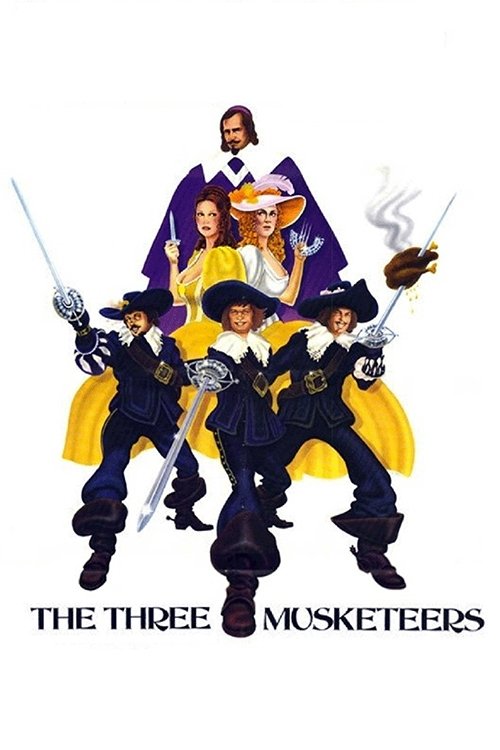
The Three Musketeers
In 17th century France, young D'Artagnan wants to join the King's Musketeers, but instead befriends three legendary musketeers—Athos, Porthos, and Aramis—and together, they become embroiled in the political intrigue surrounding King Louis XIII and his adversaries, particularly the powerful Cardinal Richelieu.
Despite its tight budget of $4.5M, The Three Musketeers became a commercial success, earning $22.0M worldwide—a 389% return. The film's bold vision attracted moviegoers, confirming that strong storytelling can transcend budget limitations.
Nominated for 5 BAFTA 4 wins & 7 nominations


Plot Structure
Story beats plotted across runtime


Narrative Arc
Emotional journey through the story's key moments
Story Circle
Blueprint 15-beat structure
Arcplot Score Breakdown
Weighted: Precision (70%) + Arc (15%) + Theme (15%)
The Three Musketeers (1973) reveals precise dramatic framework, characteristic of Richard Lester's storytelling approach. This structural analysis examines how the film's 15-point plot structure maps to proven narrative frameworks across 1 hour and 46 minutes. With an Arcplot score of 7.0, the film balances conventional beats with creative variation.
Characters
Cast & narrative archetypes

D'Artagnan
Athos
Porthos
Aramis
Milady de Winter
Cardinal Richelieu
Constance Bonacieux
King Louis XIII
Queen Anne
Main Cast & Characters
D'Artagnan
Played by Michael York
A young, impetuous Gascon who dreams of becoming a Musketeer and proving his worth in Paris.
Athos
Played by Oliver Reed
The noble and melancholic leader of the Three Musketeers, haunted by his tragic past.
Porthos
Played by Frank Finlay
The vain and flamboyant Musketeer who loves luxury, wine, and showing off his strength.
Aramis
Played by Richard Chamberlain
The elegant and spiritual Musketeer who balances his devotion to God with his duty to the sword.
Milady de Winter
Played by Faye Dunaway
A beautiful and deadly spy working for Cardinal Richelieu, skilled in manipulation and assassination.
Cardinal Richelieu
Played by Charlton Heston
The cunning and politically ambitious chief minister who schemes to consolidate his power over France.
Constance Bonacieux
Played by Raquel Welch
The Queen's loyal seamstress and D'Artagnan's love interest, brave and resourceful.
King Louis XIII
Played by Jean-Pierre Cassel
The weak and indecisive King of France, overshadowed by Cardinal Richelieu's influence.
Queen Anne
Played by Geraldine Chaplin
The Queen of France who seeks to protect her honor and the diamond studs from scandal.
Structural Analysis
The Status Quo at 1 minutes (1% through the runtime) establishes D'Artagnan departs his provincial home in Gascony, a brash young man full of ambition, heading to Paris to become a Musketeer like his father.. Significantly, this early placement immediately immerses viewers in the story world.
The inciting incident occurs at 12 minutes when D'Artagnan accidentally challenges all three Musketeers (Athos, Porthos, and Aramis) to duels on the same day, putting himself in mortal danger and revealing the degraded state of the once-proud Musketeers.. At 12% through the film, this Disruption aligns precisely with traditional story structure. This beat shifts the emotional landscape, launching the protagonist into the central conflict.
The First Threshold at 25 minutes marks the transition into Act II, occurring at 24% of the runtime. This shows the protagonist's commitment to D'Artagnan chooses to join the Musketeers' cause, accepting their friendship and committing to help Queen Anne retrieve her diamond studs from the Duke of Buckingham in England before the Cardinal exposes her indiscretion., moving from reaction to action.
At 52 minutes, the Midpoint arrives at 50% of the runtime—precisely centered, creating perfect narrative symmetry. The analysis reveals that this crucial beat The Musketeers successfully retrieve the diamond studs from Buckingham and begin their return journey - a false victory, as the stakes now raise with Milady de Winter actively working against them., fundamentally raising what's at risk. The emotional intensity shifts, dividing the narrative into clear before-and-after phases.
The Collapse moment at 78 minutes (74% through) represents the emotional nadir. Here, The Musketeers are captured or scattered, the mission appears to have failed, and Constance is poisoned by Milady de Winter. D'Artagnan faces the death of innocence and the cost of this dangerous world., shows the protagonist at their lowest point. This beat's placement in the final quarter sets up the climactic reversal.
The Second Threshold at 84 minutes initiates the final act resolution at 80% of the runtime. D'Artagnan realizes that the mission is bigger than personal glory - it's about loyalty, honor, and protecting those who cannot protect themselves. He synthesizes his Gascon courage with the Musketeers' code of brotherhood., demonstrating the transformation achieved throughout the journey.
Emotional Journey
The Three Musketeers's emotional architecture traces a deliberate progression across 15 carefully calibrated beats.
Narrative Framework
This structural analysis employs structural analysis methodology used to understand storytelling architecture. By mapping The Three Musketeers against these established plot points, we can identify how Richard Lester utilizes or subverts traditional narrative conventions. The plot point approach reveals not only adherence to structural principles but also creative choices that distinguish The Three Musketeers within the action genre.
Richard Lester's Structural Approach
Among the 5 Richard Lester films analyzed on Arcplot, the average structural score is 7.1, reflecting strong command of classical structure. The Three Musketeers takes a more unconventional approach compared to the director's typical style. For comparative analysis, explore the complete Richard Lester filmography.
Comparative Analysis
Additional action films include The Bad Guys, Puss in Boots and Venom: The Last Dance. For more Richard Lester analyses, see Superman II, The Four Musketeers and A Hard Day's Night.
Plot Points by Act
Act I
SetupStatus Quo
D'Artagnan departs his provincial home in Gascony, a brash young man full of ambition, heading to Paris to become a Musketeer like his father.
Theme
D'Artagnan's father advises: "All for one and one for all" - the code of honor and brotherhood that defines true Musketeers.
Worldbuilding
D'Artagnan travels to Paris, gets into trouble at an inn, arrives in the city, meets the scheming Cardinal Richelieu and Rochefort, and discovers the political intrigue between the Musketeers and the Cardinal's guards.
Disruption
D'Artagnan accidentally challenges all three Musketeers (Athos, Porthos, and Aramis) to duels on the same day, putting himself in mortal danger and revealing the degraded state of the once-proud Musketeers.
Resistance
The three Musketeers size up young d'Artagnan. They're interrupted by the Cardinal's guards, leading to a forbidden street brawl where d'Artagnan proves his worth. He begins learning the ways of Paris and the Musketeers.
Act II
ConfrontationFirst Threshold
D'Artagnan chooses to join the Musketeers' cause, accepting their friendship and committing to help Queen Anne retrieve her diamond studs from the Duke of Buckingham in England before the Cardinal exposes her indiscretion.
Mirror World
D'Artagnan falls for Constance Bonacieux, the Queen's seamstress, who embodies loyalty and honor - the values he must learn. She represents the mission beyond personal glory.
Premise
The Musketeers' adventure to England: swashbuckling fights, narrow escapes, comedic mishaps, charming encounters, and rousing action as they evade Rochefort and the Cardinal's agents across France and the English Channel.
Midpoint
The Musketeers successfully retrieve the diamond studs from Buckingham and begin their return journey - a false victory, as the stakes now raise with Milady de Winter actively working against them.
Opposition
The journey back intensifies: Milady de Winter seduces and manipulates, the Cardinal's forces close in, the Musketeers are separated and ambushed, and d'Artagnan's inexperience becomes dangerous. Political intrigue at court deepens.
Collapse
The Musketeers are captured or scattered, the mission appears to have failed, and Constance is poisoned by Milady de Winter. D'Artagnan faces the death of innocence and the cost of this dangerous world.
Crisis
D'Artagnan grapples with loss and failure, questioning whether glory is worth the price. The Musketeers regroup in darkness, mourning what they've lost and contemplating their next move.
Act III
ResolutionSecond Threshold
D'Artagnan realizes that the mission is bigger than personal glory - it's about loyalty, honor, and protecting those who cannot protect themselves. He synthesizes his Gascon courage with the Musketeers' code of brotherhood.
Synthesis
The climactic ball where the Queen presents the diamonds to the King, thwarting the Cardinal's plot. Final confrontations with Rochefort and the Cardinal's agents. Justice and honor prevail through unified action.
Transformation
D'Artagnan stands with Athos, Porthos, and Aramis as a true Musketeer - no longer the brash provincial boy, but a man of honor who understands that "All for one and one for all" means sacrifice, loyalty, and brotherhood.