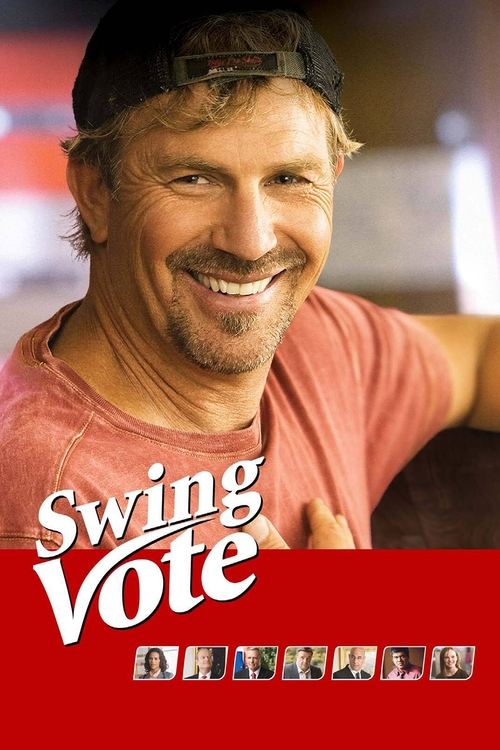
Swing Vote
In a remarkable turn of events, the result of the presidential election comes down to one man's vote.
The film disappointed at the box office against its respectable budget of $21.0M, earning $17.6M globally (-16% loss).


Plot Structure
Story beats plotted across runtime


Narrative Arc
Emotional journey through the story's key moments
Story Circle
Blueprint 15-beat structure
Arcplot Score Breakdown
Weighted: Precision (70%) + Arc (15%) + Theme (15%)
Swing Vote (2008) exhibits precise narrative architecture, characteristic of Joshua Michael Stern's storytelling approach. This structural analysis examines how the film's 15-point plot structure maps to proven narrative frameworks across 2 hours. With an Arcplot score of 6.7, the film balances conventional beats with creative variation.
Characters
Cast & narrative archetypes

Bud Johnson
Molly Johnson
Kate Madison
President Andrew Boone
Donald Greenleaf
Martin Fox
Art Crumb
Main Cast & Characters
Bud Johnson
Played by Kevin Costner
An apathetic, beer-drinking slacker who becomes the single voter to decide the presidential election.
Molly Johnson
Played by Madeline Carroll
Bud's politically engaged 12-year-old daughter who cares deeply about civic responsibility and tries to motivate her father.
Kate Madison
Played by Paula Patton
An ambitious television reporter who breaks the story about Bud and competes for the exclusive interview.
President Andrew Boone
Played by Kelsey Grammer
The incumbent Republican president running for re-election who must win over Bud's vote.
Donald Greenleaf
Played by Dennis Hopper
The Democratic challenger who also courts Bud's crucial deciding vote.
Martin Fox
Played by Stanley Tucci
President Boone's calculating campaign manager who orchestrates strategies to win Bud over.
Art Crumb
Played by Nathan Lane
Greenleaf's campaign manager who competes with Fox to secure Bud's vote.
Structural Analysis
The Status Quo at 2 minutes (1% through the runtime) establishes Bud Johnson is an apathetic, irresponsible factory worker living in a small New Mexico town. His bright 12-year-old daughter Molly essentially parents him, managing their household while he neglects his duties, including voting.. Structural examination shows that this early placement immediately immerses viewers in the story world.
The inciting incident occurs at 15 minutes when On Election Day, Bud gets drunk and passes out instead of voting as he promised Molly. Desperate, Molly sneaks into the polling place to cast his ballot for him, but is interrupted, and the machine malfunctions, resulting in an uncounted vote.. At 13% through the film, this Disruption is delayed, allowing extended setup of the story world. This beat shifts the emotional landscape, launching the protagonist into the central conflict.
The First Threshold at 30 minutes marks the transition into Act II, occurring at 25% of the runtime. This shows the protagonist's commitment to Bud decides to embrace his role as the deciding voter and engage with the political process. He agrees to meet with both campaigns and learn about the issues, largely motivated by wanting to impress Molly and the attention he's receiving., moving from reaction to action.
At 60 minutes, the Midpoint arrives at 50% of the runtime—precisely centered, creating perfect narrative symmetry. Notably, this crucial beat A false victory: Bud appears on television for a debate/interview and humiliates himself with his ignorance, revealing he knows nothing about the issues despite all the attention. Molly is mortified and deeply disappointed in him., fundamentally raising what's at risk. The emotional intensity shifts, dividing the narrative into clear before-and-after phases.
The Collapse moment at 90 minutes (75% through) represents the emotional nadir. Here, Molly, completely disillusioned with her father and the political circus, runs away. Bud realizes he's failed her completely and that his irresponsibility has hurt the one person who matters most. He hits rock bottom, confronting his worthlessness as a father and citizen., reveals the protagonist at their lowest point. This beat's placement in the final quarter sets up the climactic reversal.
The Second Threshold at 96 minutes initiates the final act resolution at 80% of the runtime. Bud finds Molly and reconciles with her. He realizes he must cast his vote based on genuine conviction and responsibility, not celebrity or manipulation. He understands that being a good citizen and father means making an informed, principled choice., demonstrating the transformation achieved throughout the journey.
Emotional Journey
Swing Vote's emotional architecture traces a deliberate progression across 15 carefully calibrated beats.
Narrative Framework
This structural analysis employs proven narrative structure principles that track dramatic progression. By mapping Swing Vote against these established plot points, we can identify how Joshua Michael Stern utilizes or subverts traditional narrative conventions. The plot point approach reveals not only adherence to structural principles but also creative choices that distinguish Swing Vote within the comedy genre.
Joshua Michael Stern's Structural Approach
Among the 2 Joshua Michael Stern films analyzed on Arcplot, the average structural score is 6.8, demonstrating varied approaches to story architecture. Swing Vote takes a more unconventional approach compared to the director's typical style. For comparative analysis, explore the complete Joshua Michael Stern filmography.
Comparative Analysis
Additional comedy films include The Bad Guys, Ella Enchanted and The Evening Star. For more Joshua Michael Stern analyses, see Jobs.
Plot Points by Act
Act I
SetupStatus Quo
Bud Johnson is an apathetic, irresponsible factory worker living in a small New Mexico town. His bright 12-year-old daughter Molly essentially parents him, managing their household while he neglects his duties, including voting.
Theme
Molly's teacher discusses the importance of civic duty and how one person can make a difference in democracy. This thematic statement about individual responsibility and participation foreshadows Bud's journey.
Worldbuilding
Introduction to Bud's dysfunctional life: his drinking, his strained relationship with Molly, his ex-wife, and his dead-end job. We see the presidential election campaign heating up between President Andrew Boone and challenger Donald Greenleaf. Molly is passionate about politics while Bud couldn't care less.
Disruption
On Election Day, Bud gets drunk and passes out instead of voting as he promised Molly. Desperate, Molly sneaks into the polling place to cast his ballot for him, but is interrupted, and the machine malfunctions, resulting in an uncounted vote.
Resistance
The presidential election comes down to New Mexico, which comes down to Bud's single vote. Election officials declare a revote for just Bud in 10 days. The media descends on their small town. Bud is confused and overwhelmed by the sudden attention. Political operatives from both campaigns begin courting him.
Act II
ConfrontationFirst Threshold
Bud decides to embrace his role as the deciding voter and engage with the political process. He agrees to meet with both campaigns and learn about the issues, largely motivated by wanting to impress Molly and the attention he's receiving.
Mirror World
Bud's relationship with Molly deepens as she becomes his guide through political education. She represents the idealistic citizen he should be, and their bond strengthens as he begins to take things more seriously for her sake.
Premise
The fun of watching both presidential campaigns pander shamelessly to Bud. They flip-flop on core positions to match his offhand comments. Bud enjoys celebrity status, appears on TV, and experiences wealth and attention for the first time. Both candidates visit him personally.
Midpoint
A false victory: Bud appears on television for a debate/interview and humiliates himself with his ignorance, revealing he knows nothing about the issues despite all the attention. Molly is mortified and deeply disappointed in him.
Opposition
Bud faces increasing pressure from all sides. The media turns critical. His ex-wife threatens to take custody of Molly. Campaign operatives become more aggressive and manipulative. Bud begins to realize how the system is corrupt and how he's being used. His relationship with Molly becomes strained.
Collapse
Molly, completely disillusioned with her father and the political circus, runs away. Bud realizes he's failed her completely and that his irresponsibility has hurt the one person who matters most. He hits rock bottom, confronting his worthlessness as a father and citizen.
Crisis
Bud searches for Molly and reflects on his failures. He grapples with who he's become and what really matters. He reads materials Molly left behind about the issues and begins to genuinely educate himself for the first time.
Act III
ResolutionSecond Threshold
Bud finds Molly and reconciles with her. He realizes he must cast his vote based on genuine conviction and responsibility, not celebrity or manipulation. He understands that being a good citizen and father means making an informed, principled choice.
Synthesis
Bud prepares to vote with genuine thoughtfulness. He conducts his own final evaluation of the candidates. On voting day, he enters the booth with Molly by his side, ready to make a truly informed decision as a responsible citizen and father.
Transformation
Bud casts his vote privately and exits the polling place with dignity. He and Molly walk together, their relationship restored. He has transformed from an apathetic, irresponsible citizen into someone who understands civic duty and fatherhood.