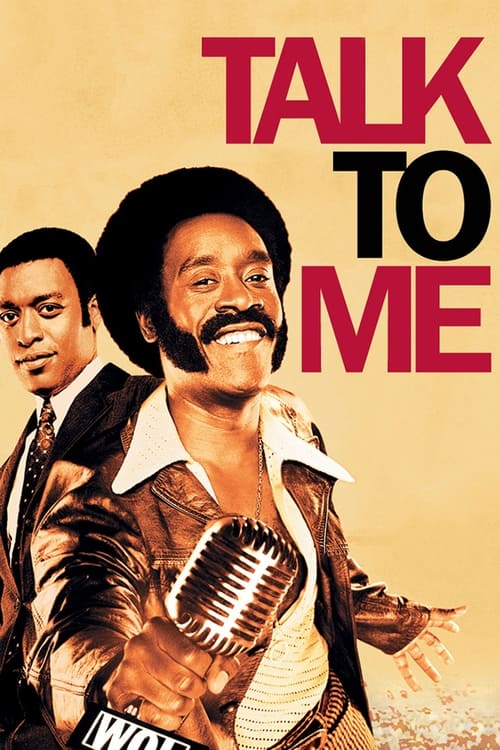
Talk to Me
The story of Washington D.C. radio personality Ralph "Petey" Greene, an ex-con who became a popular talk show host and community activist in the 1960s.
The film earned $4.8M at the global box office.
8 wins & 14 nominations


Plot Structure
Story beats plotted across runtime


Narrative Arc
Emotional journey through the story's key moments
Story Circle
Blueprint 15-beat structure
Arcplot Score Breakdown
Weighted: Precision (70%) + Arc (15%) + Theme (15%)
Talk to Me (2007) exemplifies deliberately positioned narrative architecture, characteristic of Kasi Lemmons's storytelling approach. This structural analysis examines how the film's 15-point plot structure maps to proven narrative frameworks across 1 hour and 58 minutes. With an Arcplot score of 7.2, the film balances conventional beats with creative variation.
Characters
Cast & narrative archetypes

Ralph "Petey" Greene
Dewey Hughes
Vernell Watson
Milo Hughes
E.G. Sonderling
Main Cast & Characters
Ralph "Petey" Greene
Played by Don Cheadle
An ex-con who becomes a revolutionary radio personality in 1960s Washington D.C., speaking truth to power with raw, unfiltered honesty.
Dewey Hughes
Played by Chiwetel Ejiofor
An ambitious program director who discovers Petey and becomes his manager, struggling to balance commercial success with authentic voice.
Vernell Watson
Played by Taraji P. Henson
Petey's girlfriend and later wife, a grounding force who supports him through his rise to fame and personal struggles.
Milo Hughes
Played by Mike Epps
Dewey's brother and club owner who first introduces Dewey to Petey while Petey is still in prison.
E.G. Sonderling
Played by Martin Sheen
The conservative station owner who initially resists Petey's controversial style but recognizes the commercial potential.
Structural Analysis
The Status Quo at 1 minutes (1% through the runtime) establishes Petey Greene performs for inmates at Lorton Prison, showing his raw charisma and gift for connecting with people, while program director Dewey Hughes visits the prison. Establishes Petey's world behind bars and Dewey's establishment radio career.. Structural examination shows that this early placement immediately immerses viewers in the story world.
The inciting incident occurs at 15 minutes when Petey is released from prison. His freedom disrupts both men's status quo - he immediately seeks out Dewey to get on the radio, creating the possibility of their partnership and the central conflict of the film.. At 13% through the film, this Disruption is delayed, allowing extended setup of the story world. This beat shifts the emotional landscape, launching the protagonist into the central conflict.
The First Threshold at 28 minutes marks the transition into Act II, occurring at 23% of the runtime. This indicates the protagonist's commitment to Dewey makes the active choice to put Petey on the air despite objections from management. This decision launches them both into a new world and commits Dewey to championing Petey's unfiltered voice., moving from reaction to action.
At 56 minutes, the Midpoint arrives at 48% of the runtime—precisely centered, creating perfect narrative symmetry. Notably, this crucial beat False victory: Petey reaches peak success and influence. He's offered opportunities beyond radio, potentially including national television. The partnership seems unstoppable. However, this success plants seeds of tension - Dewey wants to expand Petey's reach, but Petey resists changing his authentic style., fundamentally raising what's at risk. The emotional intensity shifts, dividing the narrative into clear before-and-after phases.
The Collapse moment at 87 minutes (74% through) represents the emotional nadir. Here, All is lost: The partnership fractures completely. Their friendship and professional relationship collapse. Petey spirals into self-destruction, returning to old patterns. Dewey realizes his ambition has damaged both Petey and their mission. The dream of taking authentic voice to the mainstream appears dead., demonstrates the protagonist at their lowest point. This beat's placement in the final quarter sets up the climactic reversal.
The Second Threshold at 95 minutes initiates the final act resolution at 80% of the runtime. Synthesis/revelation: Dewey realizes that success isn't about changing Petey or reaching the biggest audience - it's about the authentic impact they had on their community. He understands the value of what they built together. Reconciliation becomes possible when ambition yields to acceptance., demonstrating the transformation achieved throughout the journey.
Emotional Journey
Talk to Me's emotional architecture traces a deliberate progression across 15 carefully calibrated beats.
Narrative Framework
This structural analysis employs structural analysis methodology used to understand storytelling architecture. By mapping Talk to Me against these established plot points, we can identify how Kasi Lemmons utilizes or subverts traditional narrative conventions. The plot point approach reveals not only adherence to structural principles but also creative choices that distinguish Talk to Me within the drama genre.
Kasi Lemmons's Structural Approach
Among the 3 Kasi Lemmons films analyzed on Arcplot, the average structural score is 7.1, reflecting strong command of classical structure. Talk to Me represents one of the director's most structurally precise works. For comparative analysis, explore the complete Kasi Lemmons filmography.
Comparative Analysis
Additional drama films include After Thomas, South Pacific and Dirty Dancing: Havana Nights. For more Kasi Lemmons analyses, see Eve's Bayou, Black Nativity.
Plot Points by Act
Act I
SetupStatus Quo
Petey Greene performs for inmates at Lorton Prison, showing his raw charisma and gift for connecting with people, while program director Dewey Hughes visits the prison. Establishes Petey's world behind bars and Dewey's establishment radio career.
Theme
Petey tells Dewey "Tell it like it is" - the phrase that becomes central to the story. The theme of authenticity versus mainstream acceptability is introduced through their early conversations about what radio can be.
Worldbuilding
Establishing 1966 Washington D.C., WOL-AM radio station, Dewey's ambitions, his relationship with girlfriend Vernell, the conservative radio landscape, and Petey's incarceration and raw talent. We see Dewey's drive to make it big and the constraints of 1960s radio.
Disruption
Petey is released from prison. His freedom disrupts both men's status quo - he immediately seeks out Dewey to get on the radio, creating the possibility of their partnership and the central conflict of the film.
Resistance
Dewey debates whether to give the ex-con Petey a chance on air. Petey persistently pursues the opportunity, while Dewey weighs the risks to his career. Station management resists. Dewey must decide if authenticity is worth the professional risk.
Act II
ConfrontationFirst Threshold
Dewey makes the active choice to put Petey on the air despite objections from management. This decision launches them both into a new world and commits Dewey to championing Petey's unfiltered voice.
Mirror World
Dewey and Petey's partnership deepens as they navigate the radio world together. Their relationship becomes the thematic heart - Dewey represents ambition and polish, Petey represents raw authenticity. Vernell also serves as mirror, questioning Dewey's choices.
Premise
The promise of the premise: Petey becomes a sensation with his unfiltered commentary. Success builds, ratings soar, the show gains cultural significance during the Civil Rights era. Martin Luther King Jr.'s assassination coverage showcases their power to reach the community. They're riding high.
Midpoint
False victory: Petey reaches peak success and influence. He's offered opportunities beyond radio, potentially including national television. The partnership seems unstoppable. However, this success plants seeds of tension - Dewey wants to expand Petey's reach, but Petey resists changing his authentic style.
Opposition
Dewey pushes Petey toward mainstream opportunities including a Tonight Show appearance, but Petey's unpolished authenticity doesn't translate. The television appearance is a disaster. Their relationship strains as Dewey's ambitions clash with Petey's resistance to conforming. Petey feels Dewey is trying to change him; Dewey feels Petey is self-sabotaging.
Collapse
All is lost: The partnership fractures completely. Their friendship and professional relationship collapse. Petey spirals into self-destruction, returning to old patterns. Dewey realizes his ambition has damaged both Petey and their mission. The dream of taking authentic voice to the mainstream appears dead.
Crisis
Dark night of the soul: Both men face the consequences of their choices. Dewey reflects on whether his ambition betrayed the authenticity that made Petey special. Petey confronts his own demons and resistance to growth. Both must reconcile who they are with who they wanted to become.
Act III
ResolutionSecond Threshold
Synthesis/revelation: Dewey realizes that success isn't about changing Petey or reaching the biggest audience - it's about the authentic impact they had on their community. He understands the value of what they built together. Reconciliation becomes possible when ambition yields to acceptance.
Synthesis
Finale: Dewey and Petey reconcile, finding peace with who they are and what they accomplished. Epilogue text reveals Petey's legacy and early death, and Dewey's continued work. The resolution honors both men's journeys - Petey's authenticity and Dewey's dreams, showing how they changed their community.
Transformation
Final image mirrors opening but shows transformation: Instead of Petey performing behind bars or Dewey chasing mainstream success, we see the legacy of their authentic voice and genuine friendship. The closing shows what they built together mattered more than what they couldn't achieve separately.