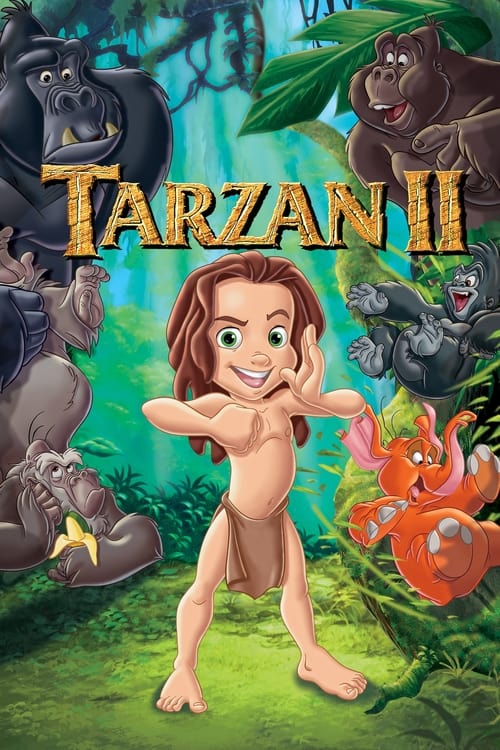
Tarzan II
When one of his missteps puts his family in jeopardy, Tarzan decides they would be better off without him.


Plot Structure
Story beats plotted across runtime


Narrative Arc
Emotional journey through the story's key moments
Story Circle
Blueprint 15-beat structure
Arcplot Score Breakdown
Weighted: Precision (70%) + Arc (15%) + Theme (15%)
Tarzan II (2005) reveals meticulously timed story structure, characteristic of Brian Smith's storytelling approach. This structural analysis examines how the film's 15-point plot structure maps to proven narrative frameworks across 1 hour and 12 minutes. With an Arcplot score of 6.8, the film balances conventional beats with creative variation.
Characters
Cast & narrative archetypes

Tarzan
Kala
Terk
Zugor
Mama Gunda
Uto
Kerchak
Main Cast & Characters
Tarzan
Played by Harrison Chad
A young ape-man struggling with feelings of inadequacy and not fitting in with his gorilla family.
Kala
Played by Glenn Close
Tarzan's adoptive gorilla mother who loves him unconditionally despite his differences.
Terk
Played by Brenda Grate
Tarzan's best friend, a young female gorilla who is energetic and loyal.
Zugor
Played by George Carlin
A reclusive elderly gorilla who pretends to be a terrifying monster to keep others away.
Mama Gunda
Played by Estelle Harris
A villainous female gorilla who leads a group of rogue gorillas and wants revenge on Zugor.
Uto
Played by Brad Garrett
Mama Gunda's son, a dim-witted but well-meaning young gorilla.
Kerchak
Played by Lance Henriksen
The stern leader of the gorilla family and Tarzan's adoptive father.
Structural Analysis
The Status Quo at 1 minutes (1% through the runtime) establishes Young Tarzan struggles to keep up with the other young gorillas during play, highlighting his physical differences and his desperate desire to fit in with his adopted family.. The analysis reveals that this early placement immediately immerses viewers in the story world.
The inciting incident occurs at 10 minutes when During a dangerous waterfall incident, Tarzan falls and believes Kala died trying to save him. Overwhelmed with guilt and feeling he only brings trouble, he decides to run away from the family.. At 13% through the film, this Disruption is delayed, allowing extended setup of the story world. This beat shifts the emotional landscape, launching the protagonist into the central conflict.
The First Threshold at 18 minutes marks the transition into Act II, occurring at 25% of the runtime. This illustrates the protagonist's commitment to Tarzan crosses into Dark Mountain territory to find the Zugor, making the active choice to leave his old life completely behind and seek a new identity in this mysterious forbidden place., moving from reaction to action.
At 36 minutes, the Midpoint arrives at 50% of the runtime—precisely centered, creating perfect narrative symmetry. Notably, this crucial beat Tarzan successfully helps Zugor maintain the monster illusion and feels he has found a new home and purpose. He believes he can stay on Dark Mountain forever, having found where he belongs - a false victory., fundamentally raising what's at risk. The emotional intensity shifts, dividing the narrative into clear before-and-after phases.
The Collapse moment at 54 minutes (75% through) represents the emotional nadir. Here, Tarzan learns Kala is alive and has been searching for him. He realizes his running away caused his mother tremendous pain. Zugor's secret is exposed and he loses everything - the illusion that protected him is shattered., indicates the protagonist at their lowest point. This beat's placement in the final quarter sets up the climactic reversal.
The Second Threshold at 58 minutes initiates the final act resolution at 81% of the runtime. Tarzan realizes that his differences are actually his strengths. He chooses to return and use his unique abilities to save his family, finally understanding that belonging isn't about being the same - it's about being yourself., demonstrating the transformation achieved throughout the journey.
Emotional Journey
Tarzan II's emotional architecture traces a deliberate progression across 15 carefully calibrated beats.
Narrative Framework
This structural analysis employs systematic plot point analysis that identifies crucial turning points. By mapping Tarzan II against these established plot points, we can identify how Brian Smith utilizes or subverts traditional narrative conventions. The plot point approach reveals not only adherence to structural principles but also creative choices that distinguish Tarzan II within the adventure genre.
Comparative Analysis
Additional adventure films include The Black Stallion, The Bad Guys and Puss in Boots.
Plot Points by Act
Act I
SetupStatus Quo
Young Tarzan struggles to keep up with the other young gorillas during play, highlighting his physical differences and his desperate desire to fit in with his adopted family.
Theme
Kala tells Tarzan that being different doesn't make him less of an ape - it's not what you are on the outside, but who you are on the inside that matters.
Worldbuilding
We see Tarzan's life among the gorillas - his loving relationship with Kala, his rivalry with Terk, the disapproval of Kerchak, and his constant failures to match the physical abilities of the other apes.
Disruption
During a dangerous waterfall incident, Tarzan falls and believes Kala died trying to save him. Overwhelmed with guilt and feeling he only brings trouble, he decides to run away from the family.
Resistance
Tarzan wanders alone through the jungle, questioning his identity and purpose. He hears tales of a monster called the Zugor on Dark Mountain and decides to seek it out, believing he no longer belongs anywhere.
Act II
ConfrontationFirst Threshold
Tarzan crosses into Dark Mountain territory to find the Zugor, making the active choice to leave his old life completely behind and seek a new identity in this mysterious forbidden place.
Mirror World
Tarzan discovers that the fearsome Zugor is actually a grumpy old hermit ape named Zugor who uses tricks to scare others away. Zugor becomes an unlikely mentor figure who also struggles with belonging.
Premise
Tarzan learns to survive on Dark Mountain with Zugor, discovering new skills that utilize his unique abilities. He also meets Mama Gunda and her sons, finding unexpected friendships and a sense of usefulness.
Midpoint
Tarzan successfully helps Zugor maintain the monster illusion and feels he has found a new home and purpose. He believes he can stay on Dark Mountain forever, having found where he belongs - a false victory.
Opposition
Mama Gunda's sons reveal Tarzan's location. Meanwhile, Kala is alive and searching for Tarzan. The real monster Sabor threatens both groups. Tarzan's new peaceful existence is endangered from multiple directions.
Collapse
Tarzan learns Kala is alive and has been searching for him. He realizes his running away caused his mother tremendous pain. Zugor's secret is exposed and he loses everything - the illusion that protected him is shattered.
Crisis
Tarzan must confront the pain he caused by running away. Zugor retreats in shame. The real danger of Sabor looms as Tarzan's family is in mortal peril, and he must decide who he truly is.
Act III
ResolutionSecond Threshold
Tarzan realizes that his differences are actually his strengths. He chooses to return and use his unique abilities to save his family, finally understanding that belonging isn't about being the same - it's about being yourself.
Synthesis
Tarzan uses his unique human abilities - his intelligence, creativity, and agility - to help defeat the threat and save both his gorilla family and his new friends. Zugor joins the fight, also accepting who he truly is.
Transformation
Tarzan is reunited with Kala and accepted back into the family. Unlike the opening where he tried to hide his differences, he now embraces them. Kerchak shows grudging respect, and Tarzan finally knows he belongs.