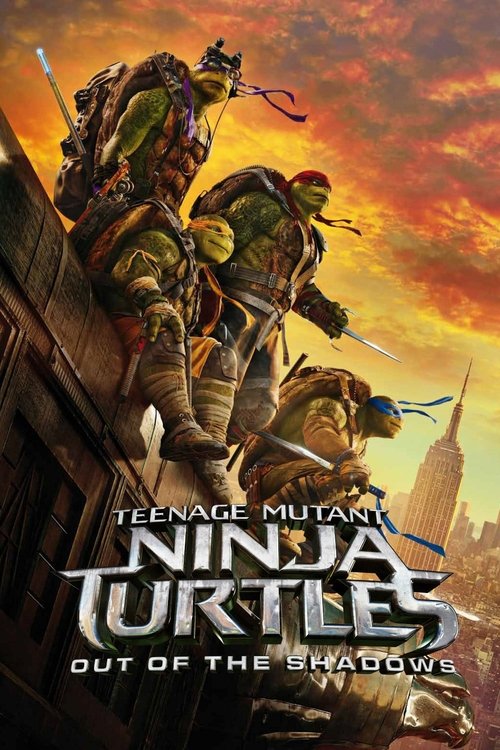
Teenage Mutant Ninja Turtles: Out of the Shadows
After supervillain Shredder escapes custody, he joins forces with mad scientist Baxter Stockman and two dimwitted henchmen, Bebop and Rocksteady, to unleash a diabolical plan to take over the world. As the Turtles prepare to take on Shredder and his new crew, they find themselves facing an even greater evil with similar intentions: the notorious Krang.
Working with a significant budget of $135.0M, the film achieved a respectable showing with $245.6M in global revenue (+82% profit margin).


Plot Structure
Story beats plotted across runtime


Narrative Arc
Emotional journey through the story's key moments
Story Circle
Blueprint 15-beat structure
Arcplot Score Breakdown
Weighted: Precision (70%) + Arc (15%) + Theme (15%)
Teenage Mutant Ninja Turtles: Out of the Shadows (2016) reveals carefully calibrated dramatic framework, characteristic of Dave Green's storytelling approach. This structural analysis examines how the film's 15-point plot structure maps to proven narrative frameworks across 1 hour and 52 minutes. With an Arcplot score of 6.6, the film balances conventional beats with creative variation.
Characters
Cast & narrative archetypes

Leonardo
Raphael
Donatello
Michelangelo
April O'Neil
Casey Jones
Shredder
Krang
Bebop
Rocksteady
Main Cast & Characters
Leonardo
Played by Pete Ploszek
The disciplined leader of the Turtles who struggles with living in the shadows while wanting to be a hero the city can celebrate.
Raphael
Played by Alan Ritchson
The hot-headed, aggressive warrior who values action over patience and often clashes with Leonardo's cautious leadership.
Donatello
Played by Jeremy Howard
The tech-savvy genius inventor of the team who provides scientific solutions and tactical support using his intelligence.
Michelangelo
Played by Noel Fisher
The fun-loving, pizza-obsessed jokester who provides comic relief while proving himself a capable fighter when needed.
April O'Neil
Played by Megan Fox
A determined investigative reporter who serves as the Turtles' human ally and connection to the surface world.
Casey Jones
Played by Stephen Amell
A vigilante hockey mask-wearing corrections officer who joins forces with the Turtles to stop Shredder and his allies.
Shredder
Played by Brian Tee
The armored leader of the Foot Clan who escapes custody and teams with alien warlord Krang to conquer Earth.
Krang
Played by Brad Garrett
An alien warlord from Dimension X who manipulates Shredder to help him assemble a portal device and invade Earth.
Bebop
Played by Gary Anthony Williams
A dim-witted criminal transformed into a mutant warthog who serves as muscle for Shredder and Krang.
Rocksteady
Played by Stephen Farrelly
A brutish criminal transformed into a mutant rhinoceros who partners with Bebop as comic relief henchmen.
Structural Analysis
The Status Quo at 1 minutes (1% through the runtime) establishes The Turtles watch a Knicks game from the shadows above Madison Square Garden, enjoying the moment together but unable to participate openly. They are heroes who must remain hidden, accepted only by each other and their small circle.. The analysis reveals that this early placement immediately immerses viewers in the story world.
The inciting incident occurs at 13 minutes when Shredder escapes during his prison transfer using a teleportation device, vanishing before the Turtles can stop him. The Foot Clan is active again, and a new threat emerges as Shredder makes contact with the alien warlord Krang in Dimension X.. At 12% through the film, this Disruption aligns precisely with traditional story structure. This beat shifts the emotional landscape, launching the protagonist into the central conflict.
The First Threshold at 28 minutes marks the transition into Act II, occurring at 25% of the runtime. This demonstrates the protagonist's commitment to Donatello reveals the purple ooze could potentially turn the Turtles human. Leonardo makes the choice NOT to tell his brothers about this possibility, deciding to keep the team focused on stopping Krang. This secret becomes the central tension as the Turtles commit to the mission., moving from reaction to action.
At 56 minutes, the Midpoint arrives at 50% of the runtime—precisely centered, creating perfect narrative symmetry. The analysis reveals that this crucial beat Raphael discovers Leonardo has been hiding the human-transformation ooze from them. The brothers' trust shatters as Raph accuses Leo of making decisions for everyone. The team fractures at the worst possible moment—a false defeat as their unity crumbles while Krang's plan advances., fundamentally raising what's at risk. The emotional intensity shifts, dividing the narrative into clear before-and-after phases.
The Collapse moment at 84 minutes (75% through) represents the emotional nadir. Here, Krang betrays Shredder, freezing him, and the Technodrome fully materializes above New York. The Turtles are separated, outmatched, and their fractured team seems incapable of stopping an alien invasion. The world faces destruction, and the brothers' conflict may have doomed everyone., illustrates the protagonist at their lowest point. This beat's placement in the final quarter sets up the climactic reversal.
The Second Threshold at 90 minutes initiates the final act resolution at 80% of the runtime. Leonardo apologizes for keeping secrets, acknowledging that the team's strength comes from trusting each other. The brothers reconcile, choosing to remain who they are—mutant turtles, brothers—rather than wish for something else. United again, they formulate a plan to infiltrate the Technodrome., demonstrating the transformation achieved throughout the journey.
Emotional Journey
Teenage Mutant Ninja Turtles: Out of the Shadows's emotional architecture traces a deliberate progression across 15 carefully calibrated beats.
Narrative Framework
This structural analysis employs proven narrative structure principles that track dramatic progression. By mapping Teenage Mutant Ninja Turtles: Out of the Shadows against these established plot points, we can identify how Dave Green utilizes or subverts traditional narrative conventions. The plot point approach reveals not only adherence to structural principles but also creative choices that distinguish Teenage Mutant Ninja Turtles: Out of the Shadows within the action genre.
Dave Green's Structural Approach
Among the 2 Dave Green films analyzed on Arcplot, the average structural score is 7.2, reflecting strong command of classical structure. Teenage Mutant Ninja Turtles: Out of the Shadows takes a more unconventional approach compared to the director's typical style. For comparative analysis, explore the complete Dave Green filmography.
Comparative Analysis
Additional action films include The Bad Guys, Puss in Boots and Venom: The Last Dance. For more Dave Green analyses, see Earth to Echo.
Plot Points by Act
Act I
SetupStatus Quo
The Turtles watch a Knicks game from the shadows above Madison Square Garden, enjoying the moment together but unable to participate openly. They are heroes who must remain hidden, accepted only by each other and their small circle.
Theme
Splinter tells the Turtles that true strength comes from their bond as brothers and that their unity is what makes them powerful. The world may not accept them, but they have each other—foreshadowing the choice they'll face about becoming human.
Worldbuilding
We establish the Turtles' underground life, their dynamic (Leo the leader, Raph the rebel, Donnie the tech genius, Mikey the joker), April's role as their surface contact, and the backdrop of Shredder's imprisonment and impending trial. The world believes the Turtles are dangerous vigilantes.
Disruption
Shredder escapes during his prison transfer using a teleportation device, vanishing before the Turtles can stop him. The Foot Clan is active again, and a new threat emerges as Shredder makes contact with the alien warlord Krang in Dimension X.
Resistance
The Turtles investigate Shredder's escape and discover the purple ooze from TCRI. April infiltrates Baxter Stockman's lab and learns about the mutagen. Casey Jones is introduced as a corrections officer blamed for Shredder's escape, seeking redemption. Bebop and Rocksteady are transformed into mutants.
Act II
ConfrontationFirst Threshold
Donatello reveals the purple ooze could potentially turn the Turtles human. Leonardo makes the choice NOT to tell his brothers about this possibility, deciding to keep the team focused on stopping Krang. This secret becomes the central tension as the Turtles commit to the mission.
Mirror World
Casey Jones officially teams up with the Turtles and April, becoming their human ally who accepts them without hesitation. Casey represents what the Turtles want—acceptance from the outside world—but shows them that acceptance can come without changing who they are.
Premise
The Turtles pursue the three components needed for Krang's Technodrome portal in a globe-trotting adventure. Action sequences in Brazil against Bebop and Rocksteady, aerial pursuit of a plane, and Turtle teamwork showcases. The promise of the premise—ninja turtles doing ninja turtle things against colorful villains.
Midpoint
Raphael discovers Leonardo has been hiding the human-transformation ooze from them. The brothers' trust shatters as Raph accuses Leo of making decisions for everyone. The team fractures at the worst possible moment—a false defeat as their unity crumbles while Krang's plan advances.
Opposition
The brothers are divided and working at cross-purposes. Shredder delivers the final component to Krang. The Technodrome begins assembling over New York. The Turtles attempt to warn the police chief but are treated as threats. The world rejects them even as they try to save it. Bebop and Rocksteady prove formidable opponents.
Collapse
Krang betrays Shredder, freezing him, and the Technodrome fully materializes above New York. The Turtles are separated, outmatched, and their fractured team seems incapable of stopping an alien invasion. The world faces destruction, and the brothers' conflict may have doomed everyone.
Crisis
The Turtles regroup in the sewers, forced to confront their conflict. Each brother voices their fears and frustrations. The weight of potential failure—and the realization that being human wouldn't make them a family—hangs over them.
Act III
ResolutionSecond Threshold
Leonardo apologizes for keeping secrets, acknowledging that the team's strength comes from trusting each other. The brothers reconcile, choosing to remain who they are—mutant turtles, brothers—rather than wish for something else. United again, they formulate a plan to infiltrate the Technodrome.
Synthesis
The Turtles storm the Technodrome as a unified team, each using their unique skills. They defeat Krang by working together, send the Technodrome back to Dimension X, and save New York. The police witness their heroism. The city finally sees them as heroes, not monsters.
Transformation
The Turtles receive the Key to the City in a ceremony, finally accepted by New York. But they choose to remain in the shadows, watching from above—not because they have to, but because they choose to. They're comfortable being who they are. The city cheers for heroes it will never see.