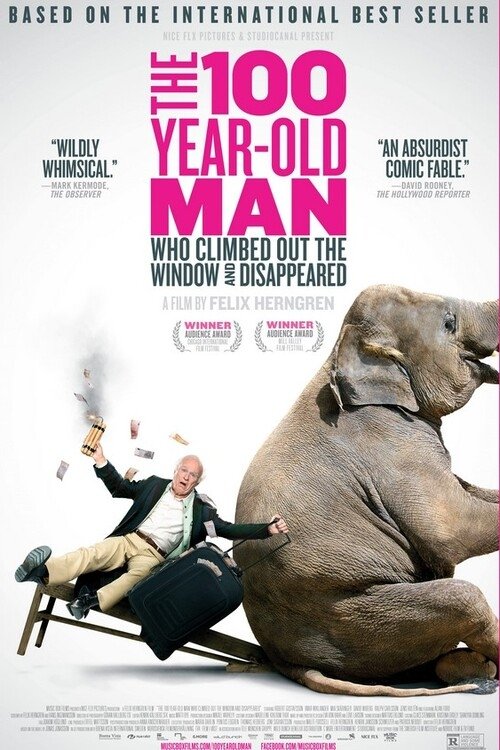
The 100 Year-Old Man Who Climbed Out the Window and Disappeared
After living a long and colorful life, Allan Karlsson finds himself stuck in a nursing home. On his 100th birthday, he leaps out a window and begins an unexpected journey.
Despite its tight budget of $9.3M, The 100 Year-Old Man Who Climbed Out the Window and Disappeared became a commercial success, earning $51.2M worldwide—a 453% return. The film's compelling narrative engaged audiences, proving that strong storytelling can transcend budget limitations.
Nominated for 1 Oscar. 6 wins & 11 nominations


Plot Structure
Story beats plotted across runtime


Narrative Arc
Emotional journey through the story's key moments
Story Circle
Blueprint 15-beat structure
Arcplot Score Breakdown
Weighted: Precision (70%) + Arc (15%) + Theme (15%)
The 100 Year-Old Man Who Climbed Out the Window and Disappeared (2013) showcases deliberately positioned plot construction, characteristic of Felix Herngren's storytelling approach. This structural analysis examines how the film's 15-point plot structure maps to proven narrative frameworks across 1 hour and 55 minutes. With an Arcplot score of 7.0, the film balances conventional beats with creative variation.
Characters
Cast & narrative archetypes

Allan Karlsson
Julius Jonsson
Benny Ljungberg
Gunilla "The Beauty" Björklund
Chief Inspector Göran Aronsson
Pim "The Boss" Gerdin
Bucket
Young Allan Karlsson
Main Cast & Characters
Allan Karlsson
Played by Robert Gustafsson
A centenarian who escapes his nursing home on his 100th birthday and embarks on an accidental adventure involving criminals and a suitcase full of money.
Julius Jonsson
Played by Iwar Wiklander
A petty criminal and hot dog stand owner who becomes Allan's loyal companion and partner in adventure.
Benny Ljungberg
Played by David Wiberg
A perpetual student with multiple degrees who joins Allan and Julius, providing medical knowledge and becoming part of their unlikely gang.
Gunilla "The Beauty" Björklund
Played by Mia Skäringer
A red-haired woman who runs a rural farm and becomes romantically involved with Benny while sheltering the group.
Chief Inspector Göran Aronsson
Played by Jens Hultén
A police detective tasked with finding the missing centenarian, growing increasingly frustrated as the case becomes more complex.
Pim "The Boss" Gerdin
Played by Simon Säppenen
The violent leader of the criminal gang Never Again who is desperately searching for his stolen money and missing members.
Bucket
Played by Filip Berg
A member of the Never Again gang who initially pursues Allan but ends up dead in one of the misadventures.
Young Allan Karlsson
Played by Robert Gustafsson
Allan in his youth and middle years, whose flashbacks reveal his extraordinary life involving historical figures and world events.
Structural Analysis
The Status Quo at 1 minutes (1% through the runtime) establishes Allan Karlsson sits alone in his nursing home room on his 100th birthday, looking bored and detached as staff prepare his unwanted celebration party. Establishes his passive existence in institutional care.. Notably, this early placement immediately immerses viewers in the story world.
The inciting incident occurs at 13 minutes when Allan climbs out his nursing home window in his slippers on his 100th birthday, abandoning the party. A spontaneous decision that disrupts his institutional existence and sets the adventure in motion.. At 12% through the film, this Disruption aligns precisely with traditional story structure. This beat shifts the emotional landscape, launching the protagonist into the central conflict.
The First Threshold at 28 minutes marks the transition into Act II, occurring at 24% of the runtime. This shows the protagonist's commitment to Allan opens the suitcase and discovers it contains millions in cash belonging to a criminal gang. He actively chooses to keep the money and continue his escape rather than return it or turn himself in, fully committing to the adventure., moving from reaction to action.
At 56 minutes, the Midpoint arrives at 49% of the runtime—precisely centered, creating perfect narrative symmetry. The analysis reveals that this crucial beat False victory: The group successfully evades their pursuers and finds temporary refuge at Benny's brother's farm with the elephant. They seem safe and form a makeshift family. Stakes raise as both police investigation intensifies and the criminal gang gets closer., fundamentally raising what's at risk. The emotional intensity shifts, dividing the narrative into clear before-and-after phases.
The Collapse moment at 84 minutes (73% through) represents the emotional nadir. Here, The criminal Boss and his gang catch up to Allan's group at the farm. Confrontation seems inevitable and deadly. "Whiff of death" as the gang leader threatens violence and the elderly protagonists appear defenseless. Their adventure appears to have led to a fatal dead end., shows the protagonist at their lowest point. This beat's placement in the final quarter sets up the climactic reversal.
The Second Threshold at 90 minutes initiates the final act resolution at 79% of the runtime. Allan applies his explosive expertise (established throughout flashbacks) to eliminate the criminal threat. His lifetime of experiences - the synthesis of past and present timelines - provides the solution. He acts decisively, combining his skills with his newfound companionship., demonstrating the transformation achieved throughout the journey.
Emotional Journey
The 100 Year-Old Man Who Climbed Out the Window and Disappeared's emotional architecture traces a deliberate progression across 15 carefully calibrated beats.
Narrative Framework
This structural analysis employs proven narrative structure principles that track dramatic progression. By mapping The 100 Year-Old Man Who Climbed Out the Window and Disappeared against these established plot points, we can identify how Felix Herngren utilizes or subverts traditional narrative conventions. The plot point approach reveals not only adherence to structural principles but also creative choices that distinguish The 100 Year-Old Man Who Climbed Out the Window and Disappeared within the adventure genre.
Comparative Analysis
Additional adventure films include The Black Stallion, The Bad Guys and Puss in Boots.
Plot Points by Act
Act I
SetupStatus Quo
Allan Karlsson sits alone in his nursing home room on his 100th birthday, looking bored and detached as staff prepare his unwanted celebration party. Establishes his passive existence in institutional care.
Theme
A nurse or staff member comments that "it's never too late" or references living life fully regardless of age, establishing the film's theme about agency, adventure, and living on one's own terms at any age.
Worldbuilding
Introduction to Allan's mundane nursing home life, the impending birthday celebration, staff and residents. First flashback begins showing young Allan's philosophy of staying out of politics. Establishes dual timeline structure and Allan's life-long pattern of stumbling into historical events.
Disruption
Allan climbs out his nursing home window in his slippers on his 100th birthday, abandoning the party. A spontaneous decision that disrupts his institutional existence and sets the adventure in motion.
Resistance
Allan wanders to the bus station and impulsively steals a suitcase from a criminal when asked to watch it. He boards a bus to escape. Flashbacks show his early adventures with explosives. The old man debates what to do with his newfound freedom and the mysterious suitcase.
Act II
ConfrontationFirst Threshold
Allan opens the suitcase and discovers it contains millions in cash belonging to a criminal gang. He actively chooses to keep the money and continue his escape rather than return it or turn himself in, fully committing to the adventure.
Mirror World
Allan meets Julius, a hot dog stand owner and fellow non-conformist, who becomes his partner in the adventure. Julius represents the thematic mirror - another person who lives by his own rules and embraces chaos.
Premise
The "fun and games" of two old men on the run with stolen mob money. They acquire an elephant, pick up Benny (a perpetual student), and evade both police and criminals. Intercut with flashbacks of Allan's extraordinary life meeting Franco, Truman, Stalin, and influencing major historical events, all while maintaining his apolitical philosophy.
Midpoint
False victory: The group successfully evades their pursuers and finds temporary refuge at Benny's brother's farm with the elephant. They seem safe and form a makeshift family. Stakes raise as both police investigation intensifies and the criminal gang gets closer.
Opposition
The criminal gang closes in, led by the vengeful Boss. Police detective pursues them more aggressively. Bodies start piling up (criminals killing each other). Flashbacks show Allan's Cold War adventures becoming more dangerous, paralleling present danger. The group's luck seems to be running out.
Collapse
The criminal Boss and his gang catch up to Allan's group at the farm. Confrontation seems inevitable and deadly. "Whiff of death" as the gang leader threatens violence and the elderly protagonists appear defenseless. Their adventure appears to have led to a fatal dead end.
Crisis
Dark moment as the group faces the criminals. Tension peaks as Allan must use his lifetime of experience to navigate this final threat. Brief contemplation of consequences before the resolution.
Act III
ResolutionSecond Threshold
Allan applies his explosive expertise (established throughout flashbacks) to eliminate the criminal threat. His lifetime of experiences - the synthesis of past and present timelines - provides the solution. He acts decisively, combining his skills with his newfound companionship.
Synthesis
The finale resolves all threads: criminals eliminated, police investigation concludes favorably, the group's fate is secured. Final flashbacks complete Allan's life story, showing how he always landed on his feet. The found family decides to continue their adventure together with the money.
Transformation
Allan and his new friends (Julius, Benny, and Benny's girlfriend) are shown traveling together on a new adventure to exotic locations with the money, living freely. Mirrors the opening image of Allan alone and passive - now he's active, surrounded by chosen family, embracing life at 100. Transformation from institutional passivity to adventurous agency.