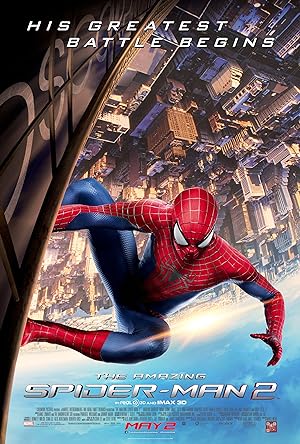
The Amazing Spider-Man 2
We've always known that Spider-Man's most important conflict has been within himself: the struggle between the ordinary obligations of Peter Parker and the extraordinary responsibilities of Spider-Man. But in The Amazing Spider-Man 2, Peter Parker finds that his greatest battle is about to begin. It's great to be Spider-Man. For Peter Parker, there's no feeling quite like swinging between skyscrapers, embracing being the hero, and spending time with Gwen. But being Spider-Man comes at a price: only Spider-Man can protect his fellow New Yorkers from the formidable villains that threaten the city. With the emergence of Electro, Peter must confront a foe far more powerful than he. And as his old friend, Harry Osborn, returns, Peter comes to realize that all of his enemies have one thing in common: Oscorp.
Despite a massive budget of $200.0M, The Amazing Spider-Man 2 became a solid performer, earning $709.0M worldwide—a 254% return. This commercial performance validated the ambitious narrative scope, illustrating how audiences embrace distinctive approach even at blockbuster scale.
4 wins & 30 nominations


Plot Structure
Story beats plotted across runtime


Narrative Arc
Emotional journey through the story's key moments
Story Circle
Blueprint 15-beat structure
Arcplot Score Breakdown
Weighted: Precision (70%) + Arc (15%) + Theme (15%)
The Amazing Spider-Man 2 (2014) exhibits strategically placed narrative design, characteristic of Marc Webb's storytelling approach. This structural analysis examines how the film's 15-point plot structure maps to proven narrative frameworks across 2 hours and 21 minutes. With an Arcplot score of 6.5, the film balances conventional beats with creative variation.
Characters
Cast & narrative archetypes

Peter Parker / Spider-Man
Gwen Stacy
Harry Osborn
Max Dillon / Electro
Aunt May
Norman Osborn
Main Cast & Characters
Peter Parker / Spider-Man
Played by Andrew Garfield
A brilliant high school graduate struggling to balance his superhero responsibilities with personal relationships and uncovering the truth about his parents.
Gwen Stacy
Played by Emma Stone
Peter's intelligent girlfriend and valedictorian who accepts a scholarship to Oxford, creating tension in their relationship.
Harry Osborn
Played by Dane DeHaan
Peter's childhood friend who returns to New York, inherits Oscorp, and becomes desperate to cure his terminal illness.
Max Dillon / Electro
Played by Jamie Foxx
An overlooked Oscorp electrical engineer who becomes obsessed with Spider-Man, then transforms into a powerful electricity-based villain.
Aunt May
Played by Sally Field
Peter's caring aunt who works as a nurse and struggles financially while supporting Peter emotionally.
Norman Osborn
Played by Chris Cooper
Harry's dying father and founder of Oscorp who reveals dark family secrets before his death.
Structural Analysis
The Status Quo at 2 minutes (1% through the runtime) establishes Peter Parker as a young boy rides in the car with his parents. Establishes Peter's abandonment and the mystery of his parents' disappearance, setting up his need for identity and belonging.. Significantly, this early placement immediately immerses viewers in the story world.
The inciting incident occurs at 17 minutes when Peter discovers hidden files in his father's briefcase revealing secrets about Oscorp and his parents' work. This disrupts his understanding of his identity and pushes him to investigate his past.. At 12% through the film, this Disruption aligns precisely with traditional story structure. This beat shifts the emotional landscape, launching the protagonist into the central conflict.
The First Threshold at 35 minutes marks the transition into Act II, occurring at 25% of the runtime. This indicates the protagonist's commitment to Peter chooses to be with Gwen despite his fears. He actively decides to pursue his own happiness and relationship, crossing into a world where he tries to balance being Spider-Man, solving his past, and having love., moving from reaction to action.
At 71 minutes, the Midpoint arrives at 50% of the runtime—precisely centered, creating perfect narrative symmetry. Notably, this crucial beat False defeat: Harry is denied Spider-Man's blood and removed from Oscorp by Menken. Electro is captured and imprisoned at Ravencroft. Peter finds his father's video explaining why he left, but the answer raises stakes - Peter's blood is the key, making him a target., fundamentally raising what's at risk. The emotional intensity shifts, dividing the narrative into clear before-and-after phases.
The Collapse moment at 106 minutes (75% through) represents the emotional nadir. Here, All is lost: Gwen Stacy dies. During the final battle at the power plant and clock tower, Green Goblin drops Gwen. Peter tries to save her with his web, but she falls and dies. The whiff of death is literal - Peter loses the love of his life., indicates the protagonist at their lowest point. This beat's placement in the final quarter sets up the climactic reversal.
The Second Threshold at 113 minutes initiates the final act resolution at 80% of the runtime. Peter remembers Gwen's graduation speech about hope and rising up. He synthesizes what she taught him - that being a hero means accepting loss and continuing anyway. He realizes honoring Gwen means living the way she would want, not drowning in guilt., demonstrating the transformation achieved throughout the journey.
Emotional Journey
The Amazing Spider-Man 2's emotional architecture traces a deliberate progression across 15 carefully calibrated beats.
Narrative Framework
This structural analysis employs a 15-point narrative structure framework that maps key story moments. By mapping The Amazing Spider-Man 2 against these established plot points, we can identify how Marc Webb utilizes or subverts traditional narrative conventions. The plot point approach reveals not only adherence to structural principles but also creative choices that distinguish The Amazing Spider-Man 2 within the action genre.
Marc Webb's Structural Approach
Among the 4 Marc Webb films analyzed on Arcplot, the average structural score is 6.7, demonstrating varied approaches to story architecture. The Amazing Spider-Man 2 takes a more unconventional approach compared to the director's typical style. For comparative analysis, explore the complete Marc Webb filmography.
Comparative Analysis
Additional action films include The Bad Guys, Puss in Boots and Venom: The Last Dance. For more Marc Webb analyses, see (500) Days of Summer, Gifted and The Amazing Spider-Man.
Plot Points by Act
Act I
SetupStatus Quo
Peter Parker as a young boy rides in the car with his parents. Establishes Peter's abandonment and the mystery of his parents' disappearance, setting up his need for identity and belonging.
Theme
Aunt May tells young Peter "Your parents were good people. They had to leave to keep you safe." Theme of sacrifice, responsibility, and the cost of being a hero is stated early.
Worldbuilding
Present-day Peter balances life as Spider-Man and high school student. He swings through New York saving lives, graduates with Gwen, but struggles with his promise to Captain Stacy to stay away from Gwen. Establishes his dual identity conflict.
Disruption
Peter discovers hidden files in his father's briefcase revealing secrets about Oscorp and his parents' work. This disrupts his understanding of his identity and pushes him to investigate his past.
Resistance
Peter debates whether to pursue the truth about his parents. He breaks up with Gwen to honor his promise, investigates Oscorp, meets Harry Osborn who is dealing with his dying father. Max Dillon becomes obsessed with Spider-Man. Peter wrestles with commitment to Gwen.
Act II
ConfrontationFirst Threshold
Peter chooses to be with Gwen despite his fears. He actively decides to pursue his own happiness and relationship, crossing into a world where he tries to balance being Spider-Man, solving his past, and having love.
Mirror World
Peter and Gwen's relationship deepens as they reconnect. Gwen represents the thematic mirror - she challenges Peter to live his own life, not be controlled by guilt or promises to the dead. Their love subplot carries the theme of choice versus obligation.
Premise
The promise of the premise: Spider-Man at his best. Peter fights Electro for the first time in Times Square, showcases his powers and heroism. He investigates his father's past, finds the hidden subway lab. Meanwhile, Harry desperately seeks a cure using Spider-Man's blood.
Midpoint
False defeat: Harry is denied Spider-Man's blood and removed from Oscorp by Menken. Electro is captured and imprisoned at Ravencroft. Peter finds his father's video explaining why he left, but the answer raises stakes - Peter's blood is the key, making him a target.
Opposition
Pressure intensifies. Harry breaks Electro out of Ravencroft and makes a deal with him. Harry injects himself with spider venom and becomes the Green Goblin. Gwen accepts Oxford placement in England. Peter must choose between keeping Gwen safe and being with her. Villains gain power while Peter is torn.
Collapse
All is lost: Gwen Stacy dies. During the final battle at the power plant and clock tower, Green Goblin drops Gwen. Peter tries to save her with his web, but she falls and dies. The whiff of death is literal - Peter loses the love of his life.
Crisis
Dark night of the soul. Peter visits Gwen's grave through the seasons, consumed by grief and guilt. He abandons being Spider-Man for months. The city suffers without its hero. Peter is broken, unable to move forward.
Act III
ResolutionSecond Threshold
Peter remembers Gwen's graduation speech about hope and rising up. He synthesizes what she taught him - that being a hero means accepting loss and continuing anyway. He realizes honoring Gwen means living the way she would want, not drowning in guilt.
Synthesis
The finale. Peter returns as Spider-Man to face the Rhino who is terrorizing the city. A young boy wearing a Spider-Man costume stands up to Rhino, inspired by Peter's heroism. Peter arrives, fully embracing his role as hero and symbol of hope.
Transformation
Spider-Man charges at Rhino in slow motion, fully committed to his heroic identity. Contrasts with opening - he's no longer the conflicted Peter trying to balance dual lives. He's accepted the sacrifice and responsibility. The hero has been forged through loss.