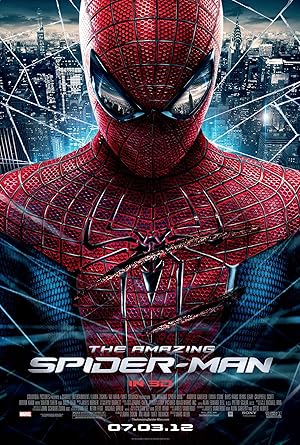
The Amazing Spider-Man
Peter Parker (Garfield) is an outcast high schooler who was abandoned by his parents as a boy, leaving him to be raised by his Uncle Ben (Sheen) and Aunt May (Field). Like most teenagers, Peter is trying to figure out who he is and how he got to be the person he is today. Peter is also finding his way with his first high school crush, Gwen Stacy (Stone), and together, they struggle with love, commitment, and secrets. As Peter discovers a mysterious briefcase that belonged to his father, he begins a quest to understand his parents' disappearance - leading him directly to Oscorp and the lab of Dr. Curt Connors (Ifans), his father's former partner. As Spider-Man is set on a collision course with Connors' alter-ego, The Lizard, Peter will make life-altering choices to use his powers and shape his destiny to become a hero.
Despite a enormous budget of $215.0M, The Amazing Spider-Man became a commercial success, earning $757.9M worldwide—a 253% return. This commercial performance validated the ambitious narrative scope, demonstrating that audiences embrace fresh perspective even at blockbuster scale.
2 wins & 33 nominations


Plot Structure
Story beats plotted across runtime


Narrative Arc
Emotional journey through the story's key moments
Story Circle
Blueprint 15-beat structure
Arcplot Score Breakdown
Weighted: Precision (70%) + Arc (15%) + Theme (15%)
The Amazing Spider-Man (2012) exhibits strategically placed narrative architecture, characteristic of Marc Webb's storytelling approach. This structural analysis examines how the film's 15-point plot structure maps to proven narrative frameworks across 2 hours and 16 minutes. With an Arcplot score of 6.3, the film takes an unconventional approach to traditional narrative frameworks.
Characters
Cast & narrative archetypes

Peter Parker / Spider-Man
Gwen Stacy
Dr. Curt Connors / The Lizard
Uncle Ben Parker
Aunt May Parker
Captain George Stacy
Main Cast & Characters
Peter Parker / Spider-Man
Played by Andrew Garfield
A brilliant but socially awkward high school student who gains spider abilities and must learn responsibility after his uncle's death.
Gwen Stacy
Played by Emma Stone
Peter's intelligent and confident classmate who becomes his love interest and ally.
Dr. Curt Connors / The Lizard
Played by Rhys Ifans
A one-armed scientist obsessed with regeneration who transforms into a monstrous reptilian villain.
Uncle Ben Parker
Played by Martin Sheen
Peter's moral compass and father figure who teaches him about responsibility before his tragic death.
Aunt May Parker
Played by Sally Field
Peter's loving and supportive aunt who raises him after his parents' disappearance.
Captain George Stacy
Played by Denis Leary
Gwen's father and NYPD captain who initially opposes Spider-Man but comes to respect him.
Structural Analysis
The Status Quo at 1 minutes (1% through the runtime) establishes Young Peter Parker hides during a game of hide-and-seek, discovering his father's ransacked office. His parents leave him with Uncle Ben and Aunt May, abandoning him without explanation—establishing Peter's core wound of abandonment.. Significantly, this early placement immediately immerses viewers in the story world.
The inciting incident occurs at 16 minutes when Peter finds his father's hidden briefcase containing research documents and a photo with Dr. Curt Connors. This discovery disrupts his ordinary life and sends him on a quest to understand his parents' disappearance.. At 12% through the film, this Disruption aligns precisely with traditional story structure. This beat shifts the emotional landscape, launching the protagonist into the central conflict.
The First Threshold at 34 minutes marks the transition into Act II, occurring at 25% of the runtime. This demonstrates the protagonist's commitment to Peter fully embraces his new powers by creating web-shooters and beginning to test his abilities. He makes the active choice to use his father's research and his new powers together, stepping into a new world as a potential superhero., moving from reaction to action.
At 68 minutes, the Midpoint arrives at 50% of the runtime—precisely centered, creating perfect narrative symmetry. Notably, this crucial beat Dr. Connors injects himself with the regeneration serum and transforms into the Lizard for the first time. The stakes escalate dramatically—Peter's collaboration with Connors has created the villain he must now stop. False defeat: his attempt to help has made things worse., fundamentally raising what's at risk. The emotional intensity shifts, dividing the narrative into clear before-and-after phases.
The Collapse moment at 102 minutes (75% through) represents the emotional nadir. Here, Captain Stacy confronts Peter and demands he stay away from Gwen. The police hunt Spider-Man as a criminal while the Lizard prepares his city-wide transformation. Peter is wounded, isolated, and faces losing everything—Gwen, his reputation, and potentially the city itself., reveals the protagonist at their lowest point. This beat's placement in the final quarter sets up the climactic reversal.
The Second Threshold at 109 minutes initiates the final act resolution at 80% of the runtime. Ordinary New Yorkers rally to help Spider-Man by aligning construction cranes to create a path to Oscorp Tower. Peter realizes he's not alone and that being a hero means inspiring others. He commits fully to stopping the Lizard regardless of personal cost., demonstrating the transformation achieved throughout the journey.
Emotional Journey
The Amazing Spider-Man's emotional architecture traces a deliberate progression across 15 carefully calibrated beats.
Narrative Framework
This structural analysis employs systematic plot point analysis that identifies crucial turning points. By mapping The Amazing Spider-Man against these established plot points, we can identify how Marc Webb utilizes or subverts traditional narrative conventions. The plot point approach reveals not only adherence to structural principles but also creative choices that distinguish The Amazing Spider-Man within the action genre.
Marc Webb's Structural Approach
Among the 4 Marc Webb films analyzed on Arcplot, the average structural score is 6.7, demonstrating varied approaches to story architecture. The Amazing Spider-Man takes a more unconventional approach compared to the director's typical style. For comparative analysis, explore the complete Marc Webb filmography.
Comparative Analysis
Additional action films include The Bad Guys, Puss in Boots and Venom: The Last Dance. For more Marc Webb analyses, see (500) Days of Summer, Gifted and The Amazing Spider-Man 2.
Plot Points by Act
Act I
SetupStatus Quo
Young Peter Parker hides during a game of hide-and-seek, discovering his father's ransacked office. His parents leave him with Uncle Ben and Aunt May, abandoning him without explanation—establishing Peter's core wound of abandonment.
Theme
Uncle Ben tells teenage Peter about his father: "If there's one thing your father believed in, it was that if you have the ability to do something, you have the moral obligation to do it." The theme of responsibility is stated.
Worldbuilding
Peter's life as an outcast high school student is established. He's intelligent but awkward, photographs everything, stands up to bullies, and secretly admires Gwen Stacy. He discovers his father's old briefcase containing mysterious research.
Disruption
Peter finds his father's hidden briefcase containing research documents and a photo with Dr. Curt Connors. This discovery disrupts his ordinary life and sends him on a quest to understand his parents' disappearance.
Resistance
Peter infiltrates Oscorp to meet Dr. Connors, sneaking into a lab where genetically modified spiders are being developed. He's bitten by a spider and begins experiencing strange changes. He debates whether to pursue his father's legacy or return to normal life.
Act II
ConfrontationFirst Threshold
Peter fully embraces his new powers by creating web-shooters and beginning to test his abilities. He makes the active choice to use his father's research and his new powers together, stepping into a new world as a potential superhero.
Mirror World
Peter and Gwen's relationship deepens as he reveals his secret to her on her fire escape. Gwen represents the emotional connection and humanity that will anchor Peter's hero journey—she embodies what he's fighting for and teaches him about vulnerability.
Premise
Peter experiments with his powers, develops his Spider-Man persona, and hunts for Uncle Ben's killer. He enjoys the thrill of being a vigilante while simultaneously growing closer to Gwen and helping Dr. Connors with cross-species genetics research.
Midpoint
Dr. Connors injects himself with the regeneration serum and transforms into the Lizard for the first time. The stakes escalate dramatically—Peter's collaboration with Connors has created the villain he must now stop. False defeat: his attempt to help has made things worse.
Opposition
The Lizard attacks the city and Spider-Man must stop him. Peter faces opposition from Captain Stacy who hunts Spider-Man, while the Lizard grows stronger. Peter's dual identity strains his relationships as the Lizard's plan to transform all of New York is revealed.
Collapse
Captain Stacy confronts Peter and demands he stay away from Gwen. The police hunt Spider-Man as a criminal while the Lizard prepares his city-wide transformation. Peter is wounded, isolated, and faces losing everything—Gwen, his reputation, and potentially the city itself.
Crisis
Peter grapples with Captain Stacy's ultimatum and his own doubts. He's wounded and the city has turned against Spider-Man. He must decide whether to honor his promise to stay away from Gwen or follow his responsibility to save New York.
Act III
ResolutionSecond Threshold
Ordinary New Yorkers rally to help Spider-Man by aligning construction cranes to create a path to Oscorp Tower. Peter realizes he's not alone and that being a hero means inspiring others. He commits fully to stopping the Lizard regardless of personal cost.
Synthesis
Spider-Man swings across the crane path to Oscorp Tower for the final confrontation. Captain Stacy joins the fight, helping Peter defeat the Lizard and deploy the antidote. Stacy is mortally wounded and makes Peter promise to keep Gwen safe by staying away from her.
Transformation
Peter returns to school changed—no longer just an outcast but a hero carrying the weight of responsibility. Though he initially honors his promise to Captain Stacy, Gwen's knowing smile in class suggests he can't stay away. Peter has transformed from a boy seeking answers about his past into a man accepting responsibility for others.