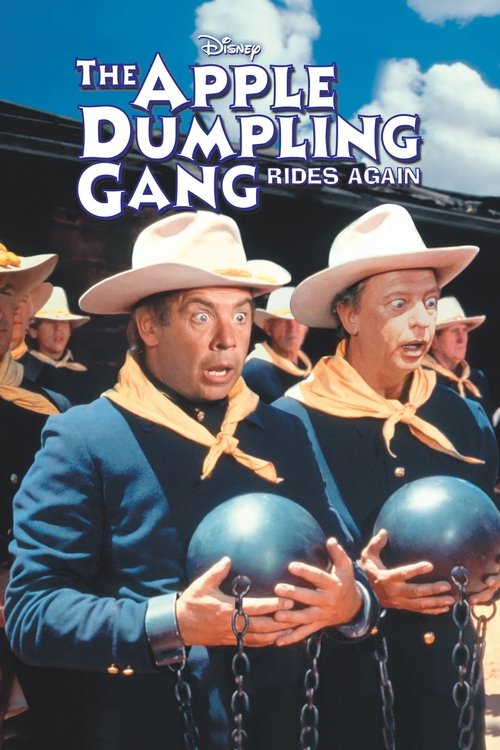
The Apple Dumpling Gang Rides Again
Amos and Theodore, the two bumbling outlaw wannabes from The Apple Dumpling Gang, are back and trying to make it on their own. This time, the crazy duo gets involved in an army supply theft case -- and, of course, gets in lots of comic trouble along the way!
Despite its tight budget of $5.5M, The Apple Dumpling Gang Rides Again became a commercial success, earning $20.9M worldwide—a 284% return. The film's compelling narrative found its audience, demonstrating that strong storytelling can transcend budget limitations.


Plot Structure
Story beats plotted across runtime


Narrative Arc
Emotional journey through the story's key moments
Story Circle
Blueprint 15-beat structure
Arcplot Score Breakdown
Weighted: Precision (70%) + Arc (15%) + Theme (15%)
The Apple Dumpling Gang Rides Again (1979) demonstrates deliberately positioned narrative architecture, characteristic of Vincent McEveety's storytelling approach. This structural analysis examines how the film's 15-point plot structure maps to proven narrative frameworks across 1 hour and 28 minutes. With an Arcplot score of 7.0, the film balances conventional beats with creative variation.
Characters
Cast & narrative archetypes

Amos Tucker
Theodore Ogelvie
Marshal Woolly Bill Hitchcock
Big Mac
Pvt. Jeff Reed
Millie Gaskill
Main Cast & Characters
Amos Tucker
Played by Tim Conway
Bumbling outlaw who constantly finds himself in trouble despite his good intentions. Partner to Theodore.
Theodore Ogelvie
Played by Don Knotts
The more logical half of the outlaw duo, constantly exasperated by Amos's mishaps but loyal to his partner.
Marshal Woolly Bill Hitchcock
Played by Kenneth Mars
Gruff, determined lawman pursuing the bumbling outlaws with persistence and authority.
Big Mac
Played by Jack Elam
Tough gang leader who runs afoul of Amos and Theodore, creating conflict and danger for the protagonists.
Pvt. Jeff Reed
Played by Tim Matheson
Young cavalry private who becomes entangled in the outlaws' misadventures and eventual redemption.
Millie Gaskill
Played by Elyssa Davalos
Romantic interest who adds heart and motivation to the story, connected to Jeff Reed.
Structural Analysis
The Status Quo at 1 minutes (1% through the runtime) establishes Amos and Theodore are bumbling outlaws attempting a stagecoach robbery that goes comically wrong, establishing their incompetence and desire to go straight.. Of particular interest, this early placement immediately immerses viewers in the story world.
The inciting incident occurs at 10 minutes when The boys are mistakenly identified as notorious outlaws by the cavalry, forcing them into a situation where they must prove their innocence while actual criminals operate nearby.. At 12% through the film, this Disruption aligns precisely with traditional story structure. This beat shifts the emotional landscape, launching the protagonist into the central conflict.
The First Threshold at 22 minutes marks the transition into Act II, occurring at 25% of the runtime. This demonstrates the protagonist's commitment to The boys actively decide to join the cavalry to prove they're honest citizens, committing themselves to military service despite their complete lack of qualifications., moving from reaction to action.
At 44 minutes, the Midpoint arrives at 50% of the runtime—precisely centered, creating perfect narrative symmetry. Structural examination shows that this crucial beat False victory: The boys appear to have succeeded in military life and gained respect through a series of fortunate accidents, but the real criminals are closing in and stakes are raised., fundamentally raising what's at risk. The emotional intensity shifts, dividing the narrative into clear before-and-after phases.
The Collapse moment at 66 minutes (75% through) represents the emotional nadir. Here, The boys are exposed, disgraced, and face court-martial or imprisonment. Their dream of going straight appears dead, and they've lost the respect and trust they briefly earned., reveals the protagonist at their lowest point. This beat's placement in the final quarter sets up the climactic reversal.
The Second Threshold at 70 minutes initiates the final act resolution at 80% of the runtime. The boys discover information about the real criminals' plan and realize they can use their unique "skills" for good. They choose to act heroically despite the risks, synthesizing their past with their aspirations., demonstrating the transformation achieved throughout the journey.
Emotional Journey
The Apple Dumpling Gang Rides Again's emotional architecture traces a deliberate progression across 15 carefully calibrated beats.
Narrative Framework
This structural analysis employs a 15-point narrative structure framework that maps key story moments. By mapping The Apple Dumpling Gang Rides Again against these established plot points, we can identify how Vincent McEveety utilizes or subverts traditional narrative conventions. The plot point approach reveals not only adherence to structural principles but also creative choices that distinguish The Apple Dumpling Gang Rides Again within the comedy genre.
Vincent McEveety's Structural Approach
Among the 3 Vincent McEveety films analyzed on Arcplot, the average structural score is 7.5, reflecting strong command of classical structure. The Apple Dumpling Gang Rides Again takes a more unconventional approach compared to the director's typical style. For comparative analysis, explore the complete Vincent McEveety filmography.
Comparative Analysis
Additional comedy films include The Bad Guys, Ella Enchanted and The Evening Star. For more Vincent McEveety analyses, see Herbie Goes to Monte Carlo, Herbie Goes Bananas.
Plot Points by Act
Act I
SetupStatus Quo
Amos and Theodore are bumbling outlaws attempting a stagecoach robbery that goes comically wrong, establishing their incompetence and desire to go straight.
Theme
A character suggests that some folks just aren't cut out for the outlaw life and should find honest work, stating the film's theme about redemption and finding one's proper place.
Worldbuilding
Amos and Theodore arrive in a new town hoping to start fresh. We meet the local military commander, the townspeople, and establish the Western frontier setting where our bumbling heroes are mistaken for heroes.
Disruption
The boys are mistakenly identified as notorious outlaws by the cavalry, forcing them into a situation where they must prove their innocence while actual criminals operate nearby.
Resistance
Amos and Theodore debate whether to run or stay and prove themselves. They encounter the strict cavalry officer and navigate misunderstandings while trying to establish their honest intentions.
Act II
ConfrontationFirst Threshold
The boys actively decide to join the cavalry to prove they're honest citizens, committing themselves to military service despite their complete lack of qualifications.
Mirror World
Introduction of the romantic subplot and the thematic mirror showing what honest, competent citizenship looks like, contrasting with our heroes' bumbling attempts.
Premise
The fun and games of Amos and Theodore as incompetent cavalry members, filled with slapstick comedy, training mishaps, and inadvertent heroics that somehow work in their favor.
Midpoint
False victory: The boys appear to have succeeded in military life and gained respect through a series of fortunate accidents, but the real criminals are closing in and stakes are raised.
Opposition
The actual villains escalate their criminal activities. The cavalry command tightens scrutiny on Amos and Theodore. Their past catches up with them and their incompetence creates increasingly serious consequences.
Collapse
The boys are exposed, disgraced, and face court-martial or imprisonment. Their dream of going straight appears dead, and they've lost the respect and trust they briefly earned.
Crisis
Amos and Theodore face their darkest hour, questioning whether they can ever escape their past or be anything other than failures. They must decide who they really want to be.
Act III
ResolutionSecond Threshold
The boys discover information about the real criminals' plan and realize they can use their unique "skills" for good. They choose to act heroically despite the risks, synthesizing their past with their aspirations.
Synthesis
The climactic confrontation where Amos and Theodore use their bumbling methods to actually thwart the villains. Slapstick comedy combines with genuine heroism as they save the day in their own chaotic way.
Transformation
Final image shows Amos and Theodore accepted and respected in the community, having proven that even bumbling fools can be heroes. They've found their place through courage rather than competence.