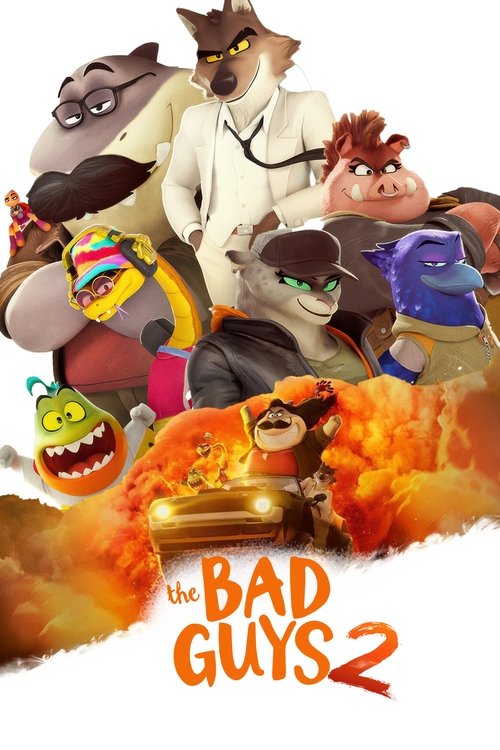
The Bad Guys 2
The now-reformed Bad Guys are trying (very, very hard) to be good, but instead find themselves hijacked into a high-stakes, globe-trotting heist, masterminded by a new team of criminals they never saw coming: The Bad Girls.
Despite a considerable budget of $80.0M, The Bad Guys 2 became a commercial success, earning $224.7M worldwide—a 181% return.


Plot Structure
Story beats plotted across runtime


Narrative Arc
Emotional journey through the story's key moments
Story Circle
Blueprint 15-beat structure
Arcplot Score Breakdown
Weighted: Precision (70%) + Arc (15%) + Theme (15%)
The Bad Guys 2 (2025) reveals meticulously timed narrative design, characteristic of Pierre Perifel's storytelling approach. This structural analysis examines how the film's 15-point plot structure maps to proven narrative frameworks across 1 hour and 44 minutes. With an Arcplot score of 7.4, the film balances conventional beats with creative variation.
Characters
Cast & narrative archetypes

Mr. Wolf
Mr. Snake
Ms. Tarantula
Mr. Shark
Mr. Piranha
Diane Foxington
Police Chief Misty Luggins
Main Cast & Characters
Mr. Wolf
Played by Sam Rockwell
The charismatic leader of the Bad Guys gang, a smooth-talking gray wolf trying to reform his criminal ways while leading his crew on new adventures.
Mr. Snake
Played by Marc Maron
Wolf's best friend and the crew's safecracker, a cynical snake who struggles with going straight but remains loyal to his friends.
Ms. Tarantula
Played by Awkwafina
The tech-savvy hacker of the group, a tiny tarantula with massive skills who serves as the crew's digital intelligence expert.
Mr. Shark
Played by Craig Robinson
The crew's master of disguise, a great white shark with a surprisingly gentle soul and talent for impersonation.
Mr. Piranha
Played by Anthony Ramos
The short-tempered muscle of the group, a tiny but fierce piranha with a thick accent and explosive personality.
Diane Foxington
Played by Zazie Beetz
The former Crimson Paw turned governor, a clever fox who understands both sides of the law and mentors the reformed criminals.
Police Chief Misty Luggins
Played by Alex Borstein
The determined police chief obsessed with catching criminals, though she grudgingly accepts the Bad Guys' reformation.
Structural Analysis
The Status Quo at 1 minutes (1% through the runtime) establishes The Bad Guys crew is now celebrated as heroes, enjoying their reformed status with public adoration and legitimate hero work, contrasting their former criminal lives.. Structural examination shows that this early placement immediately immerses viewers in the story world.
The inciting incident occurs at 13 minutes when A new threat emerges: either a powerful villain from their past returns, or they're framed for a crime they didn't commit, threatening to undo their reformation and destroy their new reputation.. At 12% through the film, this Disruption aligns precisely with traditional story structure. This beat shifts the emotional landscape, launching the protagonist into the central conflict.
The First Threshold at 27 minutes marks the transition into Act II, occurring at 26% of the runtime. This indicates the protagonist's commitment to The crew makes the active choice to face the threat as true heroes, committing to prove their reformation is real. They accept the mission that will test whether they've truly changed., moving from reaction to action.
At 53 minutes, the Midpoint arrives at 51% of the runtime—precisely centered, creating perfect narrative symmetry. Structural examination shows that this crucial beat False victory: The crew seemingly defeats the villain or clears their names, celebrating their success. They appear to have proven themselves as true heroes, but this victory is premature or reveals a deeper conspiracy., fundamentally raising what's at risk. The emotional intensity shifts, dividing the narrative into clear before-and-after phases.
The Collapse moment at 78 minutes (75% through) represents the emotional nadir. Here, All is lost: The crew is defeated, captured, or completely discredited. A mentor or beloved character may be endangered or lost. The public brands them as villains again. Their worst fear—that they can't truly change—seems confirmed., reveals the protagonist at their lowest point. This beat's placement in the final quarter sets up the climactic reversal.
The Second Threshold at 83 minutes initiates the final act resolution at 80% of the runtime. Breakthrough: The crew realizes that true heroism isn't about public approval or perfection—it's about choosing good despite the cost. They synthesize their criminal skills with heroic intentions, finding their unique way to be heroes., demonstrating the transformation achieved throughout the journey.
Emotional Journey
The Bad Guys 2's emotional architecture traces a deliberate progression across 15 carefully calibrated beats.
Narrative Framework
This structural analysis employs proven narrative structure principles that track dramatic progression. By mapping The Bad Guys 2 against these established plot points, we can identify how Pierre Perifel utilizes or subverts traditional narrative conventions. The plot point approach reveals not only adherence to structural principles but also creative choices that distinguish The Bad Guys 2 within the family genre.
Pierre Perifel's Structural Approach
Among the 2 Pierre Perifel films analyzed on Arcplot, the average structural score is 7.4, reflecting strong command of classical structure. The Bad Guys 2 exemplifies the director's characteristic narrative technique. For comparative analysis, explore the complete Pierre Perifel filmography.
Comparative Analysis
Additional family films include The Black Stallion, Ella Enchanted. For more Pierre Perifel analyses, see The Bad Guys.
Plot Points by Act
Act I
SetupStatus Quo
The Bad Guys crew is now celebrated as heroes, enjoying their reformed status with public adoration and legitimate hero work, contrasting their former criminal lives.
Theme
A character observes that "Being good is harder than being bad" or "Anyone can change, but staying changed is the real challenge," establishing the theme of sustained redemption versus easy relapse.
Worldbuilding
Establishment of the crew's new life as heroes, their struggles adapting to heroism, the public's expectations, and introduction of their new roles and relationships. Shows the tension between their criminal instincts and heroic duties.
Disruption
A new threat emerges: either a powerful villain from their past returns, or they're framed for a crime they didn't commit, threatening to undo their reformation and destroy their new reputation.
Resistance
The crew debates whether to face this threat as heroes or revert to their old criminal ways. They resist the call to action, fearing failure or exposure. Mentors or allies encourage them to trust their growth.
Act II
ConfrontationFirst Threshold
The crew makes the active choice to face the threat as true heroes, committing to prove their reformation is real. They accept the mission that will test whether they've truly changed.
Mirror World
Introduction or deepening of a relationship that embodies the theme—perhaps a new ally who represents true heroism, or a reformed villain who mirrors their own journey, teaching them about authentic change.
Premise
The "fun and games" of heroes solving the mystery—using their criminal skills for good, creative heist-style heroics, bonding moments, and comedic situations. The crew explores what it means to be heroes while pursuing the antagonist.
Midpoint
False victory: The crew seemingly defeats the villain or clears their names, celebrating their success. They appear to have proven themselves as true heroes, but this victory is premature or reveals a deeper conspiracy.
Opposition
The real threat emerges. The villain's true plan unfolds, allies turn against them, or public opinion shifts back to distrust. Internal conflicts arise as crew members doubt themselves or each other. Pressure intensifies and their flaws surface.
Collapse
All is lost: The crew is defeated, captured, or completely discredited. A mentor or beloved character may be endangered or lost. The public brands them as villains again. Their worst fear—that they can't truly change—seems confirmed.
Crisis
Dark night of the soul: The crew processes their failure, confronting their deepest doubts about redemption. Emotional beats as they question their worth and whether being good is possible for people like them.
Act III
ResolutionSecond Threshold
Breakthrough: The crew realizes that true heroism isn't about public approval or perfection—it's about choosing good despite the cost. They synthesize their criminal skills with heroic intentions, finding their unique way to be heroes.
Synthesis
The finale: The crew executes a brilliant plan combining their criminal expertise with heroic values. They face the villain in a climactic confrontation, save the day, and prove their reformation is genuine—not for approval, but because it's who they choose to be.
Transformation
Final image: The crew stands together, no longer seeking validation but secure in their identity as reformed heroes. Mirrors the opening but shows growth—they're comfortable being themselves while doing good, having earned self-acceptance.