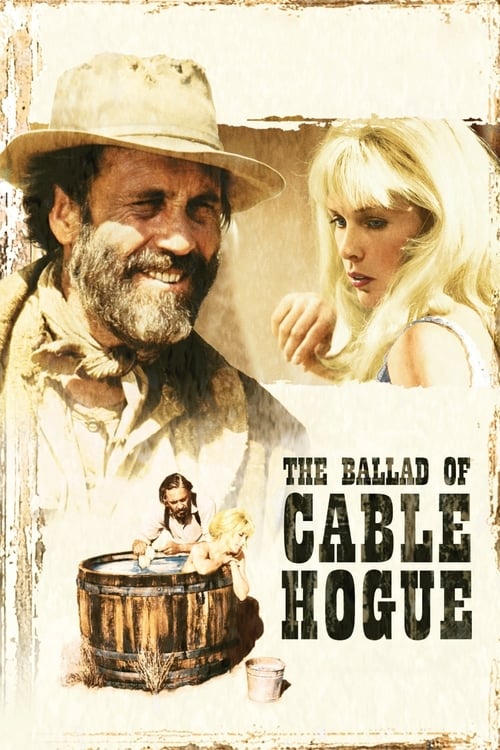
The Ballad of Cable Hogue
Double-crossed and left without water in the desert, Cable Hogue is saved when he finds a spring. It is in just the right spot for a much needed rest stop on the local stagecoach line, and Hogue uses this to his advantage. He builds a house and makes money off the stagecoach passengers. Hildy, a prostitute from the nearest town, moves in with him. Hogue has everything going his way until the advent of the automobile ends the era of the stagecoach.
Working with a small-scale budget of $3.7M, the film achieved a steady performer with $5.0M in global revenue (+35% profit margin).


Plot Structure
Story beats plotted across runtime


Narrative Arc
Emotional journey through the story's key moments
Story Circle
Blueprint 15-beat structure
Arcplot Score Breakdown
Weighted: Precision (70%) + Arc (15%) + Theme (15%)
The Ballad of Cable Hogue (1970) reveals precise story structure, characteristic of Sam Peckinpah's storytelling approach. This structural analysis examines how the film's 15-point plot structure maps to proven narrative frameworks across 2 hours and 1 minutes. With an Arcplot score of 7.0, the film balances conventional beats with creative variation.
Characters
Cast & narrative archetypes

Cable Hogue
Hildy
Joshua Duncan Sloane
Taggart
Bowen
Main Cast & Characters
Cable Hogue
Played by Jason Robards
A prospector left to die in the desert who discovers water and builds a stagecoach station, finding purpose and revenge.
Hildy
Played by Stella Stevens
A good-hearted prostitute who becomes Cable's love interest and yearns for respectability.
Joshua Duncan Sloane
Played by David Warner
A wandering, opportunistic preacher who befriends Cable and provides comic relief and occasional wisdom.
Taggart
Played by Strother Martin
One of the two men who betrays Cable and leaves him to die in the desert.
Bowen
Played by L.Q. Jones
The other betrayer who abandons Cable in the desert, triggering his quest for survival and revenge.
Structural Analysis
The Status Quo at 2 minutes (2% through the runtime) establishes Cable Hogue is abandoned in the desert without water by his partners Taggart and Bowen, left to die. He embodies the desperate, betrayed prospector at rock bottom.. Structural examination shows that this early placement immediately immerses viewers in the story world.
The inciting incident occurs at 14 minutes when Cable discovers water—a spring in the middle of the desert wilderness. This life-saving discovery transforms his situation from dying prospector to potential businessman.. At 12% through the film, this Disruption aligns precisely with traditional story structure. This beat shifts the emotional landscape, launching the protagonist into the central conflict.
The First Threshold at 31 minutes marks the transition into Act II, occurring at 25% of the runtime. This shows the protagonist's commitment to Cable commits fully to building Cable Springs as a stage stop and establishing his business. He chooses entrepreneurship and civilization over revenge, actively deciding to make his fortune from the water., moving from reaction to action.
At 61 minutes, the Midpoint arrives at 50% of the runtime—precisely centered, creating perfect narrative symmetry. Structural examination shows that this crucial beat Cable proposes marriage to Hildy and she accepts, promising to return to him. This represents a false victory—Cable believes he can have both his desert kingdom and romantic fulfillment, but complications loom., fundamentally raising what's at risk. The emotional intensity shifts, dividing the narrative into clear before-and-after phases.
The Collapse moment at 89 minutes (74% through) represents the emotional nadir. Here, Cable is run over by an automobile—the symbol of progress and the new world. Mortally wounded, he faces the literal death that provides the "whiff of death" for this beat. His era and way of life are ending., illustrates the protagonist at their lowest point. This beat's placement in the final quarter sets up the climactic reversal.
The Second Threshold at 97 minutes initiates the final act resolution at 80% of the runtime. Cable achieves acceptance and understanding. He realizes his life had value—he survived, built something, loved Hildy. He makes peace with God and his fate, synthesizing his earlier anger at providence with gratitude., demonstrating the transformation achieved throughout the journey.
Emotional Journey
The Ballad of Cable Hogue's emotional architecture traces a deliberate progression across 15 carefully calibrated beats.
Narrative Framework
This structural analysis employs structural analysis methodology used to understand storytelling architecture. By mapping The Ballad of Cable Hogue against these established plot points, we can identify how Sam Peckinpah utilizes or subverts traditional narrative conventions. The plot point approach reveals not only adherence to structural principles but also creative choices that distinguish The Ballad of Cable Hogue within the comedy genre.
Sam Peckinpah's Structural Approach
Among the 5 Sam Peckinpah films analyzed on Arcplot, the average structural score is 7.1, reflecting strong command of classical structure. The Ballad of Cable Hogue takes a more unconventional approach compared to the director's typical style. For comparative analysis, explore the complete Sam Peckinpah filmography.
Comparative Analysis
Additional comedy films include The Bad Guys, Ella Enchanted and The Evening Star. For more Sam Peckinpah analyses, see Convoy, Pat Garrett & Billy the Kid and The Getaway.
Plot Points by Act
Act I
SetupStatus Quo
Cable Hogue is abandoned in the desert without water by his partners Taggart and Bowen, left to die. He embodies the desperate, betrayed prospector at rock bottom.
Theme
Joshua the itinerant preacher appears and discusses divine providence and whether God has a plan. The theme: faith, survival, and whether a man makes his own destiny or trusts in providence.
Worldbuilding
Cable wanders the desert, near death from thirst. He prays desperately to God, arguing and bargaining for his life. Joshua departs, and Cable continues his struggle for survival in the harsh desert landscape.
Disruption
Cable discovers water—a spring in the middle of the desert wilderness. This life-saving discovery transforms his situation from dying prospector to potential businessman.
Resistance
Cable stakes his claim and begins building Cable Springs way station. He travels to town, encounters the Stage Line company, and navigates the business of establishing his desert enterprise. He debates whether to seek revenge or build a new life.
Act II
ConfrontationFirst Threshold
Cable commits fully to building Cable Springs as a stage stop and establishing his business. He chooses entrepreneurship and civilization over revenge, actively deciding to make his fortune from the water.
Mirror World
Hildy, the prostitute with a heart of gold, enters Cable's life. She represents love, connection, and the possibility of emotional fulfillment beyond mere survival and profit. Their relationship will teach Cable about vulnerability.
Premise
Cable runs his way station, the "promise of the premise"—a lone man building something from nothing in the desert. His relationship with Hildy deepens during her visits. He prospers, makes deals, and enjoys his hard-won independence.
Midpoint
Cable proposes marriage to Hildy and she accepts, promising to return to him. This represents a false victory—Cable believes he can have both his desert kingdom and romantic fulfillment, but complications loom.
Opposition
Time passes and the world changes. The automobile arrives, threatening to make Cable's stage stop obsolete. Hildy pursues her own life in San Francisco. Cable's world, built on stagecoach travel, faces increasing pressure from modernization.
Collapse
Cable is run over by an automobile—the symbol of progress and the new world. Mortally wounded, he faces the literal death that provides the "whiff of death" for this beat. His era and way of life are ending.
Crisis
Cable lies dying, reflecting on his life. Joshua returns to give him last rites. Cable confronts mortality and processes whether his life had meaning—his struggles, his love, his little empire in the desert.
Act III
ResolutionSecond Threshold
Cable achieves acceptance and understanding. He realizes his life had value—he survived, built something, loved Hildy. He makes peace with God and his fate, synthesizing his earlier anger at providence with gratitude.
Synthesis
Cable's funeral. Hildy returns to find him dead. Joshua conducts the service with his characteristic philosophy. Cable Springs is sold to the bank. The characters process the loss and move forward into the modern world.
Transformation
The desert returns to wilderness. Where Cable once fought for survival and built his empire, nature persists unchanged. The closing image mirrors the opening—the eternal desert—but Cable's story has been told, his transformation from bitter survivor to man at peace complete.