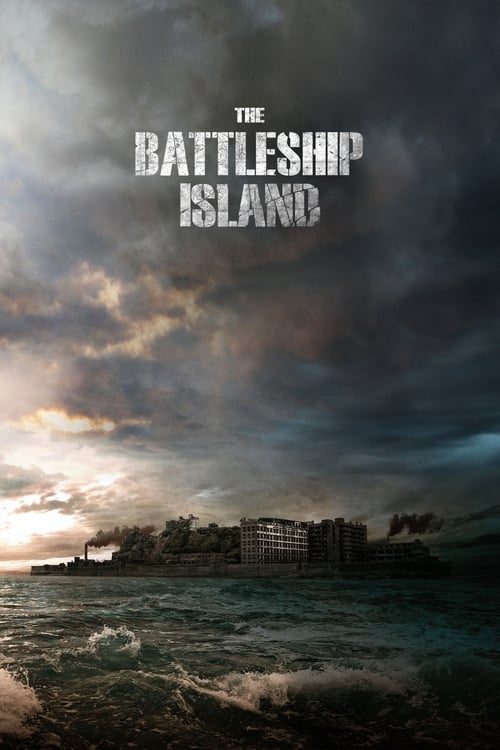
The Battleship Island
During the Japanese colonial era, roughly 400 Korean people, who were forced onto Battleship Island 'Hashima Island' to mine for coal, attempt to escape.
Despite a mid-range budget of $21.0M, The Battleship Island became a financial success, earning $46.2M worldwide—a 120% return.
11 wins & 10 nominations


Plot Structure
Story beats plotted across runtime


Narrative Arc
Emotional journey through the story's key moments
Story Circle
Blueprint 15-beat structure
Arcplot Score Breakdown
Weighted: Precision (70%) + Arc (15%) + Theme (15%)
The Battleship Island (2017) demonstrates strategically placed story structure, characteristic of Ryoo Seung-wan's storytelling approach. This structural analysis examines how the film's 15-point plot structure maps to proven narrative frameworks across 2 hours and 12 minutes. With an Arcplot score of 6.8, the film balances conventional beats with creative variation.
Characters
Cast & narrative archetypes

Lee Kang-ok
Park Moo-young
Choi Chil-sung
Oh Mal-nyeon
Lee So-hee
Yoon Hak-chul
Sergeant Yoshida
Main Cast & Characters
Lee Kang-ok
Played by Hwang Jung-min
A bandmaster and father who leads a jazz band, forced into labor on Hashima Island while protecting his daughter
Park Moo-young
Played by So Ji-sub
An OSS independence fighter sent undercover to rescue a key resistance figure from the island
Choi Chil-sung
Played by Song Joong-ki
A streetwise gangster and fixer who navigates the brutal hierarchy of forced labor
Oh Mal-nyeon
Played by Lee Jung-hyun
A comfort woman and resilient survivor who forms a protective bond with Lee So-hee
Lee So-hee
Played by Kim Su-an
Kang-ok's young daughter, a talented dancer whose innocence contrasts with the island's brutality
Yoon Hak-chul
Played by Kim In-woo
A Korean foreman who collaborates with Japanese oppressors for personal gain
Sergeant Yoshida
Played by Kim Joong-hee
A brutal Japanese guard who enforces discipline through violence and cruelty
Structural Analysis
The Status Quo at 2 minutes (1% through the runtime) establishes Lee Kang-ok performs with his daughter in Seoul, living as a bandmaster entertaining Japanese soldiers. Their life is precarious but they maintain dignity through music.. Significantly, this early placement immediately immerses viewers in the story world.
The inciting incident occurs at 16 minutes when Kang-ok and So-hee are deceived and forcibly transported to Hashima Island (Battleship Island) under false promises of work. Their world of relative freedom is violently stripped away.. At 12% through the film, this Disruption aligns precisely with traditional story structure. This beat shifts the emotional landscape, launching the protagonist into the central conflict.
The First Threshold at 33 minutes marks the transition into Act II, occurring at 25% of the runtime. This shows the protagonist's commitment to Kang-ok makes the choice to collaborate with the Japanese overseers, performing music to survive and protect his daughter, accepting the role of entertainer-collaborator despite the moral cost., moving from reaction to action.
At 66 minutes, the Midpoint arrives at 50% of the runtime—precisely centered, creating perfect narrative symmetry. Structural examination shows that this crucial beat News arrives that Japan is losing the war. The Japanese commanders decide to eliminate all witnesses by executing the Korean laborers and destroying evidence. What seemed like a survival situation becomes a death sentence., fundamentally raising what's at risk. The emotional intensity shifts, dividing the narrative into clear before-and-after phases.
The Collapse moment at 99 minutes (75% through) represents the emotional nadir. Here, The escape plan is discovered. Mass executions begin. Park is captured and tortured. So-hee is taken by the Japanese. The systematic massacre of Korean laborers commences - literal death surrounds the characters., illustrates the protagonist at their lowest point. This beat's placement in the final quarter sets up the climactic reversal.
The Second Threshold at 106 minutes initiates the final act resolution at 80% of the runtime. Kang-ok transforms from passive collaborator to active fighter. He embraces resistance, not for political ideology, but for his daughter and his people. The survivors unite for a final armed uprising., demonstrating the transformation achieved throughout the journey.
Emotional Journey
The Battleship Island's emotional architecture traces a deliberate progression across 15 carefully calibrated beats.
Narrative Framework
This structural analysis employs structural analysis methodology used to understand storytelling architecture. By mapping The Battleship Island against these established plot points, we can identify how Ryoo Seung-wan utilizes or subverts traditional narrative conventions. The plot point approach reveals not only adherence to structural principles but also creative choices that distinguish The Battleship Island within the action genre.
Ryoo Seung-wan's Structural Approach
Among the 3 Ryoo Seung-wan films analyzed on Arcplot, the average structural score is 6.7, demonstrating varied approaches to story architecture. The Battleship Island represents one of the director's most structurally precise works. For comparative analysis, explore the complete Ryoo Seung-wan filmography.
Comparative Analysis
Additional action films include The Bad Guys, Puss in Boots and Venom: The Last Dance. For more Ryoo Seung-wan analyses, see The Berlin File, Veteran.
Plot Points by Act
Act I
SetupStatus Quo
Lee Kang-ok performs with his daughter in Seoul, living as a bandmaster entertaining Japanese soldiers. Their life is precarious but they maintain dignity through music.
Theme
A character warns that "survival requires knowing when to bow your head and when to fight back" - establishing the film's central tension between collaboration and resistance under occupation.
Worldbuilding
Introduction of multiple characters in occupied Korea: Kang-ok and his daughter So-hee, Chil-sung the gangster, Mal-nyeon the comfort woman, and OSS agent Park. The brutal reality of Japanese colonial rule is established through forced conscription scenes.
Disruption
Kang-ok and So-hee are deceived and forcibly transported to Hashima Island (Battleship Island) under false promises of work. Their world of relative freedom is violently stripped away.
Resistance
The characters arrive at the island and discover the horrific truth: it's a forced labor prison camp. They witness brutal working conditions in the underwater coal mines, starvation, and violence. OSS agent Park secretly observes and plans.
Act II
ConfrontationFirst Threshold
Kang-ok makes the choice to collaborate with the Japanese overseers, performing music to survive and protect his daughter, accepting the role of entertainer-collaborator despite the moral cost.
Mirror World
OSS agent Park reveals his mission to Kang-ok: he must rescue a key Korean independence fighter imprisoned on the island. This subplot represents the resistance path - the opposite of collaboration.
Premise
The ensemble navigates survival on the island. Kang-ok performs for the Japanese, Chil-sung works the mines and builds influence, Mal-nyeon endures the comfort station, and Park secretly organizes. Relationships deepen and plans form.
Midpoint
News arrives that Japan is losing the war. The Japanese commanders decide to eliminate all witnesses by executing the Korean laborers and destroying evidence. What seemed like a survival situation becomes a death sentence.
Opposition
The Japanese intensify their cruelty and begin covert executions. Park's escape plan accelerates but faces obstacles. Kang-ok struggles between self-preservation and joining the resistance. Internal conflicts and betrayals threaten the escape attempt.
Collapse
The escape plan is discovered. Mass executions begin. Park is captured and tortured. So-hee is taken by the Japanese. The systematic massacre of Korean laborers commences - literal death surrounds the characters.
Crisis
Kang-ok faces his darkest moment, having lost his daughter and watching his people die. The weight of his collaboration and inaction crushes him. The survivors huddle in despair as the Japanese hunt them down.
Act III
ResolutionSecond Threshold
Kang-ok transforms from passive collaborator to active fighter. He embraces resistance, not for political ideology, but for his daughter and his people. The survivors unite for a final armed uprising.
Synthesis
The desperate battle for escape erupts. Korean laborers fight Japanese forces in brutal combat through the mines and facilities. Characters sacrifice themselves for others. Some escape on a ship while Japanese forces pursue. A final violent confrontation at sea.
Transformation
The surviving escapees reach open water, but at tremendous cost. Most characters are dead. The image shows the island receding in the distance - a mass grave. Liberation comes through blood, not salvation.