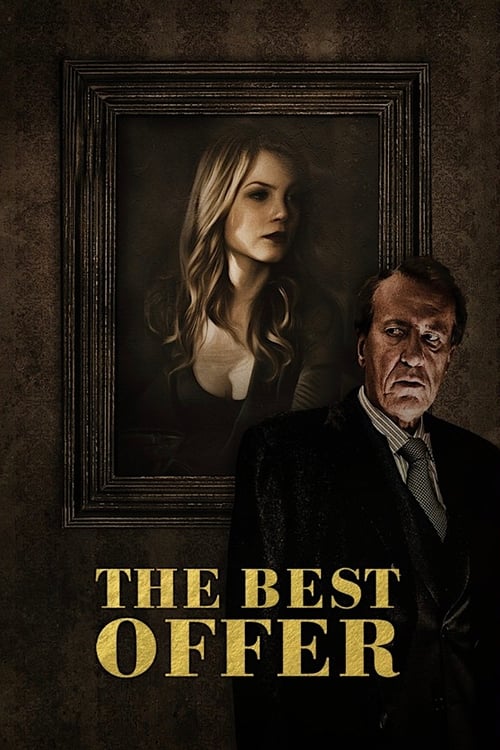
The Best Offer
Virgil Oldman is a world renowned antiques expert and auctioneer. An eccentric genius, he leads a solitary life, going to extreme lengths to keep his distance from the messiness of human relationships. When appointed by the beautiful but emotionally damaged Claire to oversee the valuation and sale of her family’s priceless art collection, Virgil allows himself to form an attachment to her – and soon he is engulfed by a passion which will rock his bland existence to the core.
Working with a limited budget of $13.5M, the film achieved a steady performer with $19.3M in global revenue (+43% profit margin).
25 wins & 26 nominations


Plot Structure
Story beats plotted across runtime


Narrative Arc
Emotional journey through the story's key moments
Story Circle
Blueprint 15-beat structure
Arcplot Score Breakdown
Weighted: Precision (70%) + Arc (15%) + Theme (15%)
The Best Offer (2013) exhibits precise story structure, characteristic of Giuseppe Tornatore's storytelling approach. This structural analysis examines how the film's 15-point plot structure maps to proven narrative frameworks across 2 hours and 11 minutes. With an Arcplot score of 7.0, the film balances conventional beats with creative variation.
Characters
Cast & narrative archetypes

Virgil Oldman
Claire Ibbetson
Robert
Billy Whistler
Main Cast & Characters
Virgil Oldman
Played by Geoffrey Rush
A wealthy, obsessive-compulsive art auctioneer who lives a meticulously controlled life and secretly collects stolen portrait paintings of women in a hidden vault.
Claire Ibbetson
Played by Sylvia Hoeks
A mysterious, agoraphobic young woman who hires Virgil to auction her parents' estate and gradually draws him into an elaborate romantic relationship.
Robert
Played by Jim Sturgess
Virgil's trusted friend and mechanical automaton restorer who helps him understand the gears and mechanisms found at Claire's villa.
Billy Whistler
Played by Donald Sutherland
A skilled art forger and Virgil's accomplice in defrauding auction clients by undervaluing genuine pieces and buying them through a proxy.
Structural Analysis
The Status Quo at 2 minutes (1% through the runtime) establishes Virgil Oldman conducts a prestigious auction with supreme confidence and control, wearing his ritual gloves. His meticulously ordered life as a master auctioneer and art expert is established - powerful, isolated, obsessive.. Significantly, this early placement immediately immerses viewers in the story world.
The inciting incident occurs at 16 minutes when Virgil receives a mysterious phone call from Claire Ibbetson requesting him to appraise her late parents' villa and its contents. She refuses to meet him face-to-face, immediately intriguing the control-obsessed auctioneer with this unusual challenge.. At 12% through the film, this Disruption aligns precisely with traditional story structure. This beat shifts the emotional landscape, launching the protagonist into the central conflict.
The First Threshold at 33 minutes marks the transition into Act II, occurring at 25% of the runtime. This reveals the protagonist's commitment to Virgil makes the active choice to truly engage with Claire, having their first meaningful conversation through the locked door. He commits himself to helping her overcome her supposed agoraphobia, stepping beyond his role as mere appraiser into emotional territory., moving from reaction to action.
At 66 minutes, the Midpoint arrives at 50% of the runtime—precisely centered, creating perfect narrative symmetry. The analysis reveals that this crucial beat False victory: Virgil and Claire make love for the first time. Virgil believes he has found authentic love and is being transformed into a better, more complete person. He has never been happier, but the audience (especially on rewatch) sees he is falling deeper into an elaborate trap., fundamentally raising what's at risk. The emotional intensity shifts, dividing the narrative into clear before-and-after phases.
The Collapse moment at 98 minutes (75% through) represents the emotional nadir. Here, Virgil awakens to find Claire vanished. The house is empty. All of his precious stolen portraits have been taken - his life's secret collection, gone. Both the love he believed he found and the art he hoarded for decades have disappeared. Total devastation - the death of his identity, his dream, his carefully constructed world., illustrates the protagonist at their lowest point. This beat's placement in the final quarter sets up the climactic reversal.
The Second Threshold at 105 minutes initiates the final act resolution at 80% of the runtime. Through investigation, Virgil discovers the devastating truth: Claire was never agoraphobic - she was an actress hired to seduce him. Robert was part of the con. The entire romance was an elaborate forgery designed to steal his portraits. He realizes he was the artwork being counterfeited, his emotions the medium., demonstrating the transformation achieved throughout the journey.
Emotional Journey
The Best Offer's emotional architecture traces a deliberate progression across 15 carefully calibrated beats.
Narrative Framework
This structural analysis employs structural analysis methodology used to understand storytelling architecture. By mapping The Best Offer against these established plot points, we can identify how Giuseppe Tornatore utilizes or subverts traditional narrative conventions. The plot point approach reveals not only adherence to structural principles but also creative choices that distinguish The Best Offer within the drama genre.
Giuseppe Tornatore's Structural Approach
Among the 5 Giuseppe Tornatore films analyzed on Arcplot, the average structural score is 6.3, demonstrating varied approaches to story architecture. The Best Offer represents one of the director's most structurally precise works. For comparative analysis, explore the complete Giuseppe Tornatore filmography.
Comparative Analysis
Additional drama films include After Thomas, South Pacific and Dirty Dancing: Havana Nights. For more Giuseppe Tornatore analyses, see Malena, The Legend of 1900 and The Unknown Woman.
Plot Points by Act
Act I
SetupStatus Quo
Virgil Oldman conducts a prestigious auction with supreme confidence and control, wearing his ritual gloves. His meticulously ordered life as a master auctioneer and art expert is established - powerful, isolated, obsessive.
Theme
Billy Whistler tells Virgil that all authentic works of art contain imperfections - it's how you know they're genuine. This statement foreshadows the central theme about authenticity versus forgery, and the imperfections that make us human.
Worldbuilding
Establishment of Virgil's world: his OCD rituals, his secret vault containing a stolen collection of female portraits, his friendship with mechanic Billy, and his ongoing scheme with a dwarf accomplice to defraud auction clients by understating values.
Disruption
Virgil receives a mysterious phone call from Claire Ibbetson requesting him to appraise her late parents' villa and its contents. She refuses to meet him face-to-face, immediately intriguing the control-obsessed auctioneer with this unusual challenge.
Resistance
Virgil explores the vast, mysterious villa finding valuable artworks and strange mechanical gears. He debates whether to pursue this peculiar case. Billy begins assembling the gear components into an unknown mechanism. Virgil struggles with his curiosity about the invisible Claire.
Act II
ConfrontationFirst Threshold
Virgil makes the active choice to truly engage with Claire, having their first meaningful conversation through the locked door. He commits himself to helping her overcome her supposed agoraphobia, stepping beyond his role as mere appraiser into emotional territory.
Mirror World
Virgil finally sees Claire for the first time - young, beautiful, fragile. The romantic subplot begins in earnest. Robert, a young art restorer, also enters the story, offering to help Virgil understand Claire's psychological condition. The relationship that will transform (and destroy) Virgil is now active.
Premise
The promise of the premise: watching an emotionally isolated, obsessive man fall deeply in love for the first time. Virgil courts Claire with gentleness and patience. The automaton machine takes shape as Billy assembles the gears. Virgil begins removing his gloves, lowering his defenses, opening his heart.
Midpoint
False victory: Virgil and Claire make love for the first time. Virgil believes he has found authentic love and is being transformed into a better, more complete person. He has never been happier, but the audience (especially on rewatch) sees he is falling deeper into an elaborate trap.
Opposition
Virgil becomes increasingly vulnerable and exposed. He moves Claire into his home and reveals his secret portrait vault to her - his most protected possession. Small inconsistencies appear but his love blinds him. The automaton nears completion. His obsession with Claire deepens as his defenses crumble entirely.
Collapse
Virgil awakens to find Claire vanished. The house is empty. All of his precious stolen portraits have been taken - his life's secret collection, gone. Both the love he believed he found and the art he hoarded for decades have disappeared. Total devastation - the death of his identity, his dream, his carefully constructed world.
Crisis
Virgil's psychological breakdown. He sits alone in the empty vault room, destroyed. He desperately seeks answers - where is Claire, where are the paintings, was any of it real? The dark night of the soul as he processes the magnitude of his loss and betrayal.
Act III
ResolutionSecond Threshold
Through investigation, Virgil discovers the devastating truth: Claire was never agoraphobic - she was an actress hired to seduce him. Robert was part of the con. The entire romance was an elaborate forgery designed to steal his portraits. He realizes he was the artwork being counterfeited, his emotions the medium.
Synthesis
Virgil makes desperate attempts to find Claire, traveling to search for her, but finds nothing. His mental state unravels completely. His OCD intensifies without purpose. The finale shows the complete destruction of the man who was once so powerful and controlled - now a broken shell seeking meaning in empty rituals.
Transformation
Virgil sits alone in a Prague café, mentally shattered, compulsively checking coat check numbers in a futile obsessive ritual. Nearby, the completed automaton moves in a display case - the only authentic thing to emerge from the deception - but he is too destroyed to see it. Where once he was controlled and powerful, he is now powerless and lost. A tragic negative transformation.