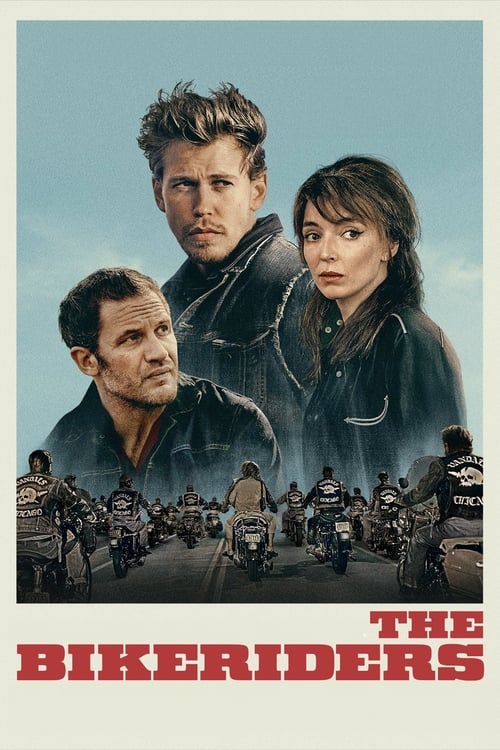
The Bikeriders
After a chance encounter, headstrong Kathy is drawn to Benny, member of Midwestern motorcycle club the Vandals. As the club transforms into a dangerous underworld of violence, Benny must choose between Kathy and his loyalty to the club.
The film underperformed commercially against its respectable budget of $40.0M, earning $36.1M globally (-10% loss).
1 win & 6 nominations


Plot Structure
Story beats plotted across runtime


Narrative Arc
Emotional journey through the story's key moments
Story Circle
Blueprint 15-beat structure
Arcplot Score Breakdown
Weighted: Precision (70%) + Arc (15%) + Theme (15%)
The Bikeriders (2024) exemplifies meticulously timed narrative design, characteristic of Jeff Nichols's storytelling approach. This structural analysis examines how the film's 15-point plot structure maps to proven narrative frameworks across 1 hour and 56 minutes. With an Arcplot score of 7.4, the film balances conventional beats with creative variation.
Characters
Cast & narrative archetypes

Benny
Kathy
Johnny
Zipco
Cal
Brucie
Funny Sonny
Main Cast & Characters
Benny
Played by Austin Butler
A brooding, rebellious biker drawn to the freedom and danger of the Vandals motorcycle club.
Kathy
Played by Jodie Comer
A young woman who falls for Benny and narrates the story of the club's rise and fall.
Johnny
Played by Tom Hardy
The charismatic founder and leader of the Vandals, struggling to maintain control as the club evolves.
Zipco
Played by Michael Shannon
Johnny's loyal right-hand man and trusted friend within the Vandals.
Cal
Played by Boyd Holbrook
A photographer who documents the bikers and becomes part of their world.
Brucie
Played by Damon Herriman
A volatile and unpredictable member of the club who represents the darker shift in biker culture.
Funny Sonny
Played by Norman Reedus
A fun-loving, comedic member of the Vandals who provides levity.
Structural Analysis
The Status Quo at 1 minutes (1% through the runtime) establishes Interview framing device establishes Kathy recounting the story to Danny Lyon, photographer. The Vandals MC in their glory days - free, wild, and belonging to something bigger than themselves.. The analysis reveals that this early placement immediately immerses viewers in the story world.
The inciting incident occurs at 13 minutes when Kathy and Benny connect romantically. She's pulled into his world - the catalyst that brings an outsider's perspective into the club. This relationship disrupts both their lives and will become the lens through which the club's evolution is viewed.. At 12% through the film, this Disruption aligns precisely with traditional story structure. This beat shifts the emotional landscape, launching the protagonist into the central conflict.
The First Threshold at 29 minutes marks the transition into Act II, occurring at 25% of the runtime. This demonstrates the protagonist's commitment to Kathy and Benny marry. She makes the active choice to commit to him despite knowing it means sharing him with the club. This marks her full entry into the Vandals world and Benny's attempt to bridge both lives., moving from reaction to action.
At 57 minutes, the Midpoint arrives at 50% of the runtime—precisely centered, creating perfect narrative symmetry. Notably, this crucial beat A violent confrontation at a club gathering shows the Vandals are changing. The newer, more reckless members bring dangerous heat. Johnny struggles to maintain control. False defeat: the club that represented freedom now represents chaos and danger. The fun and games are over., fundamentally raising what's at risk. The emotional intensity shifts, dividing the narrative into clear before-and-after phases.
The Collapse moment at 86 minutes (74% through) represents the emotional nadir. Here, Johnny dies (or the club dissolves/he steps down) - the "whiff of death" moment. The father figure and embodiment of the original Vandals ethos is gone. Everything Benny believed in - the brotherhood, the code, the way of life - dies with Johnny., shows the protagonist at their lowest point. This beat's placement in the final quarter sets up the climactic reversal.
The Second Threshold at 92 minutes initiates the final act resolution at 80% of the runtime. Benny makes his choice: he chooses Kathy and domestic life over the club. The synthesis of what Johnny taught him (loyalty, being true to yourself) with what Kathy represents (survival, love, a future). He doesn't betray who he is - he evolves., demonstrating the transformation achieved throughout the journey.
Emotional Journey
The Bikeriders's emotional architecture traces a deliberate progression across 15 carefully calibrated beats.
Narrative Framework
This structural analysis employs systematic plot point analysis that identifies crucial turning points. By mapping The Bikeriders against these established plot points, we can identify how Jeff Nichols utilizes or subverts traditional narrative conventions. The plot point approach reveals not only adherence to structural principles but also creative choices that distinguish The Bikeriders within the crime genre.
Jeff Nichols's Structural Approach
Among the 4 Jeff Nichols films analyzed on Arcplot, the average structural score is 7.1, reflecting strong command of classical structure. The Bikeriders represents one of the director's most structurally precise works. For comparative analysis, explore the complete Jeff Nichols filmography.
Comparative Analysis
Additional crime films include The Bad Guys, Rustom and The Whole Ten Yards. For more Jeff Nichols analyses, see Loving, Midnight Special and Mud.
Plot Points by Act
Act I
SetupStatus Quo
Interview framing device establishes Kathy recounting the story to Danny Lyon, photographer. The Vandals MC in their glory days - free, wild, and belonging to something bigger than themselves.
Theme
Johnny tells Benny: "You gotta decide what you want to be - an outlaw or just another guy." Theme of identity, belonging, and the cost of loyalty to a romanticized way of life versus domestic stability.
Worldbuilding
Establishing the Vandals motorcycle club culture in 1960s Chicago. Kathy meets Benny at a bar during a club gathering. The club's rituals, brotherhood, and Johnny's charismatic leadership are introduced. Benny is the quiet, dangerous type who draws Kathy in.
Disruption
Kathy and Benny connect romantically. She's pulled into his world - the catalyst that brings an outsider's perspective into the club. This relationship disrupts both their lives and will become the lens through which the club's evolution is viewed.
Resistance
Kathy navigates her attraction to Benny and the dangerous allure of the biker lifestyle. She experiences the brotherhood, the parties, and the freedom, but also witnesses the violence and volatility. Benny is torn between his loyalty to Johnny and the club versus a potential future with Kathy.
Act II
ConfrontationFirst Threshold
Kathy and Benny marry. She makes the active choice to commit to him despite knowing it means sharing him with the club. This marks her full entry into the Vandals world and Benny's attempt to bridge both lives.
Mirror World
Kathy's domestic life with Benny serves as the thematic mirror - she represents stability, family, and the "normal" life. Her relationship with Benny carries the central tension: can you be both an outlaw and a family man?
Premise
The promise of the premise: life with the Vandals. Road trips, brotherhood, freedom of the open road. Kathy tries to pull Benny toward domesticity while Johnny represents the pure biker ethos. The club expands, attracting younger, more violent members. Tensions grow between the old guard and new recruits.
Midpoint
A violent confrontation at a club gathering shows the Vandals are changing. The newer, more reckless members bring dangerous heat. Johnny struggles to maintain control. False defeat: the club that represented freedom now represents chaos and danger. The fun and games are over.
Opposition
The club fractures. Rival clubs emerge. Law enforcement pressure increases. Benny is caught between Kathy's ultimatums and Johnny's expectation of loyalty. The romantic outlaw life becomes unsustainable as violence escalates and members are arrested or killed.
Collapse
Johnny dies (or the club dissolves/he steps down) - the "whiff of death" moment. The father figure and embodiment of the original Vandals ethos is gone. Everything Benny believed in - the brotherhood, the code, the way of life - dies with Johnny.
Crisis
Benny processes the loss. The dark night: what does he do now? The club is unrecognizable. Johnny is gone. Kathy has been waiting. The romantic myth of the outlaw biker has been exposed as unsustainable and ultimately tragic.
Act III
ResolutionSecond Threshold
Benny makes his choice: he chooses Kathy and domestic life over the club. The synthesis of what Johnny taught him (loyalty, being true to yourself) with what Kathy represents (survival, love, a future). He doesn't betray who he is - he evolves.
Synthesis
Benny and Kathy build their life together. The interview framework pays off - we understand why Kathy is telling this story. The era of the Vandals passes into history, captured in photographs. The myth is preserved, but the reality moved on.
Transformation
Final image mirrors the opening but shows transformation. Benny, older, with Kathy - domesticated but not broken. The bikes and colors are gone, but he carries the spirit. The club existed, mattered, and ended. Life continues. He chose love over myth.