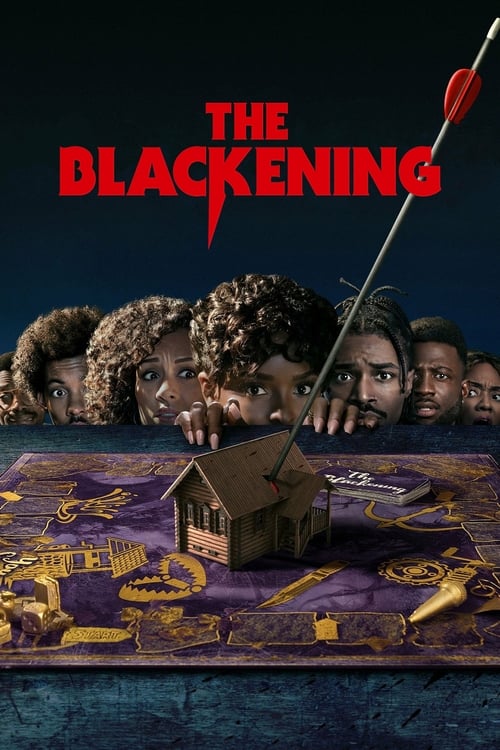
The Blackening
N/A
Despite its limited budget of $5.0M, The Blackening became a box office success, earning $16.0M worldwide—a 220% return. The film's distinctive approach found its audience, confirming that strong storytelling can transcend budget limitations.


Plot Structure
Story beats plotted across runtime


Narrative Arc
Emotional journey through the story's key moments
Story Circle
Blueprint 15-beat structure
Arcplot Score Breakdown
Weighted: Precision (70%) + Arc (15%) + Theme (15%)
The Blackening (2023) exhibits precise narrative design, characteristic of Tim Story's storytelling approach. This structural analysis examines how the film's 15-point plot structure maps to proven narrative frameworks across 1 hour and 37 minutes. With an Arcplot score of 7.7, the film showcases strong structural fundamentals.
Characters
Cast & narrative archetypes

Lisa
Nnamdi
Allison
Clifton
Shanika
Dewayne
King
Morgan
Main Cast & Characters
Lisa
Played by Antoinette Robertson
Strong-willed advertising exec who takes charge of the group's survival, dealing with past relationship drama.
Nnamdi
Played by Sinqua Walls
Lisa's ex-boyfriend, a successful professional trying to reconcile with her while surviving the deadly game.
Allison
Played by Grace Byers
Pragmatic and outspoken member of the group who challenges others' assumptions and demands honesty.
Clifton
Played by Jermaine Fowler
Allison's boyfriend, an awkward outsider trying to prove he belongs with the tight-knit friend group.
Shanika
Played by X Mayo
Fun-loving and loyal friend who provides comic relief while navigating relationship tensions.
Dewayne
Played by Dewayne Perkins
Shanika's boyfriend, a laid-back stoner who brings levity but also paranoia to tense situations.
King
Played by Melvin Gregg
Charismatic but self-absorbed actor who uses his celebrity status and survival knowledge strategically.
Morgan
Played by Yvonne Orji
Anxious and neurotic member of the group who overthinks every decision and harbors secret attractions.
Structural Analysis
The Status Quo at 1 minutes (1% through the runtime) establishes Friends arrive at remote cabin for Juneteenth reunion weekend, excited and joking, establishing their tight-knit group dynamic and shared history.. Of particular interest, this early placement immediately immerses viewers in the story world.
The inciting incident occurs at 11 minutes when The group discovers a mysterious board game called "The Blackening" with a racist caricature, and two friends go missing after investigating the game room.. At 11% through the film, this Disruption aligns precisely with traditional story structure. This beat shifts the emotional landscape, launching the protagonist into the central conflict.
The First Threshold at 24 minutes marks the transition into Act II, occurring at 25% of the runtime. This illustrates the protagonist's commitment to The group collectively chooses to enter the game room and engage with "The Blackening" game, committing to play despite the obvious danger., moving from reaction to action.
At 47 minutes, the Midpoint arrives at 49% of the runtime—precisely centered, creating perfect narrative symmetry. The analysis reveals that this crucial beat The killer is revealed to be among them/watching them, stakes intensify as someone is seriously injured or killed, and they realize the game won't let them simply leave., fundamentally raising what's at risk. The emotional intensity shifts, dividing the narrative into clear before-and-after phases.
The Collapse moment at 72 minutes (74% through) represents the emotional nadir. Here, A beloved character dies or the group is completely scattered and isolated from each other, representing the death of their friendship and unity in the face of terror., reveals the protagonist at their lowest point. This beat's placement in the final quarter sets up the climactic reversal.
The Second Threshold at 77 minutes initiates the final act resolution at 79% of the runtime. The survivors realize they must work together and embrace their collective strength rather than compete, understanding that their unity and refusal to play by horror movie rules is their advantage., demonstrating the transformation achieved throughout the journey.
Emotional Journey
The Blackening's emotional architecture traces a deliberate progression across 15 carefully calibrated beats.
Narrative Framework
This structural analysis employs proven narrative structure principles that track dramatic progression. By mapping The Blackening against these established plot points, we can identify how Tim Story utilizes or subverts traditional narrative conventions. The plot point approach reveals not only adherence to structural principles but also creative choices that distinguish The Blackening within the n/a genre.
Tim Story's Structural Approach
Among the 10 Tim Story films analyzed on Arcplot, the average structural score is 7.2, reflecting strong command of classical structure. The Blackening represents one of the director's most structurally precise works. For comparative analysis, explore the complete Tim Story filmography.
Comparative Analysis
Additional n/a films include Roald Dahl's Matilda the Musical, I Care a Lot and Glass Onion: A Knives Out Mystery. For more Tim Story analyses, see Taxi, Think Like a Man Too and Shaft.
Plot Points by Act
Act I
SetupStatus Quo
Friends arrive at remote cabin for Juneteenth reunion weekend, excited and joking, establishing their tight-knit group dynamic and shared history.
Theme
Discussion about horror movie tropes and racial stereotypes - someone jokes about Black people always dying first in horror films, foreshadowing the deadly game's central theme.
Worldbuilding
Introduction of friend group dynamics, past relationships, tensions between characters, and the isolated cabin setting. Establishes interpersonal conflicts and romantic history.
Disruption
The group discovers a mysterious board game called "The Blackening" with a racist caricature, and two friends go missing after investigating the game room.
Resistance
Friends debate what to do about their missing companions, argue about calling police versus investigating themselves, and reluctantly decide they must play the game to save their friends.
Act II
ConfrontationFirst Threshold
The group collectively chooses to enter the game room and engage with "The Blackening" game, committing to play despite the obvious danger.
Mirror World
The game forces them to confront their own Blackness through trivia questions, revealing insecurities and conflicts about cultural identity and authenticity among the friend group.
Premise
The fun and games of watching friends compete on Black culture trivia while simultaneously trying to survive, combining horror with comedy as they navigate deadly challenges and argue about who is "the Blackest."
Midpoint
The killer is revealed to be among them/watching them, stakes intensify as someone is seriously injured or killed, and they realize the game won't let them simply leave.
Opposition
The group fractures under pressure, past betrayals and secrets emerge, the killer picks them off one by one, and their survival tactics increasingly fail as paranoia sets in.
Collapse
A beloved character dies or the group is completely scattered and isolated from each other, representing the death of their friendship and unity in the face of terror.
Crisis
Survivors process their losses and confront their deepest fears, experiencing their darkest emotional moment before finding resolve.
Act III
ResolutionSecond Threshold
The survivors realize they must work together and embrace their collective strength rather than compete, understanding that their unity and refusal to play by horror movie rules is their advantage.
Synthesis
Final confrontation with the killer(s), where the friends use their knowledge, unity, and refusal to be victims to turn the tables, combining their strengths to survive and defeat the threat.
Transformation
Survivors emerge together, transformed by their experience, having reclaimed their narrative and proven that they refuse to be horror movie statistics, celebrating their bond and survival.