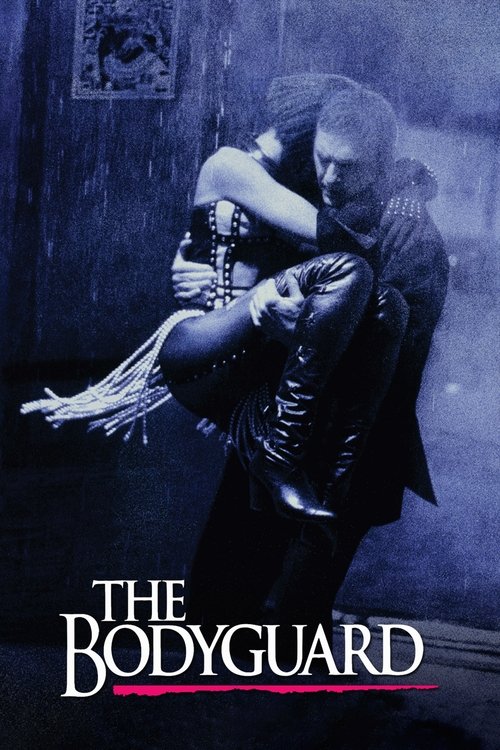
The Bodyguard
A former Secret Service agent takes on the job of bodyguard to an R&B singer, whose lifestyle is most unlike a President's.
Despite a mid-range budget of $25.0M, The Bodyguard became a massive hit, earning $411.0M worldwide—a remarkable 1544% return.
Nominated for 2 Oscars. 14 wins & 21 nominations


Plot Structure
Story beats plotted across runtime


Narrative Arc
Emotional journey through the story's key moments
Story Circle
Blueprint 15-beat structure
Characters
Cast & narrative archetypes

Rachel Marron
Frank Farmer
Sy Spector
Bill Devaney
Tony Scipelli
Nicki Marron
Main Cast & Characters
Rachel Marron
Played by Whitney Houston
A famous pop singer and actress who receives death threats and must accept protection she initially resists.
Frank Farmer
Played by Kevin Costner
A former Secret Service agent turned professional bodyguard who is hired to protect Rachel despite their clashing personalities.
Sy Spector
Played by Gary Kemp
Rachel's publicist and manager who is deeply concerned about her safety and career.
Bill Devaney
Played by Mike Starr
Rachel's devoted bodyguard who is replaced by Frank and struggles with the change.
Tony Scipelli
Played by Tomas Arana
A hitman hired to stalk Rachel who becomes increasingly obsessed with his target.
Nicki Marron
Played by Michele Lamar Richards
Rachel's younger sister who is jealous of Rachel's success and harbors deep resentment.
Structural Analysis
The Status Quo at 1 minutes (1% through the runtime) establishes Frank Farmer is shown as a solitary, disciplined former Secret Service agent, haunted by his failure to protect Reagan. He lives alone, methodical and emotionally closed off.. The analysis reveals that this early placement immediately immerses viewers in the story world.
The inciting incident occurs at 15 minutes when Frank witnesses the threatening letter and explosion at Rachel's concert venue. The danger is real and escalating, forcing him to take the assignment seriously despite Rachel's initial hostility.. At 12% through the film, this Disruption aligns precisely with traditional story structure. This beat shifts the emotional landscape, launching the protagonist into the central conflict.
The First Threshold at 32 minutes marks the transition into Act II, occurring at 25% of the runtime. This indicates the protagonist's commitment to After the Mayan Club attack where Frank physically protects Rachel from the crowd, she finally accepts him as her bodyguard. Frank commits fully to the job, and a grudging mutual respect begins to form., moving from reaction to action.
At 65 minutes, the Midpoint arrives at 50% of the runtime—precisely centered, creating perfect narrative symmetry. Of particular interest, this crucial beat Frank and Rachel consummate their relationship after the Oscar nomination announcement. False victory: they believe love can coexist with protection. But Frank immediately recognizes this compromises his judgment and pulls back emotionally., fundamentally raising what's at risk. The emotional intensity shifts, dividing the narrative into clear before-and-after phases.
The Collapse moment at 97 minutes (75% through) represents the emotional nadir. Here, Frank discovers Nicki hired the assassin out of jealousy toward her sister. Before he can act, Nicki is killed by the hitman she hired, dying in Rachel's arms. Rachel is shattered; the threat came from within her own family., shows the protagonist at their lowest point. This beat's placement in the final quarter sets up the climactic reversal.
The Second Threshold at 103 minutes initiates the final act resolution at 80% of the runtime. Rachel chooses to attend the Oscars despite the danger, trusting Frank completely. Frank synthesizes his professional skills with his emotional investment. He's no longer just a bodyguard; he's protecting the woman he loves., demonstrating the transformation achieved throughout the journey.
Emotional Journey
The Bodyguard's emotional architecture traces a deliberate progression across 15 carefully calibrated beats.
Narrative Framework
This structural analysis employs systematic plot point analysis that identifies crucial turning points. By mapping The Bodyguard against these established plot points, we can identify how Mick Jackson utilizes or subverts traditional narrative conventions. The plot point approach reveals not only adherence to structural principles but also creative choices that distinguish The Bodyguard within the drama genre.
Mick Jackson's Structural Approach
Among the 4 Mick Jackson films analyzed on Arcplot, the average structural score is 7.6, reflecting strong command of classical structure. The Bodyguard exemplifies the director's characteristic narrative technique. For comparative analysis, explore the complete Mick Jackson filmography.
Comparative Analysis
Additional drama films include After Thomas, South Pacific and Dirty Dancing: Havana Nights. For more Mick Jackson analyses, see Clean Slate, Denial and L.A. Story.
Plot Points by Act
Act I
SetupStatus Quo
Frank Farmer is shown as a solitary, disciplined former Secret Service agent, haunted by his failure to protect Reagan. He lives alone, methodical and emotionally closed off.
Theme
Bill Devaney tells Frank that Rachel Marron needs protection but warns him she's difficult. The implicit theme emerges: true protection requires vulnerability and trust, not just professional distance.
Worldbuilding
We see Frank's isolated life and professional reputation. Rachel Marron's world is established as a superstar surrounded by handlers, facing death threats she dismisses. The contrast between Frank's controlled world and Rachel's chaotic celebrity life is drawn.
Disruption
Frank witnesses the threatening letter and explosion at Rachel's concert venue. The danger is real and escalating, forcing him to take the assignment seriously despite Rachel's initial hostility.
Resistance
Frank and Rachel clash repeatedly over security protocols. She resists his rules; he remains stoic and professional. Frank assesses the household, including her son Fletcher and sister Nicki, while Rachel tests his boundaries at every turn.
Act II
ConfrontationFirst Threshold
After the Mayan Club attack where Frank physically protects Rachel from the crowd, she finally accepts him as her bodyguard. Frank commits fully to the job, and a grudging mutual respect begins to form.
Mirror World
Frank takes Rachel and Fletcher to his father's remote cabin. Away from Hollywood, they connect as real people. Rachel sees Frank's vulnerability; Frank sees Rachel beyond the star persona. Their romantic relationship begins.
Premise
The promise of the premise: a love story between protector and protected. Frank implements security while falling for Rachel. They share intimate moments, he watches her perform, and the tension between professional duty and personal desire builds.
Midpoint
Frank and Rachel consummate their relationship after the Oscar nomination announcement. False victory: they believe love can coexist with protection. But Frank immediately recognizes this compromises his judgment and pulls back emotionally.
Opposition
Frank distances himself after their night together, devastating Rachel. The stalker's attacks intensify. Nicki's jealousy becomes apparent. Frank discovers the threatening letters came from inside the house. Trust fractures on all sides as danger closes in.
Collapse
Frank discovers Nicki hired the assassin out of jealousy toward her sister. Before he can act, Nicki is killed by the hitman she hired, dying in Rachel's arms. Rachel is shattered; the threat came from within her own family.
Crisis
Rachel grieves her sister's death and betrayal. Frank struggles with guilt for not seeing the danger sooner. The Academy Awards approach, and the assassin is still out there, now working independently. Rachel must decide whether to attend.
Act III
ResolutionSecond Threshold
Rachel chooses to attend the Oscars despite the danger, trusting Frank completely. Frank synthesizes his professional skills with his emotional investment. He's no longer just a bodyguard; he's protecting the woman he loves.
Synthesis
At the Academy Awards, Frank spots the assassin in the crowd. When Rachel wins and takes the stage, the killer aims. Frank shields Rachel with his body, taking the bullet. He survives. The assassin is killed. Rachel performs "I Will Always Love You" as Frank watches from backstage.
Transformation
At the airport, Frank and Rachel share a final kiss goodbye. He returns to his solitary life, but transformed: he learned to love and be vulnerable. She continues her career, but changed by real love. Their worlds must stay separate, but both are forever altered.