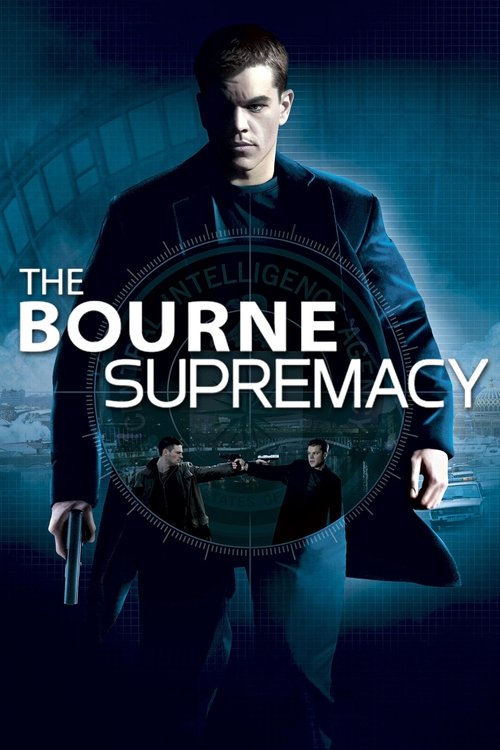
The Bourne Supremacy
A CIA operation to purchase classified Russian documents is blown by a rival agent, who then shows up in the sleepy seaside village where Bourne and Marie have been living. The pair run for their lives and Bourne, who promised retaliation should anyone from his former life attempt contact, is forced to once again take up his life as a trained assassin to survive.
Despite a considerable budget of $75.0M, The Bourne Supremacy became a commercial success, earning $288.5M worldwide—a 285% return.
5 wins & 22 nominations


Plot Structure
Story beats plotted across runtime


Narrative Arc
Emotional journey through the story's key moments
Story Circle
Blueprint 15-beat structure
Arcplot Score Breakdown
Weighted: Precision (70%) + Arc (15%) + Theme (15%)
The Bourne Supremacy (2004) exemplifies carefully calibrated dramatic framework, characteristic of Paul Greengrass's storytelling approach. This structural analysis examines how the film's 15-point plot structure maps to proven narrative frameworks across 1 hour and 48 minutes. With an Arcplot score of 7.5, the film showcases strong structural fundamentals.
Characters
Cast & narrative archetypes

Jason Bourne
Pamela Landy
Ward Abbott
Marie Kreutz
Kirill
Nicky Parsons
Main Cast & Characters
Jason Bourne
Played by Matt Damon
Former CIA assassin suffering from amnesia, haunted by fragmented memories while being hunted by the agency that created him.
Pamela Landy
Played by Joan Allen
CIA Deputy Director investigating a botched operation in Berlin, determined to uncover the truth about Treadstone and Bourne's involvement.
Ward Abbott
Played by Brian Cox
CIA Deputy Director and architect of Treadstone, willing to cover up past sins to protect his legacy and position.
Marie Kreutz
Played by Franka Potente
Bourne's girlfriend who helped him escape his past, seeking a quiet life in India with the man she loves.
Kirill
Played by Karl Urban
Russian FSB assassin and skilled operative who becomes Bourne's primary physical antagonist throughout the film.
Nicky Parsons
Played by Julia Stiles
CIA logistics coordinator and former Treadstone operative who assists Bourne despite orders, conflicted by loyalty and conscience.
Structural Analysis
The Status Quo at 1 minutes (1% through the runtime) establishes Bourne and Marie living peacefully in Goa, India. Bourne has nightmares of killing Russian politician Neski and his wife. Establishing their quiet, off-grid life in hiding.. Of particular interest, this early placement immediately immerses viewers in the story world.
The inciting incident occurs at 12 minutes when Marie is killed when assassin Kirill shoots at Bourne during a car chase in Goa. Marie dies, and Bourne barely escapes. Everything changes - his safe life is destroyed.. At 11% through the film, this Disruption aligns precisely with traditional story structure. This beat shifts the emotional landscape, launching the protagonist into the central conflict.
The First Threshold at 26 minutes marks the transition into Act II, occurring at 24% of the runtime. This demonstrates the protagonist's commitment to Bourne calls Pamela Landy and tells her: "I'm coming in." He actively chooses to engage with the CIA to find answers about who framed him rather than disappearing again., moving from reaction to action.
At 55 minutes, the Midpoint arrives at 50% of the runtime—precisely centered, creating perfect narrative symmetry. Notably, this crucial beat Bourne confronts Nicky Parsons in Amsterdam and learns crucial information about his past missions. False defeat: he realizes the depth of his past crimes - he murdered the Neskis. The truth is worse than he imagined., fundamentally raising what's at risk. The emotional intensity shifts, dividing the narrative into clear before-and-after phases.
The Collapse moment at 79 minutes (73% through) represents the emotional nadir. Here, Bourne crashes during the Moscow car chase with Kirill. He's injured and Kirill escapes. Bourne is at his lowest point - wounded, hunted, burdened by the memory of his murders. The whiff of death in the brutal crash., shows the protagonist at their lowest point. This beat's placement in the final quarter sets up the climactic reversal.
The Second Threshold at 85 minutes initiates the final act resolution at 79% of the runtime. Bourne calls Landy and provides her with Abbott's direct phone number, giving her the key to expose the conspiracy. Synthesis: Bourne combines his operational skills with his moral awakening to bring justice., demonstrating the transformation achieved throughout the journey.
Emotional Journey
The Bourne Supremacy's emotional architecture traces a deliberate progression across 15 carefully calibrated beats.
Narrative Framework
This structural analysis employs proven narrative structure principles that track dramatic progression. By mapping The Bourne Supremacy against these established plot points, we can identify how Paul Greengrass utilizes or subverts traditional narrative conventions. The plot point approach reveals not only adherence to structural principles but also creative choices that distinguish The Bourne Supremacy within the action genre.
Paul Greengrass's Structural Approach
Among the 7 Paul Greengrass films analyzed on Arcplot, the average structural score is 6.9, demonstrating varied approaches to story architecture. The Bourne Supremacy represents one of the director's most structurally precise works. For comparative analysis, explore the complete Paul Greengrass filmography.
Comparative Analysis
Additional action films include The Bad Guys, Puss in Boots and Venom: The Last Dance. For more Paul Greengrass analyses, see Green Zone, News of the World and Jason Bourne.
Plot Points by Act
Act I
SetupStatus Quo
Bourne and Marie living peacefully in Goa, India. Bourne has nightmares of killing Russian politician Neski and his wife. Establishing their quiet, off-grid life in hiding.
Theme
Marie tells Bourne: "We're not really safe here, are we?" and "People don't just forget about you." The theme: the past cannot be escaped; it must be confronted.
Worldbuilding
Establishing Bourne and Marie's life in Goa. Bourne continues having flashbacks to the Neski murders. Meanwhile, CIA agents Pamela Landy and Ward Abbott discuss a Berlin operation. A fingerprint left at a crime scene in Berlin matches Bourne.
Disruption
Marie is killed when assassin Kirill shoots at Bourne during a car chase in Goa. Marie dies, and Bourne barely escapes. Everything changes - his safe life is destroyed.
Resistance
Bourne grieves and burns Marie's belongings. He realizes he's being framed for murders in Berlin. He debates whether to run or fight back. Bourne decides he must find out who's targeting him and why.
Act II
ConfrontationFirst Threshold
Bourne calls Pamela Landy and tells her: "I'm coming in." He actively chooses to engage with the CIA to find answers about who framed him rather than disappearing again.
Mirror World
Pamela Landy is introduced as the mirror character - she represents the institutional pursuit of truth and justice. Unlike Abbott, she genuinely wants to find the truth about what happened in Berlin.
Premise
Bourne hunts for answers across Europe. Tense cat-and-mouse sequences in Naples, Munich, and Berlin. Bourne uses his skills to evade capture while gathering intelligence. He discovers he's being framed and someone is cleaning up Treadstone loose ends.
Midpoint
Bourne confronts Nicky Parsons in Amsterdam and learns crucial information about his past missions. False defeat: he realizes the depth of his past crimes - he murdered the Neskis. The truth is worse than he imagined.
Opposition
Ward Abbott intensifies efforts to kill Bourne to cover up his own crimes. Kirill continues hunting Bourne. Landy begins suspecting Abbott. The walls close in on both Bourne and the conspiracy. Intense Moscow car chase.
Collapse
Bourne crashes during the Moscow car chase with Kirill. He's injured and Kirill escapes. Bourne is at his lowest point - wounded, hunted, burdened by the memory of his murders. The whiff of death in the brutal crash.
Crisis
Bourne processes his trauma and guilt. Landy gathers evidence against Abbott. The dark night where Bourne must decide whether to seek redemption or remain a killer. He chooses accountability.
Act III
ResolutionSecond Threshold
Bourne calls Landy and provides her with Abbott's direct phone number, giving her the key to expose the conspiracy. Synthesis: Bourne combines his operational skills with his moral awakening to bring justice.
Synthesis
Landy confronts Abbott with evidence, leading to his suicide. Bourne travels to Moscow to apologize to Neski's daughter for murdering her parents. He accepts full responsibility and tells her the truth. Justice is served; Bourne finds redemption through confession.
Transformation
Bourne walks away from Neski's apartment after confessing. Unlike the opening where he was running from his past, he's now faced it. He jumps into the Moscow River wounded but free - transformed from fugitive to someone seeking atonement.